In most-ancient times, the Tolku Tatchlan Masters fashioned the innumerable ‘Faces of Tatchlan’ to invoke as needed to service and modify the Living System. They chose this method to give these Invocate tools and to serve as Masks for the Majastas to don within the Resplendent Work. Since prehistoric times, masks have served essential societal roles and are a natural extension of this service. These faces serve as handles to the many facets of the Resplendent System. They possess a life of their own and are said to hold a residue of each Majastas wearing them over their vast life spans. Eventually, the Uluvatu Masters saw these Faces coalesce into Twelve Principal Faces. Their aspect is beautiful and shocking, reflecting the dramatic lives of the Uluvatu Masters who first created them and subsequent history within Tatchlan.
This section references the ‘Three Orbs’ of Tatchlan, and now these Faces manifest in relation to them. This is how the general population understands the Living System. See here for the actual internal structure and nature of Tatchlan.
Masks for Majastas
Majastas alone may approach one or more Principal Faces and don them as Masks. To all Maja Invocates and Operants within the Living System, they appear vast, as small moons orbiting the Inner Core. With the Principal Masks, a Majastas may work directly with the Resplendent Work. Invocates invoke one or more of the hundreds of thousands of Secondary or specialized Faces associated with one or more Principal Faces. Except for a specialized Master, no Invocate may touch these Grand Faces. These Secondary Faces are tiny compared to their Principal Face. Despite this, their stature rivals that of the Invocate's body. These Secondary Faces either appear as a miniature of their master or present as a combination of two or more Principal Faces. These Secondary Faces, living under the direction of their Principal Face(s), can make minor modifications to specific quarters of the Living System. A broader awareness follows their every action as an aspect of the Principal Face or Faces. This means the cumulative actions of all Secondary Faces are known by the Majastas when they don the Principal Face.
Killing Swath Effect
With the fall of the Tolku during the Killing Swath and Suvuka Onslaught, most Faces withdrew themselves and would not respond to the Suvuka. Only Hesha Vira remained active and established a distinctive life with them. While at variance with the original design of the Living System, original design, Hesha Vira's connection kept Tatchlan functioning until the Koru roused the rest of the Principal Faces and returned the formation to wholeness seven hundred years later. After the Killing Swath, a few Secondary Faces did not recover and wander the inner orb or lie unmoving on its surface. The Koru Operants proved to be masters at gently ‘excavating' and ‘re-animating' many of these inert Faces, although a few remain where they fell. Their number order refers to the sequence of their waking at the dawn of Tolku civilization. While Hesha Vira was the first-fashioned Face, Alatanda was the earliest to be roused, followed by Skarashing and the rest.
Tatchlan Eddy
This refers to a curious feature of all animate entities within the Living System. All Principal and Secondary Faces, along with many other beings deemed ‘alive,’ are never still. Whenever they are not engaged in active service, these beings manifest what came to be called the ‘Tatchlan Eddy,’ meaning their Faces are constantly moving. These motions vary, but generally, they may be characterized as small, gentle, rhythmic gestures, such as slight turns side to side, forward and backward, or small tilts this way and that. Another aspect of this feature is group co-ordination. When several Secondary Faces, be they for one Principal Face, several, or hybrids, are in formation, they develop alternating patterns of such movements. They seldom perform the same gestures simultaneously, yet whatever form these gestures take, they are always synchronous, as if they all hear and perform to the same musical beat. What has also been noted is these complex choreographies may slightly increase or decrease in pace depending on the situation. One of the few times this ceaseless activity is stilled is when the Principal Faces form what are known as Formations. These are known as the ‘Line,’ the ‘Arch,’ the ‘Mountain,’ and the ‘Spoke.’
The Faces
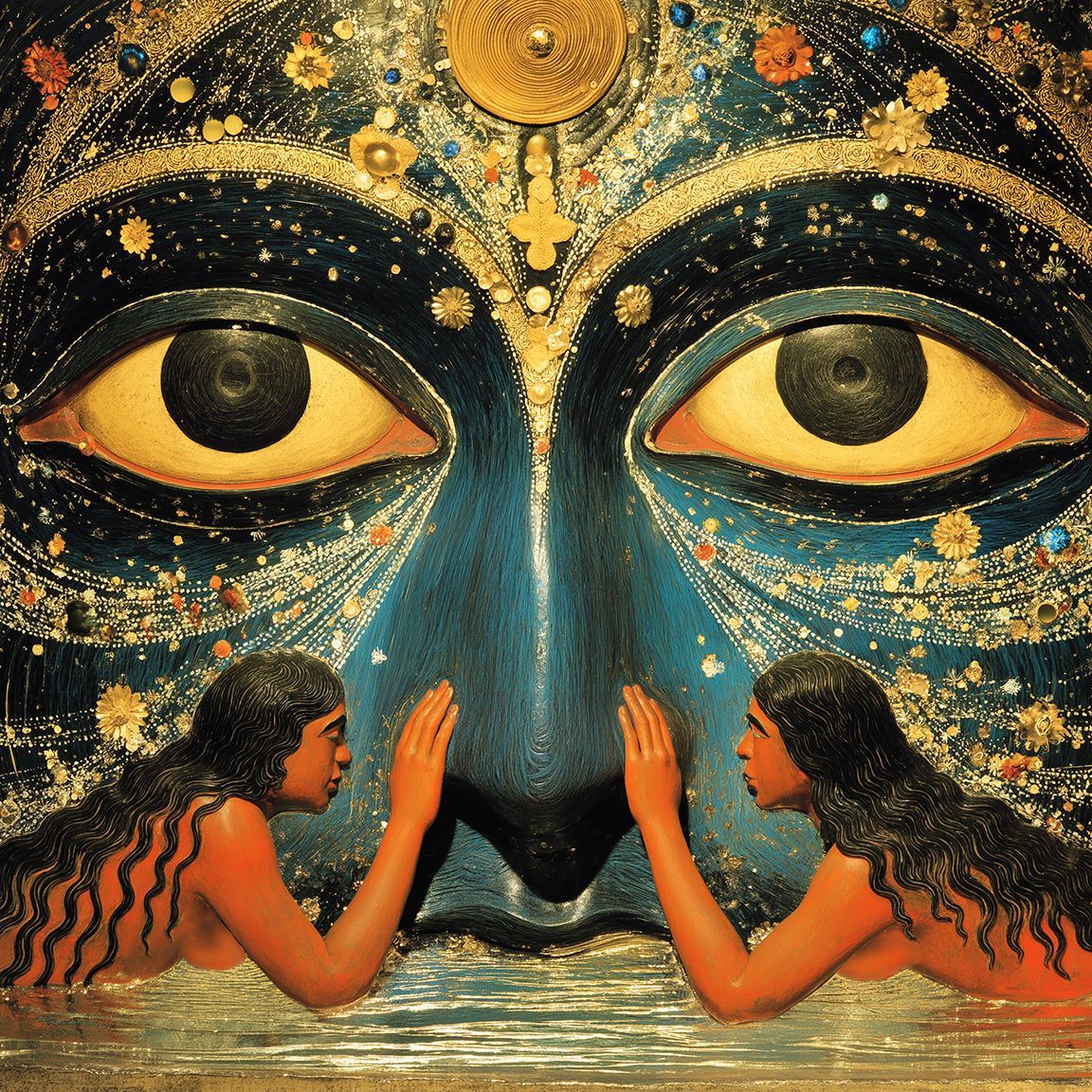
Pictured is one of many modern monuments in an Ablution Academy in the port city of Bhampay, dedicated to the moment Shuna-Shapta and the infant Majastas Thakadush-Satwa touched the face of the first Principal Face of the Tatchlan System, Alatanda. These sculptures often stand in pools of water, symbolizing their presence within Amanavata, the watery realm widely believed to be the outer layer, which contains Raw Life and the Living Orb.
Alatanda
Bridge and Gateway
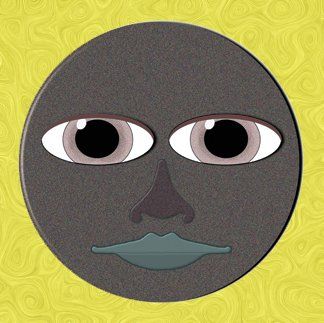
Alatanda is the largest and most potent of Face. He is known as the Bridge and Gateway to all others. He is the hub at the centre of the Principal Faces, with all other Faces connected to him. He often becomes closely linked to the current Majastas and can assist another Face in difficulty or even revive the entire Living System after some unusual interruption. Alatanda is also associated with the rare manifestation known as the ‘Resplendent Hands,’ when the Living System ‘reaches through the Skin of Anu’ to impact events directly.
His Face is completely round. His skin is a sparkling blackness. Closer examination reveals this sparkling feature is composed of living portions of the other eleven Principal Faces embedded on his own. He is one of the most benign of the Faces, with broad features and wide eyes. He is also called ‘Black Moon Face.’
Alatanda Face Dancer Costume
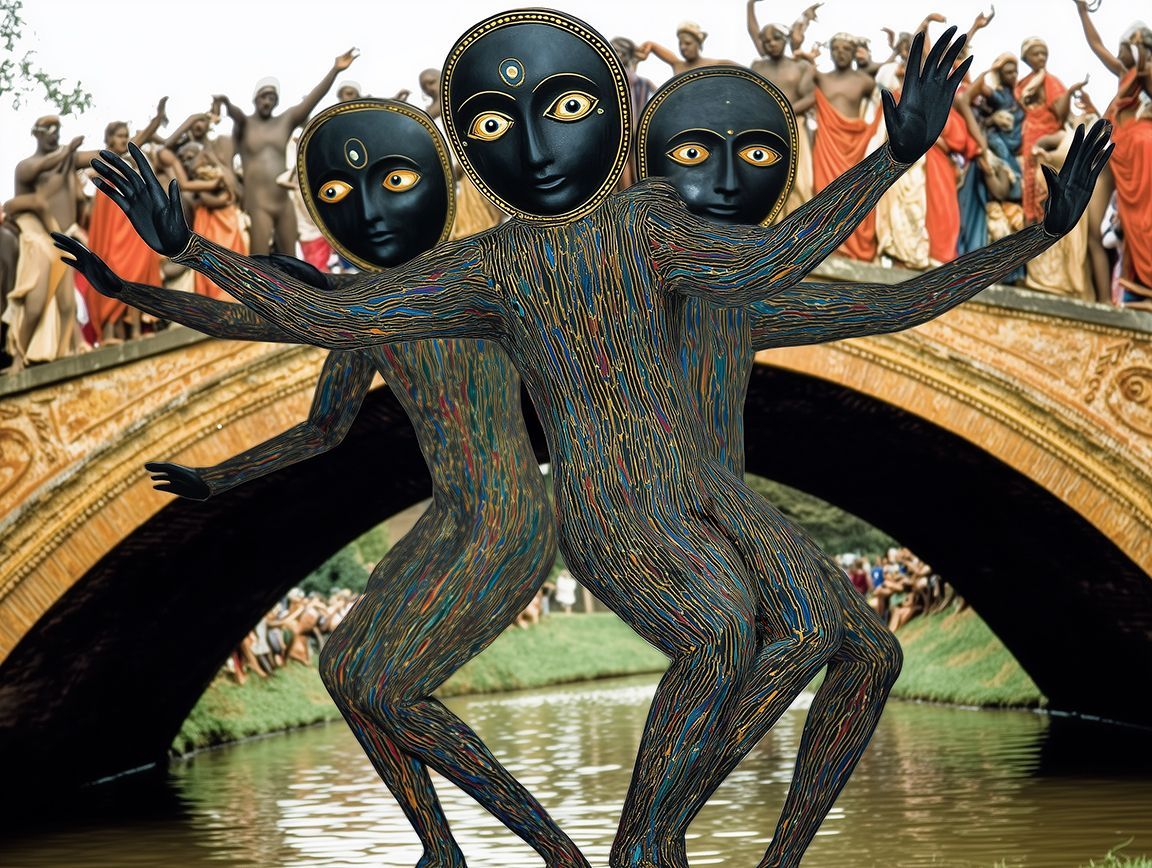
The Alatanda Festival takes place on Day Between (11), in Month One, Atra - the Bursting Flame. This image shows his Face Dancers near a bridge, a significant symbol of this first Principal Face. Most Encirclement clusters contain several Betweens, and at least one Antimony Between. While all Betweens are welcome to participate, those Antimony Betweens able are specifically called upon to become Face Dancers for this festival.
Alatanda Ceremonial Costume
Dancers/performers, known generally as ‘Face Servants' and ‘Face Dancers,' represent Alatanda not only wearing a mask of his Face but also various costumes. Some wear a shimmering black robe containing streaks of colour from all other Faces of the Resplendent Work. Others paint their bodies black with coloured flecks before adding images of his name, including badges in the shape of a wheel, an arching gate, a wide bridge or a series of bridges, or a combination of the three icons. Many of these ritual presentations include the wearing of gloves with elongated fingers. Often these Face Dancers are made up of the seventh Between Aspect, the Antimony Between, whose Aspect Gem, Antimony, is deep black.
Alatanda Bestowals
These Face Dancers usually give out what are known as Bestowals. The most common is a miniature version of the Face they wear as amulets, jewelry, or to adorn personal shrines. In the case of Alatanda, they also take the form of his titles, shining black entranceways, polished wheels or bridges, and images of the Fourth Cluster Virtue - Patience. These have taken various forms of Alatanda emblems combined with those symbolizing tenderness and nurturance.
Southern Court Station
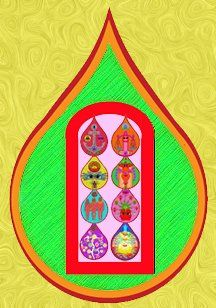
Alatanda, along with Skarashing and Naprahath, is associated with the ‘south' in the Majastas Danam Yelda directional placement and represents stability and order. When a south-facing ceremony or declaration is made, Alatanda's name is evoked if the content pertains to an accord between different Living System elements or on the Skin of Anu.
Between Day (11)
Day Between (11), in Month One, Atra - Bursting Flame, is Alatanda's Festival. Alatanda is also the first of the Faces linked to the Fourth Virtue of Cluster life: Patience.
Skarashing
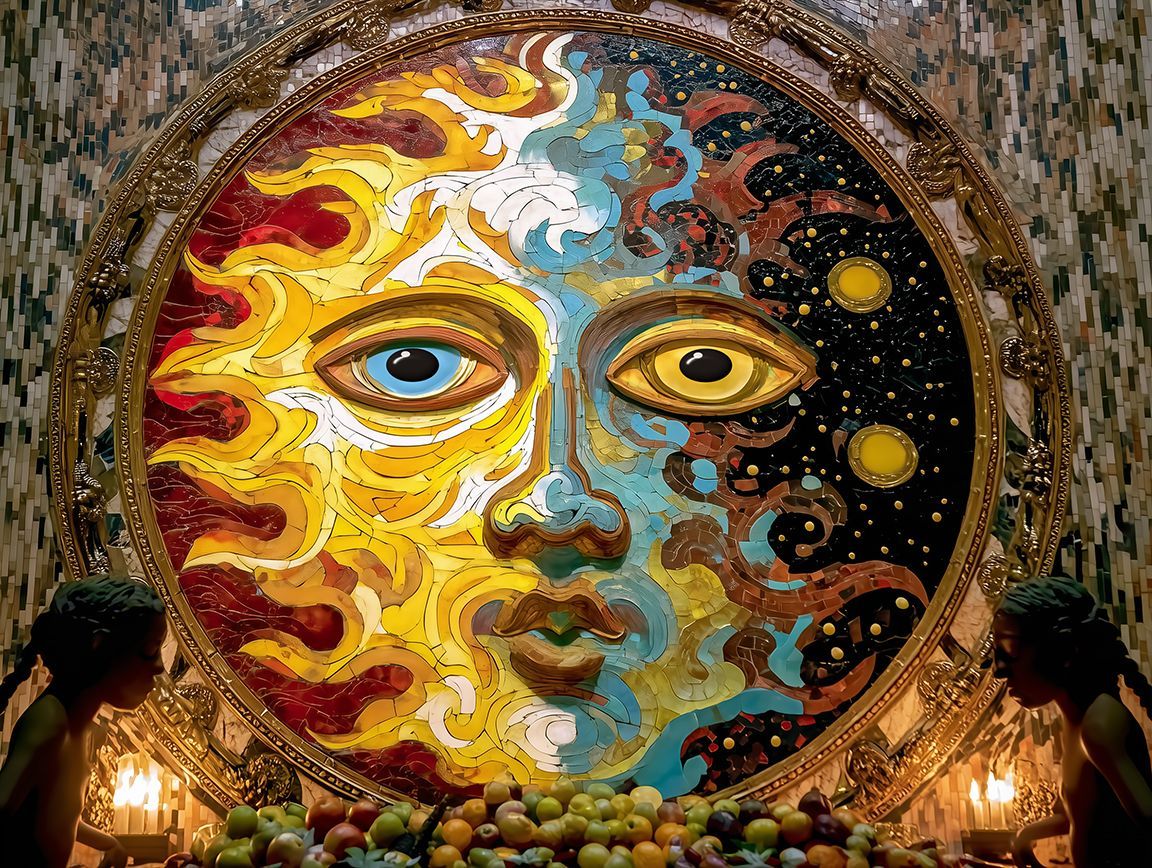
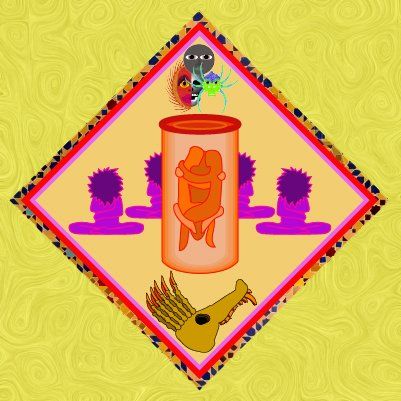
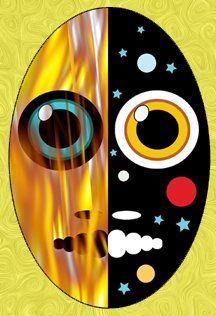
This is one of many variations on the basic theme of the second Principal Face of Tatchlan, Skarashing. This is not her official icon, but a sample image found in one of twelve Face Shrines, usually attached to the southern side of an Ablution Academy or other Mantle Establishment. All versions of this Tatchlan Face are divided in half, the left side engulfed in flames, the right side in the darkness of night, as befitting the ‘Descerner of Polarities.’ The validated and certified icon is reserved for official publications and Majastas declarations.
Discerner of Polarities
Skarashing is the next most powerful of Faces. She is the discerner of polarities, able to find the opposing tendency to each primary aspect of the Living System. She is often called upon to accompany another of the Principal Faces, particularly Naprahath, to see what is hidden and possibly working against them. Her ultimate purpose is to bring these opposing propensities into balance, as with a mirror image.
Her elemental Face is composed of half-day and half-night. On the right side, it is black and wears the four moons and eight stars; on the left, it is white and engulfed in the flames of Nu. The polarities are also present in the contrasting colours of the eyes, partaking of the other half of this uncompromising Face.
Skarashing Face Dancer Costume
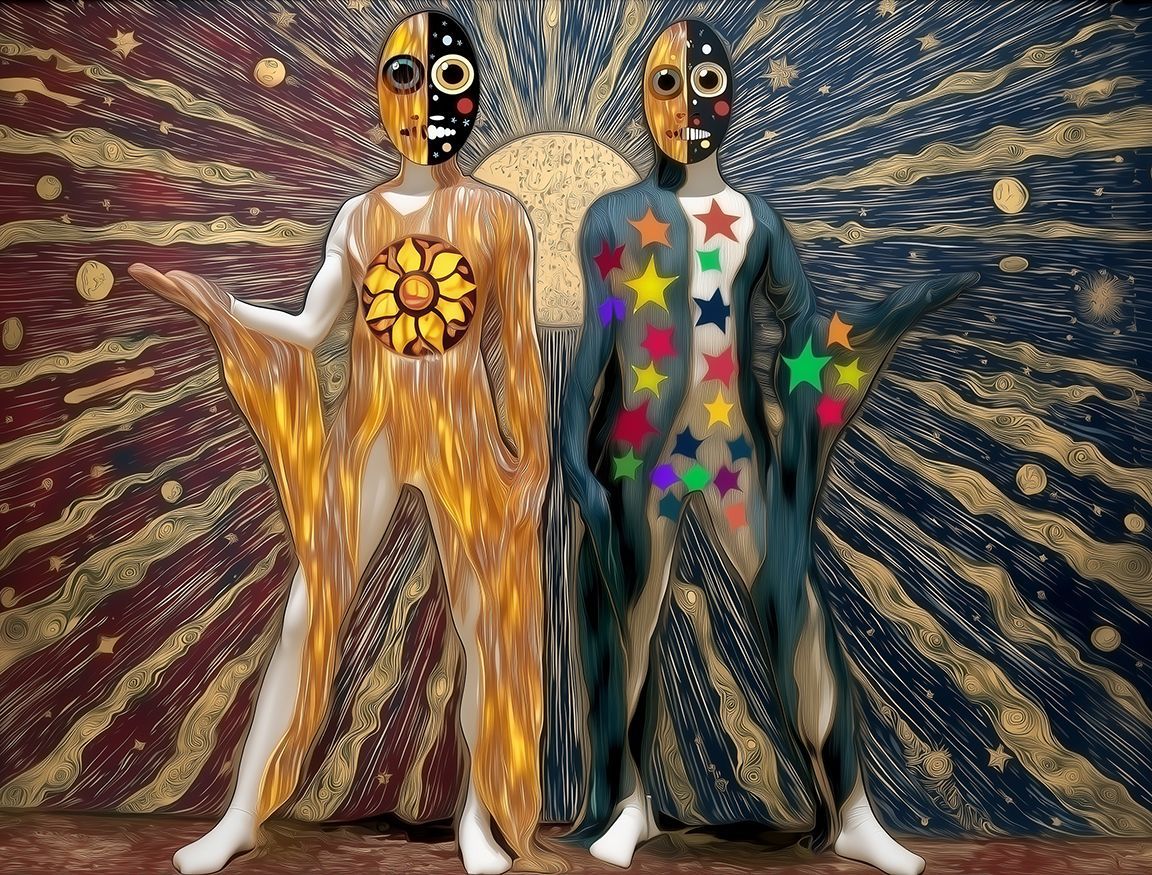
The Skarashing Festival takes place on Day Kindness (22), in Month Two, Deel - the Trickster. This image shows two of her Face Dancers, each wearing an icon version of her Face, manifesting one half of her aspect in their costumes. Most Encirclement clusters contain several Betweens, and at least one Acanthus Between. While all Betweens are welcome to participate, those Acanthus Betweens, due to their ability to ‘mirror’ the interior gender within other cluster mates, are specifically called upon to become Face Dancers for this festival.
Skarashing Ceremonial Costume
Face Dancers of Skarashing may wear flowing robes and smooth, form-fitting costumes. They may also paint their bodies with one or many designs of Nu's full Eye on one side and many fixed and wandering stars, along with the four moons, on the other. These dark and light halves may appear on the same or opposite side to the dark and light of the mask they wear. Such variations usually reflect the mood of the times; the same side means all is well; the opposite can mean a current or ongoing change or disturbance. It is common for these masks to vary equally among an even number of performers in four increments. These servants may often be of the Between’s Fourth Aspect, the Acanthus Between, due to their ability to ‘mirror’ the interior gender within other cluster mates.
Skarashing Bestowals
Along with tiny versions of their Faces, performers may present various worked items. These usually involve the melding of opposites, for example, the Face of Nu on one half with the Face of one of the four moons on the other. These can also be combined with common symbols for ‘Comfort,’ the second of the four cluster virtues, as groupings of eight items forming circles or other linked formations.
Southern Court Station
Skarashing and Naprahath attend to Alatanda at the Southern Station in the Majastas Danam Yelda directional placement. Skarashing is prominent when discord is discovered, addressed or rectified on the Skin of Anu or within Tatchlan.
Kindness Day (22)
Day Kindness (22), in Month Two, Deel - the Trickster, is Skarashing's Festival. She is the third of the Faces, after Neferdush and Humma, to be associated with Comfort, one of the Four Cluster Virtues.
Principal Faces Skarashing, and
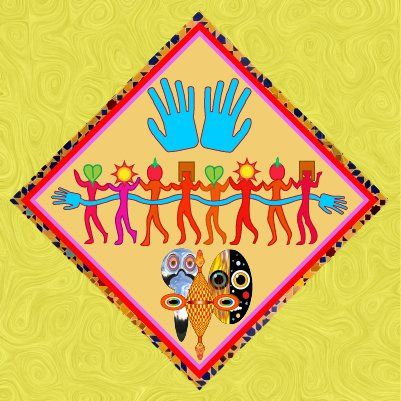
Naprahath are often seen working in concert. Skarashing reveals specific polarities, and Naprahath works to modify and bring formerly disparate elements into harmony. The Majastas customarily wear each of these faces, or a combined version, within Tatchlan.
If the green Face of Naprahath occupies the right side and Skarashing's left side, displaying the light of Nu's Eye is on the left, the Koru work goes ill. If Skarashing's dark right side is shown and Naprahath's green Face is on the left, success is at hand. This arrangement has the opposite meaning for the Danam Yeldic Majastas. Whatever the arrangement, Naprahath's crown spreads equally over both halves, given that Completes are superior to incompletes.
Naprahath
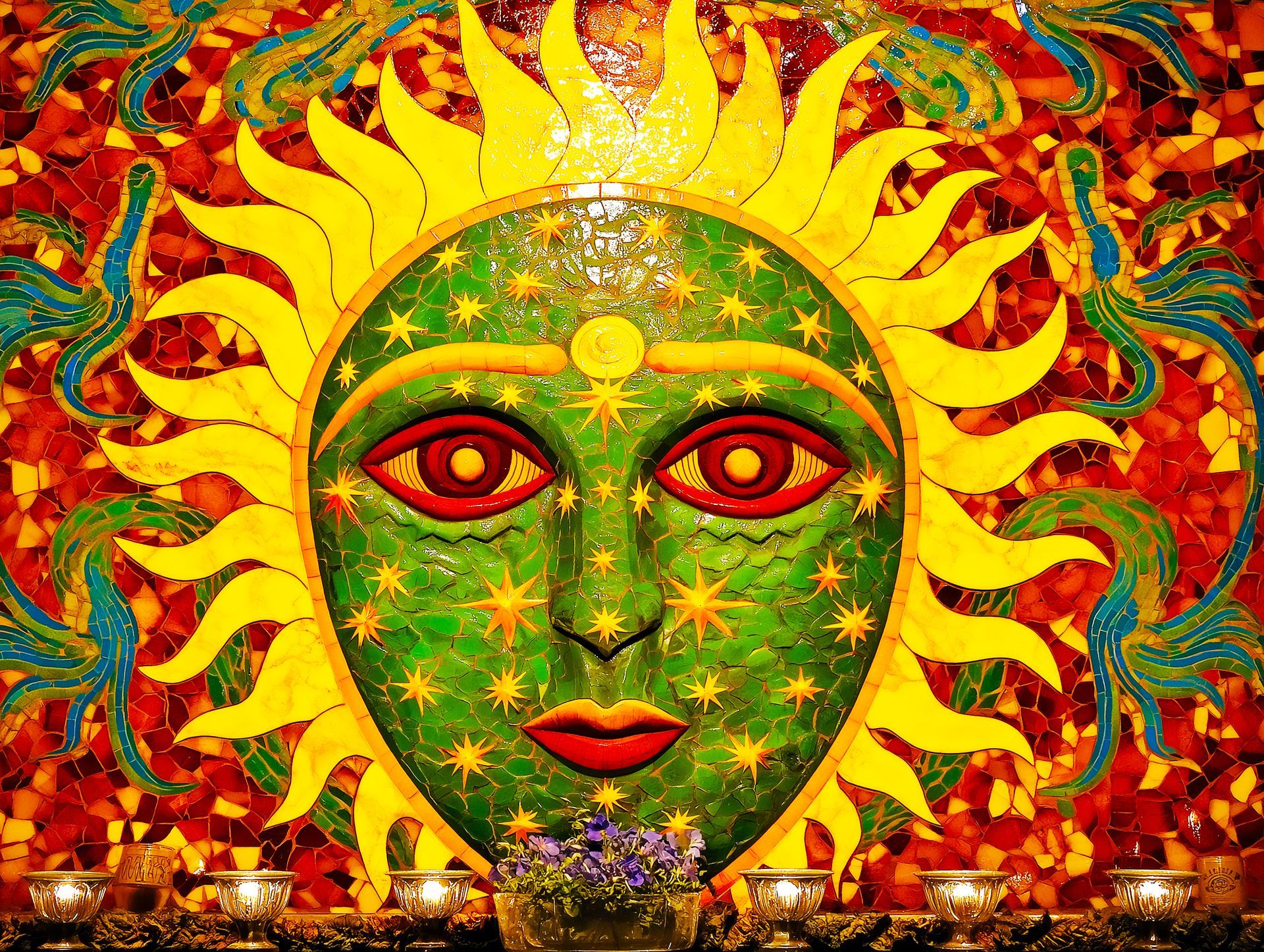
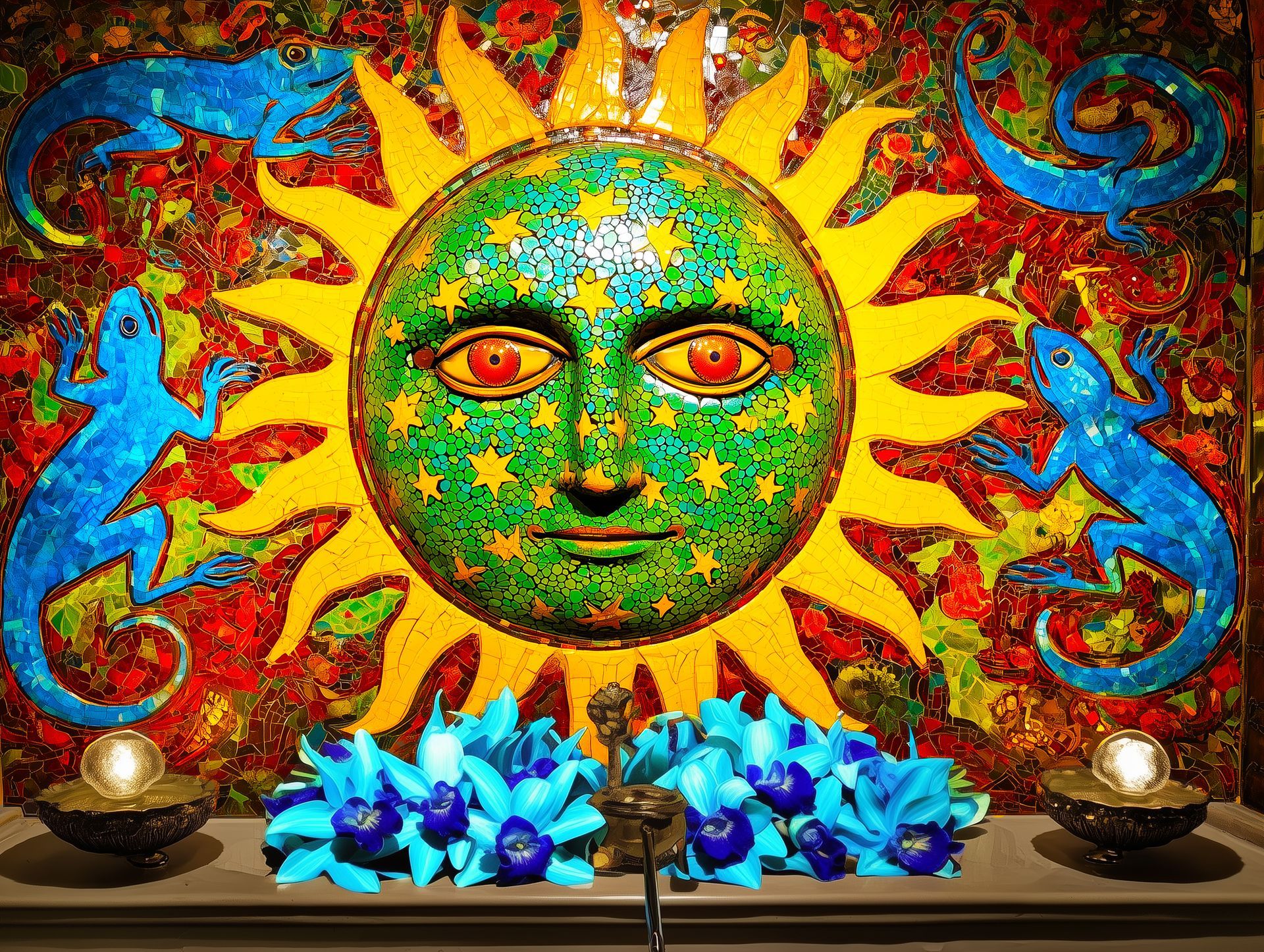
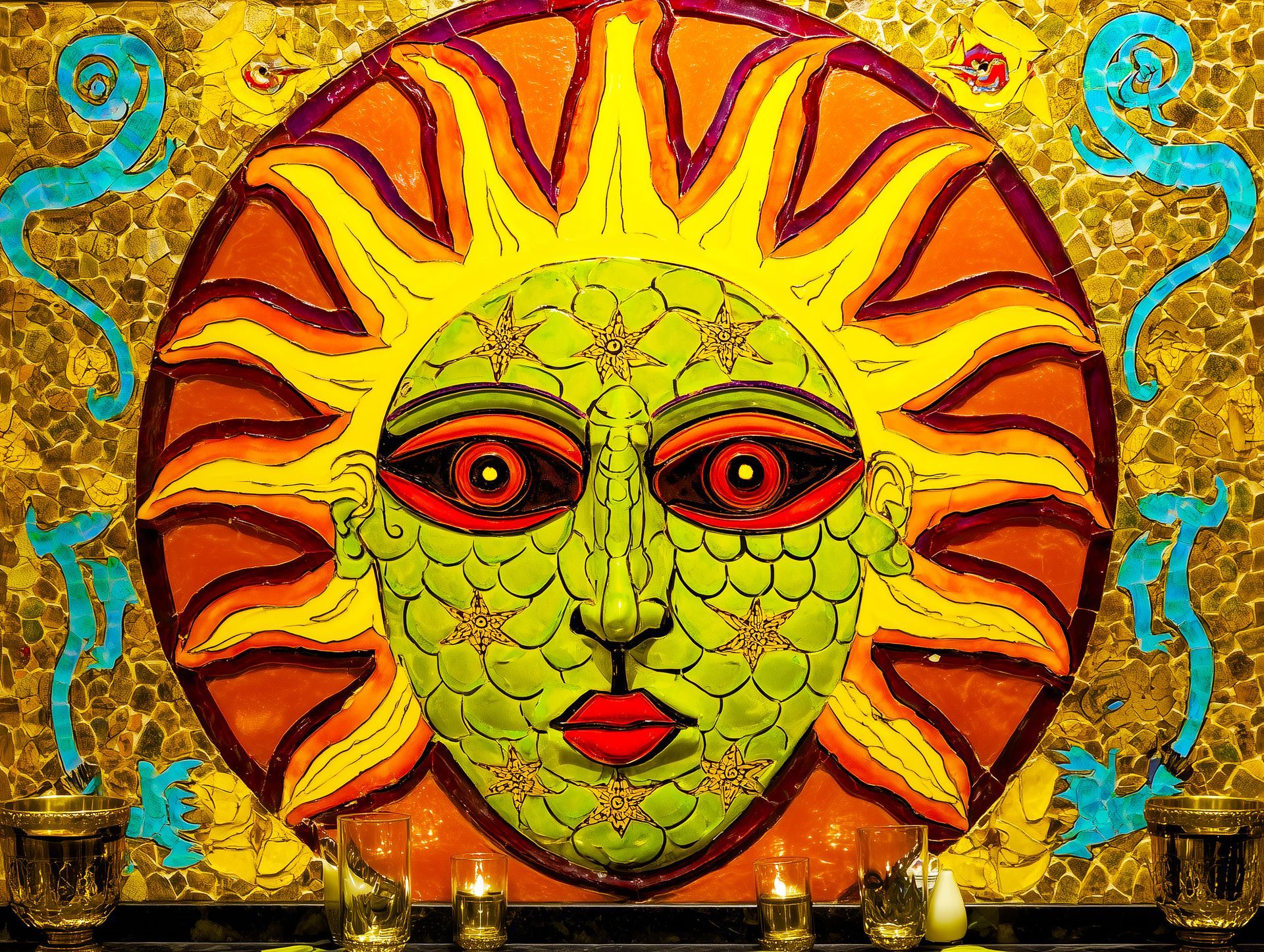
These are examples of the various manifestations of the third Principal Tatchlan Face, Naprahath. Invocates calling on one of her Secondary Faces may also request a companion Secondary Face of Skarashing, as these often work in tandem to reveal and address a number of issues that may arise across the immense complexity of Tatchlan.
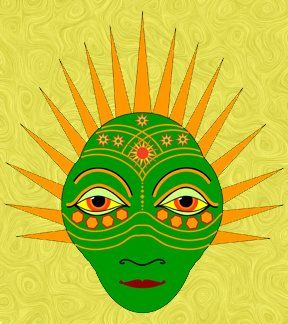
Restorer of Balance Maintainer of Harmony
Naprahath presents as a Complete. Shehe is the restorer of balance and maintainer of harmony.
They are often seen near Principal Face Skarashing, providing healing and restoration after rectifying an imbalance within the Living System. For this reason, these two Principal Faces are frequently named ‘sisters' and ‘siblings.’
Herhis Face is entirely green, with golden stars and patterns. A crown of ruddy yellow spikes rises in a series from either side and grows high at the top of herhis Face.
Naprahath Face Dancer Costume
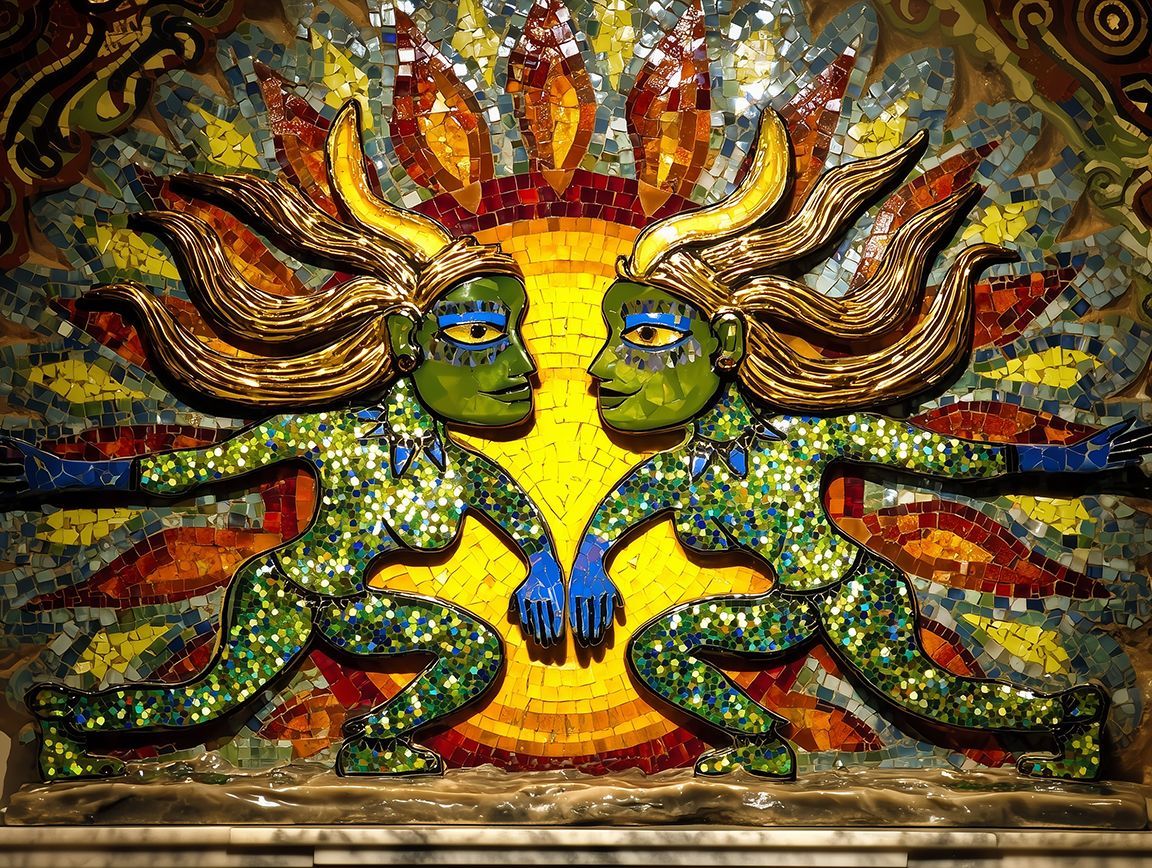
The Naprahath Festival takes place on Day Reciprocity (33), in Month Two, Deel - the Trickster. This Ablution Academy rendering shows two of her Face Dancers, in their traditional masks and green-scaled garb. While all Betweens are welcome to participate, those Cinnabar and Antimony Betweens, due to Cinnabars embodying pacifiers, and Antimony being the perfect aspect of Betweens, are specifically called upon to become Face Dancers for this festival.
Naprahath Face Dancers are generally body-painted or overlaid with small green scales. In the case of an overlay, they usually shimmer in the wind. Along with those on their masks, they often have fan-like spreads from their shoulders, elbows, knees and feet. They paint the palms of their hands blue, the universal symbol of healing. They are one of the few dancers who also sport a long tail, usually formed into a circle that frames the figure and ends in a small loop on the left side. True Completes predominate as Face Dancers at this event and accompany Cinnabar and Antimony Betweens. Cinnabars are there in their capacity as pacifiers, and Antimony represents the perfect aspect of Betweens. Other Betweens take part, along with women and men, artfully improved to appear as Completes, convincingly.
Naprahath Bestowals
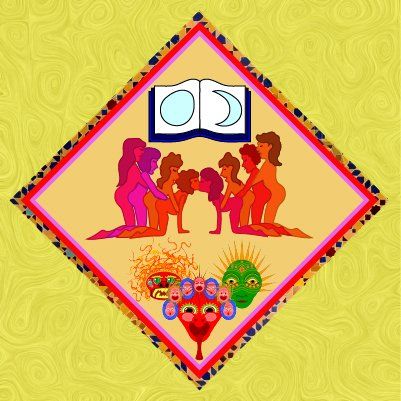
Servants representing the Face of Harmony and Balance bestow miniature versions of herhis Face, small blue hand images, and small vases covered in tiny blue handprints. This is a direct reference to the most-ancient healing Menem named Samajalas. Other bestowals may include elegant likenesses of lizards and many variations of Completes Tokens. They may also present a wide variety of these infused with imagery from the first Cluster Virtue of Kindness. On rare occasions, the Face is a double image of Skarashing and Naprahath linked or even having one face divided into halves. Yeldic ceremonies would always have the left being Skarashing and the right Naprahath, displaying a sign of balance between divergent aspects of Anu and Tatchlan.
Southern Court Station
As with Skarashing, Naprahath also attends Alatanda at the Danam Yelda southern orientation placement within the Majastas Court. When an announcement or ceremony occurs with all facing south, Naprahath is named if the content pertains to an accord between different elements.
Reciprocity Day (33)
Day Reciprocity (33), in Month Two, Deel - Trickster, is Naprahath's Festival. Shehe is the third and final Face associated with Kindness, one of the four Cluster Virtues. The first is Kava-Kura, and the second is Hesha Vira.
Humma
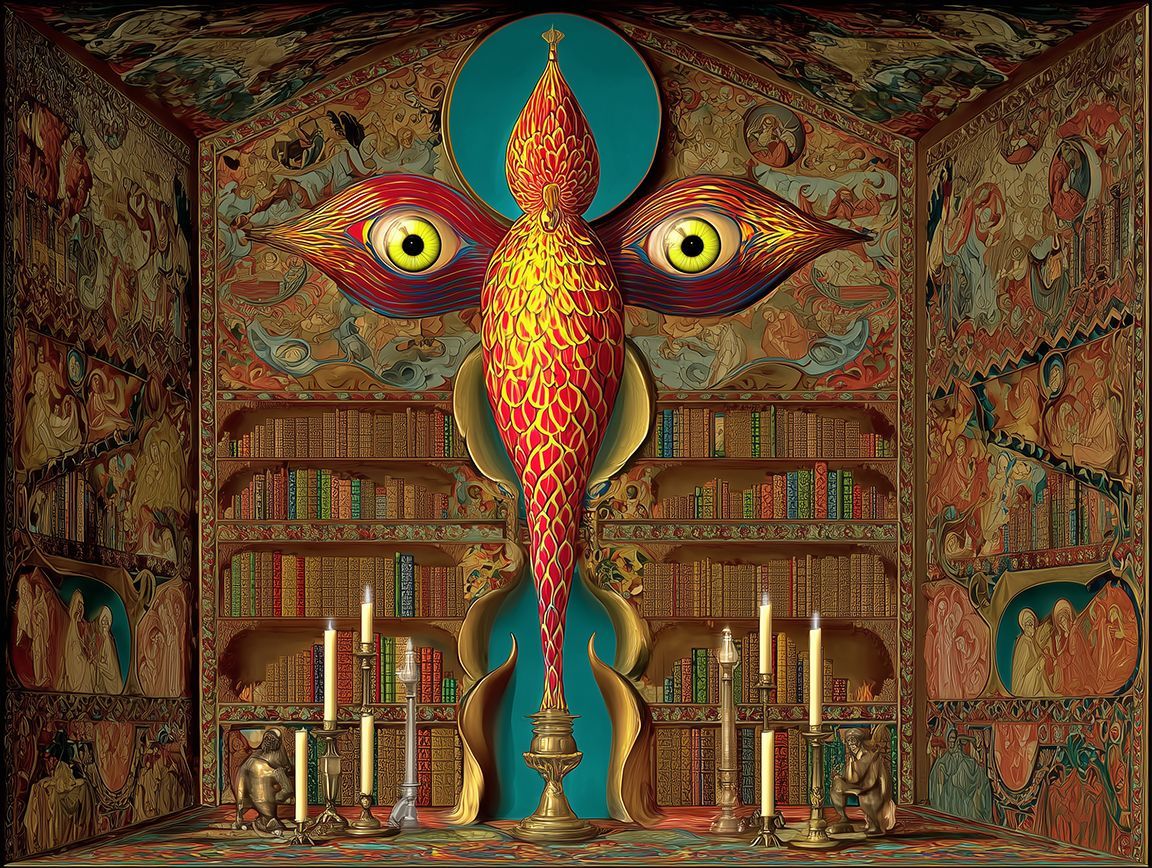
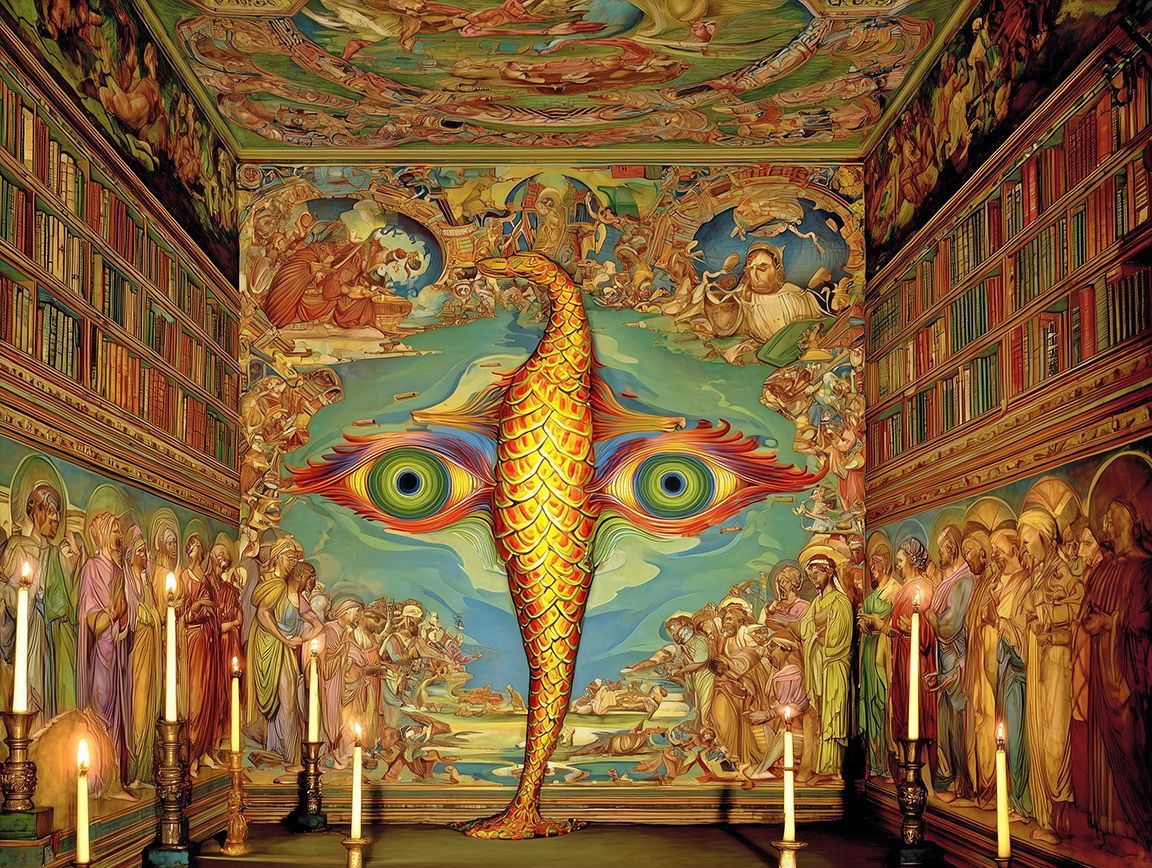
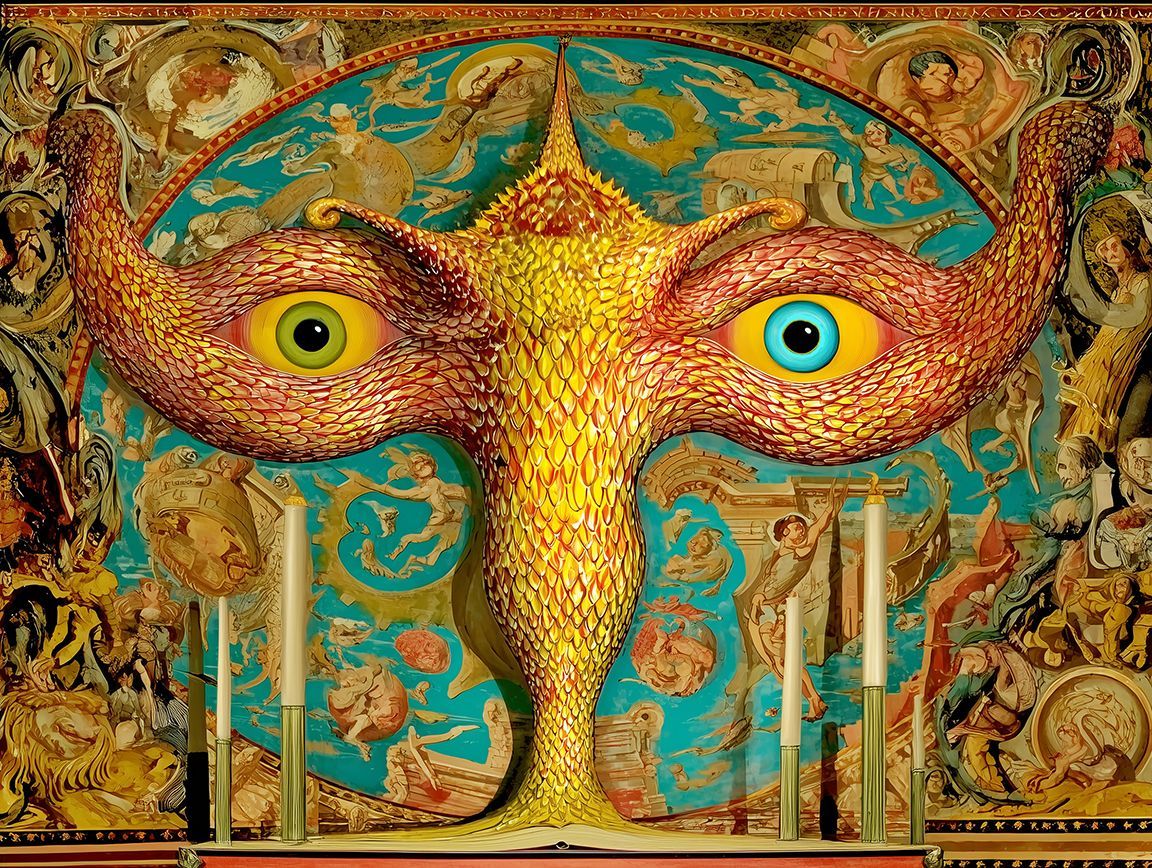
The Fourth Principal Face of Tatchlan, named Humma, has a unique visage. The Face of Recollection was formed by the Uluvatu Masters after a now-extinct deep-sea fish, known for its unusual front-facing eyes and associated with wisdom. These and many other versions are ubiquitous in the professional and academic portions of all Mantle Establishments.
Face of Recollection
Humma is the Face of Recollection. He is tasked with looking at current threads and tracing them back to their origins. Along with following all related threads, Humma notes their origins and how they influence one another and those around them. The deepest branch of Honoured Historian, the Jemnum Apprehenders, is said to emulate this Fourth Face in their pursuit of Concept Filaments.
Humma’s Face is said to resemble a deep-sea creature, alive during the Uluvatu Master's time but now long extinct. His head is long with curved sides that taper to a burning tip at the top and bottom. These flames both illuminate new memories and destroy what is no longer needed. His eyes are enormous and multihued, set on the sides of his head, leading to him being called ‘he of the delving eyes.’ His skin is composed of shining scales running in rows of red and yellow. His always open mouth, ever taking in new elements of the Resplendent System, fills his Face between his eyes.
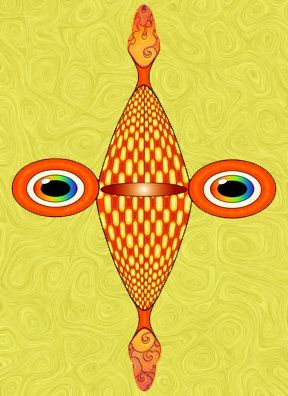
On ceremonial versions of this mask, tiny representations of other Principal Tatchlan Faces, and diverse icons associated with various aspects of Tatchlan, are painted onto these scales. They are all memories of Humma. He is said to dip down into the skin of the Living Orb and swim within it, easily parting the surface with this thin body while leaving no wake behind.
Humma Face Dancer Costume
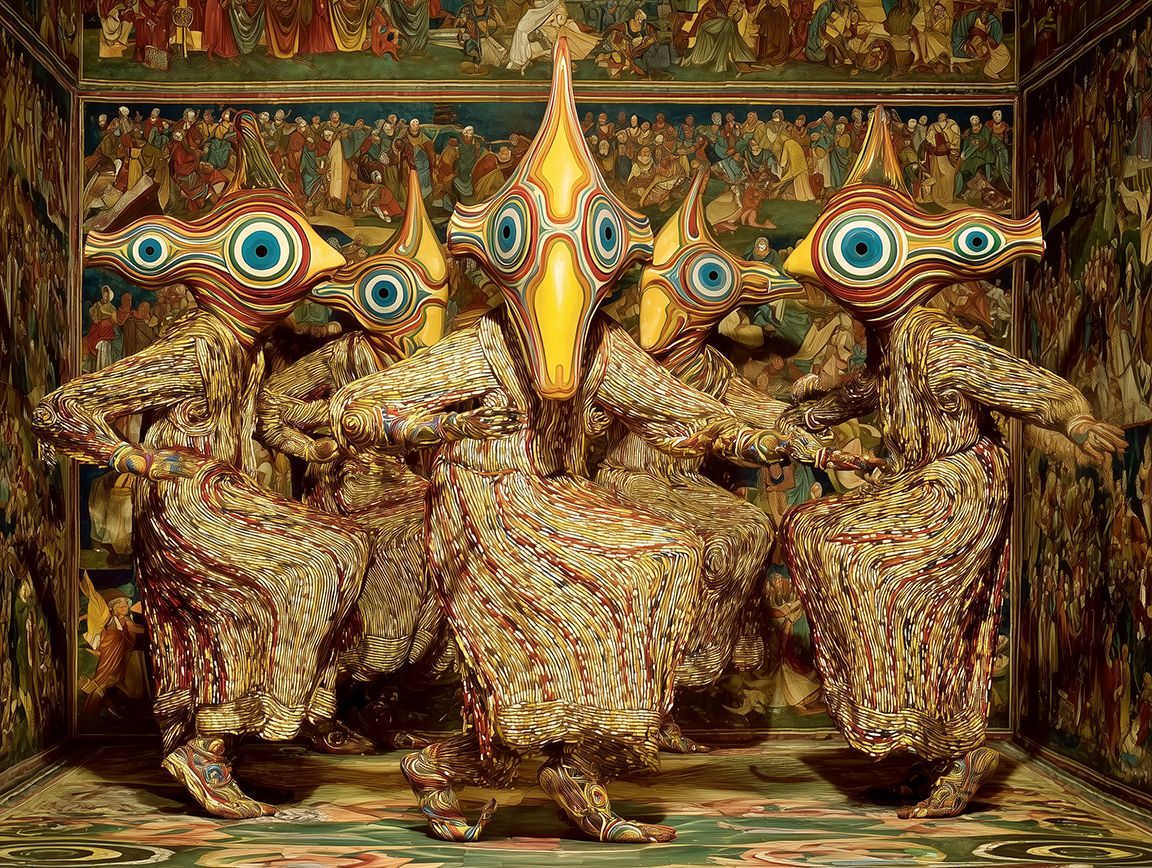
The Humma Festival takes place on Majastas Needle Day (44), in Month Three, Topy - the Needle. These Face Dancers wear a wide variety of costumes, all interwoven with red and yellow threads inspired by Humma's Face. Some simply wind threads around their bodies; others, such as these, don magnificent woven creations. While these Face Dancers emerge from the Humma Shrine at the commencement of the festival, most of their dancing takes place indoors, as is appropriate for those who embody culture and learning. Acanthus Betweens are specifically called upon to become Face Dancers for this festival due to their traditional role as ‘mirrors’ of hidden features in others, which is seen as complementing the Face of Recollection.
Face Dancers of Humma wear many thousands of red and yellow coloured threads, either wrapped around parts or all of their bodies or set on a small frame worn on their shoulders. Their arms and legs are usually fully wrapped by sets of these threads, braided, tangled or smooth. While some threads are loose, many are bound into elaborate braids running from their necks to their feet. These braids also contain many items symbolizing recollection of the recent and distant past. These were known as the ‘Tapestry of Memory.' It is common for recognizable images from the recent past to appear on the occasion. The Fourth Aspect of Betweens, along with their role in the Skarashing Festival, also take part in numbers in Humma’s Festival. The Acanthus Betweens do so because their traditional role as ‘mirrors’ of hidden features in others is seen as complementing the Face of Recollection.
Humma Bestowals
Along with tiny versions of Humma Faces and glass versions of one of his 'delving eyes,’ servants may also give a variety of woven items, often in the form of circular knots with eight or sixteen elaborate loops and other prominent features as bestowals. These weavings frequently include items worked into the threads, including symbols of Comfort, the second Cluster Virtue. Many of these intricate woven rope designs are found on most-ancient remains and depicted on artifacts. This suggests immense antiquity, returning to the formation period of The Greater Era of The Primary Epoch.
Western Court Station
Humma and Vashivonos attend to Gavaduru at the Western Station in the Majastas Danam Yelda directional placement. Humma is foremost in all historical accounts and current dispositions of Uses of each type.
Majastas Needle Day (44)
Majastas Needle Day (44), in Month Three, Topy - the Needle, is Humma's Festival. Humma is the second Face after Neferdush to be linked to the second of the Four Cluster Virtues, Comfort.
Hesha Vira
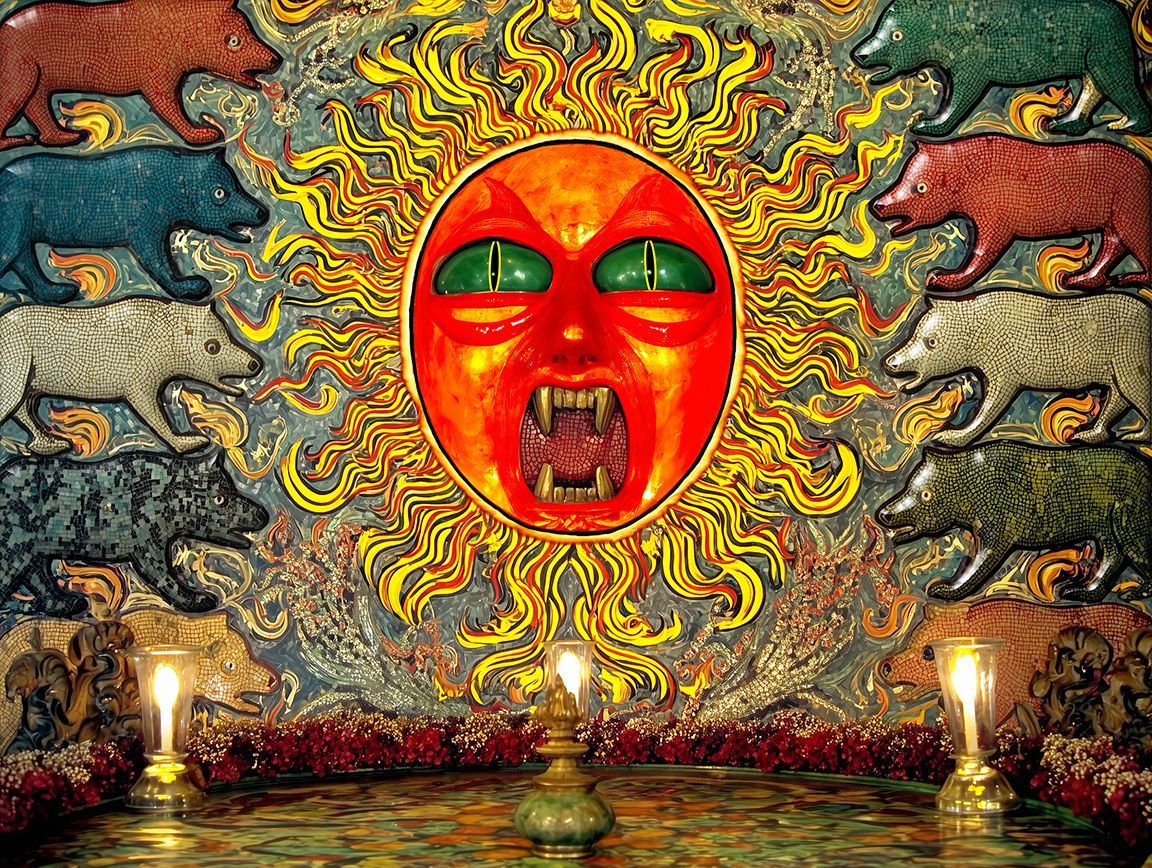
While Hesha Vira was the fifth Principal Face to be awakened into the new order of Tatchlan, this ‘Face of Raw Life’ predates all others. This is the unrefined face of rude life without the civilizing hand of culture. Hesha Vira was the natural state found by the first Practicians in the early Lesser Era of the Primary Epoch. At that time, all life was governed by ‘Death chasing Life chasing Death,’ and more sophisticated Tolku societies by Self-Absorption's ‘Four Generations.’ This Secondary Epoch interior of a Hesha Vira Face Shrine shows one piece of her complex history, her close association with the Suvuka. This link continued until the Suvuka's extinction. Thereafter, they are always displayed with her Face. She plays a prominent role in the first novel of this series, Hesha Vira's Challenge.
Face of Raw Life
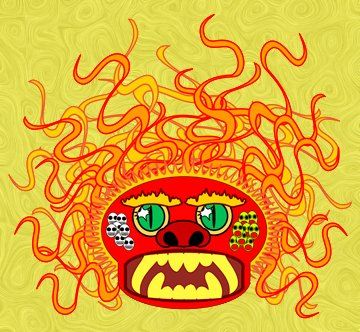
Hesha Vira is the Face associated with Raw Life. Unlike the other Faces, her primary domain is Indatubangus, which is in the middle layer surrounding the Living Orb of Tatchlan. Given the need to replenish other aspects of the Resplendent Work and monitor challenges such as fluctuations in the Common Desire, the Uluvatu Masters fashioned this Face to retain mastery over Raw Life.
This Face has angry green eyes, a mass of writhing orange/yellow hair and dark red flesh. Her roaring mouth features long, sharp teeth. On one cheek, she bears eight baby faces with open mouths and on the other, seven skulls. This signifies the raw life strategy of overproduction across all species, leading to the majority dying.
Hesh Vira Face Dancer Costume
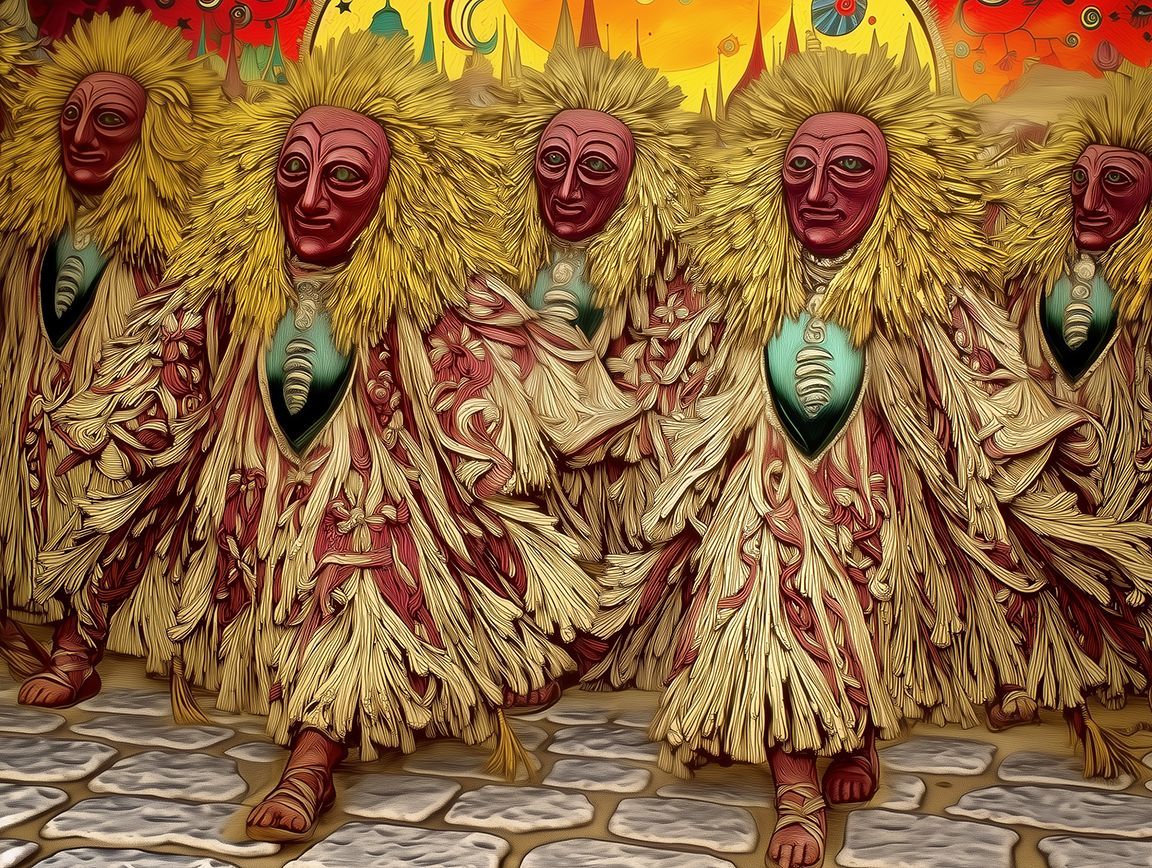
The Hesha Vira Festival takes place on Foremost Wheel Day (55), in Month Four, Ingeen - the Wheel. This image shows her Face Dancers manifesting the chaos of Raw Life, while honouring the extinct Suvuka, who adored her, in large medallions bearing their claws. Most Encirclement clusters contain several Betweens, and a small number of Azel Betweens, which are called upon to become Face Dancers for this festival.
Face Dancers of Hesha Vira may present themselves in various forms. These range from long, shaggy coats to thin body paint covered in spots, stripes or other predator markings. The colours often conform to the yellow and red of the Face they wear, but they may also contrast. They all share the embodiment of a hunting or parasitic creature. As with many Face Dancers, the form their costumes take may reflect the times or recent history. Generally, single- or pack-hunter costumes represent rude instinct, whereas parasitic forms are used to embody cunning. One well-known variation involves Hesha Vira's Dancers wearing the black fur and talons of the extinct Suvuka. A majority of Face Dancers for this festival are Azel Betweens.
Hesha Vira Bestowals
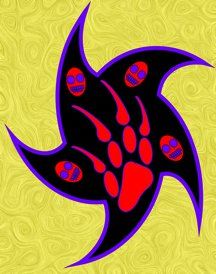
Next to images of Hesha Vira's Face, the next most common bestowal is an actual, or a reproduction of, a Suvuka talon. Another is the Suvuka Emblem, symbolizing the ancient enemy/faithful companion who becomes the agent of death for the Foremost Ones.
Inside a poisonous five-point star, the familiar paw and talon print is seen, surrounded by four skulls of the same coloration. This image is also associated with The Killing Swath, designed during The Interim.
With the first Koru Majastas, this emblem became associated with Hesha Vira, alluding to her role in keeping theLiving System awake via her influence over the Suvuka during their seven-hundred-year reign between the epochs. This period is primarily known by its Koru appellation, The Interim. Beyond these images, well-known animals of prey, usually wearing Hesha Vira's Face, are also common bestowals. These images are traditionally painted, or real blood is splashed on them. Brangnam Plague and Jimin Plague represent the chaos and malice of Hesha Vira’s Raw Life domain.
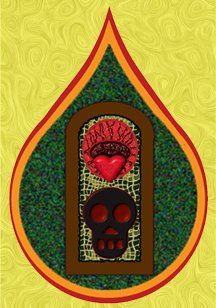
Northern Court Station
Hesha Vira and Sukakap attend Muramal in the Majastas Danam Yelda directional placement at the Northern Station. Hesha Vira dominates this station when raw life impinges on the order and harmony of the Living System or life on the Skin of Anu.
Foremost Wheel Day (55)
Foremost Wheel Day (55), in Month Four, Ingeen - the Wheel, is Hesha Vira's Festival. She is the second Face after Kava-Kura and is associated with the Cluster Virtue of Kindness.
Neferdush
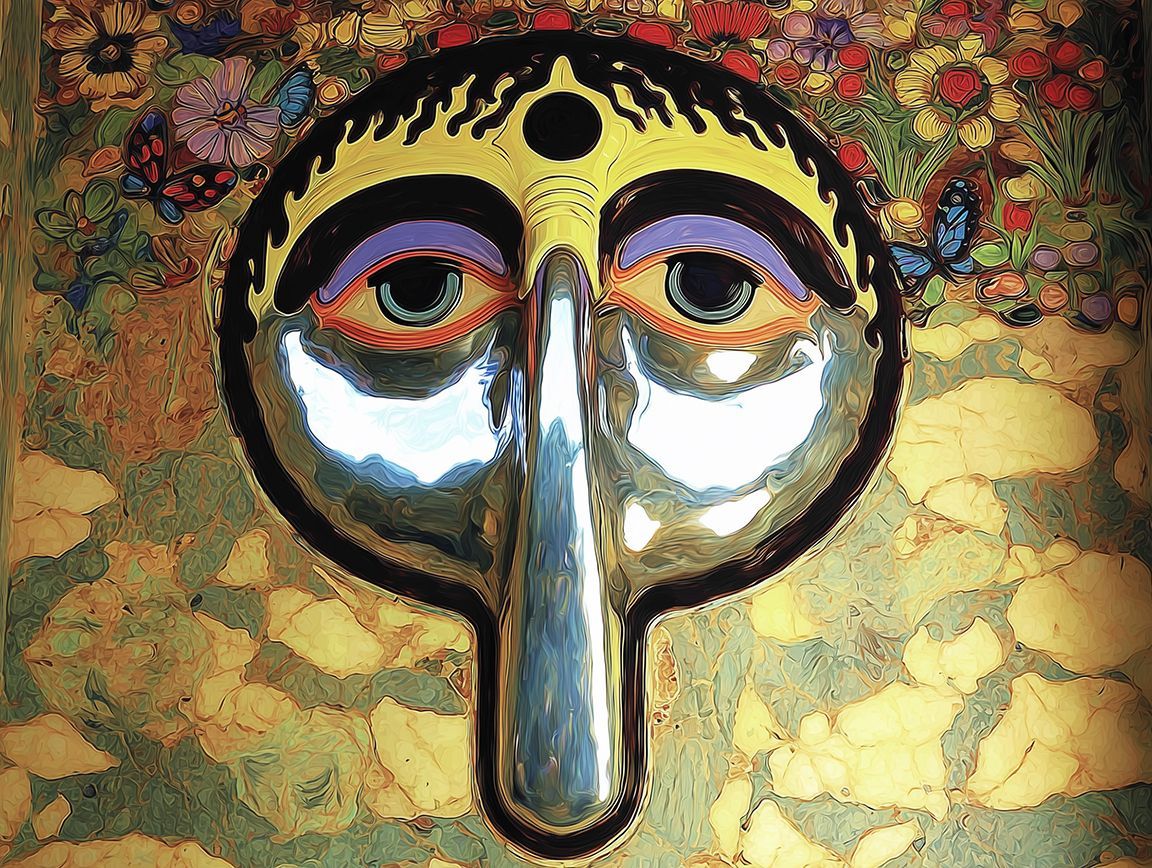
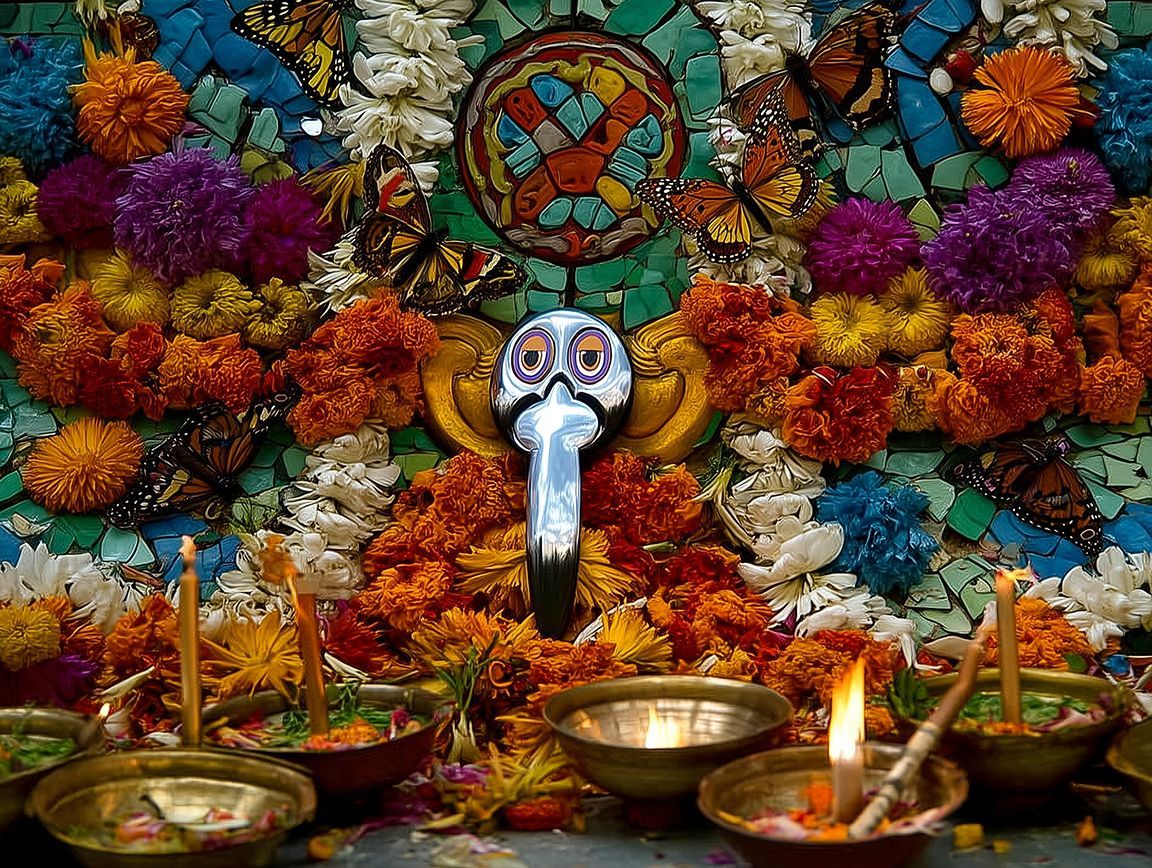
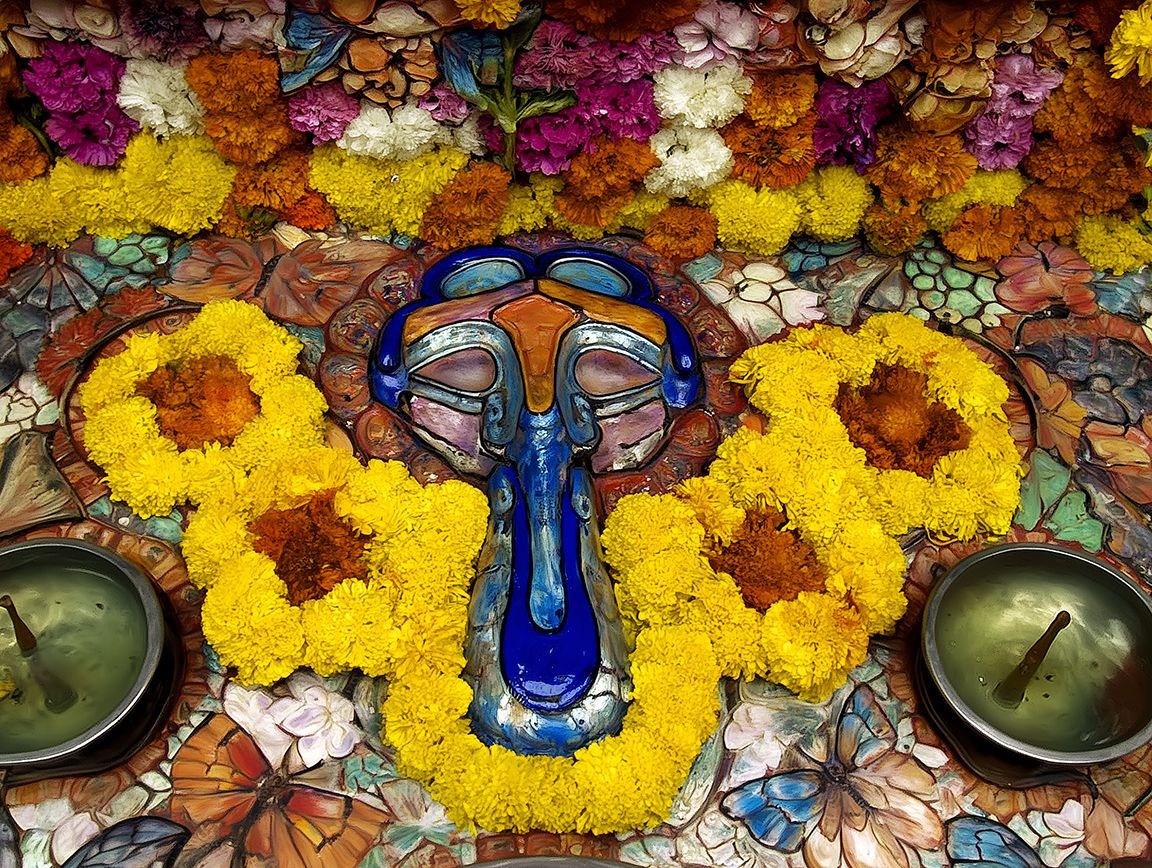
The sixth Principal Face of the Tatchlan System is named Neferdush, the ‘Face of Perception.’ This is symbolized by her enormous nose that hangs far below her chin. Invocates summon her Secondary Faces to discern subtle patterns often beneath the common perception of things, and to follow near-invisible trails to the location of delightfully new or rogue elements.
Face of Perception
Neferdush is the Face of Perception. She can sense living patterns, both universal and specific. Her Face is round, and she has large eyes. Her strange flesh is smooth silver, reflecting whatever is before her. Her nose is enormous and grows downward far below her. She has no mouth beneath it and lives on aroma alone. Broad purple swaths followed by blue and orange ring her eyes.
Neferdush Face Dancer Costume
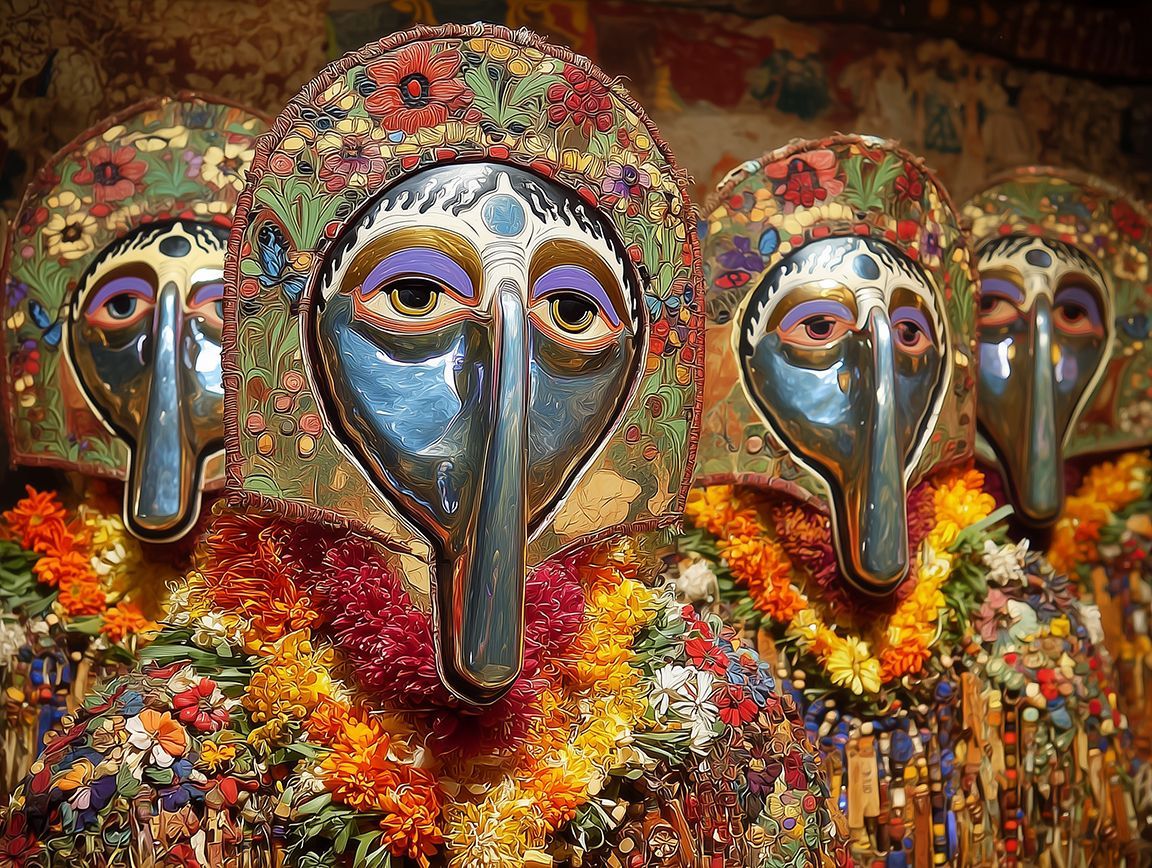
The Neferdush Festival takes place on Wellbeing Wheel Day (66), in Month Four, Ingeen - the Wheel. This image shows her Face Dancers, surrounded by rich aromas appropriate to the Face of Perception, known for her pronounced nose. This is a rare occasion when Lapis Betweens are called upon to become Face Dancers for this festival.
Neferdush Servants often wear elaborate costumes below the traditional mask, with her shining silver skin and long nose, composed of hundreds of small items or symbols of larger ones, for a wide variety of uses. If their bodies show at all, they are painted silver. These are sewn together on a silver suit without regard for their incongruity next to each other. Often, many items hang down from the underside of their arms. A variation includes costumes composed of letters of every size, style and colour covering the dancer's body. Admiration and humour greet these varied creations. Many items bounce and clang as the performers move, adding to their animated presentation. This is one of the few public events that Lapis Betweens participate in large numbers.
Neferdush Bestowals
Those representing the Face of Perception give miniature versions of her Face featuring long noses with flaring nostrils. They may also present variations of these augmented by imagery from the second Cluster Virtue of Comfort.
Eastern Court Station
Neferdush and Hashahanu attend to the beloved Kava-Kura in the Danam Yelda eastern orientation placement within the Majastas Court. Naprahath is named for the disclosure of valuable insights or new information.
Wellbeing Wheel Day (66)
Wellbeing Wheel Day (66), in Month Four, Ingeen - the Wheel, is Neferdush's Festival. She is the first Face associated with the second of the Four Virtues - Comfort.
Muramal
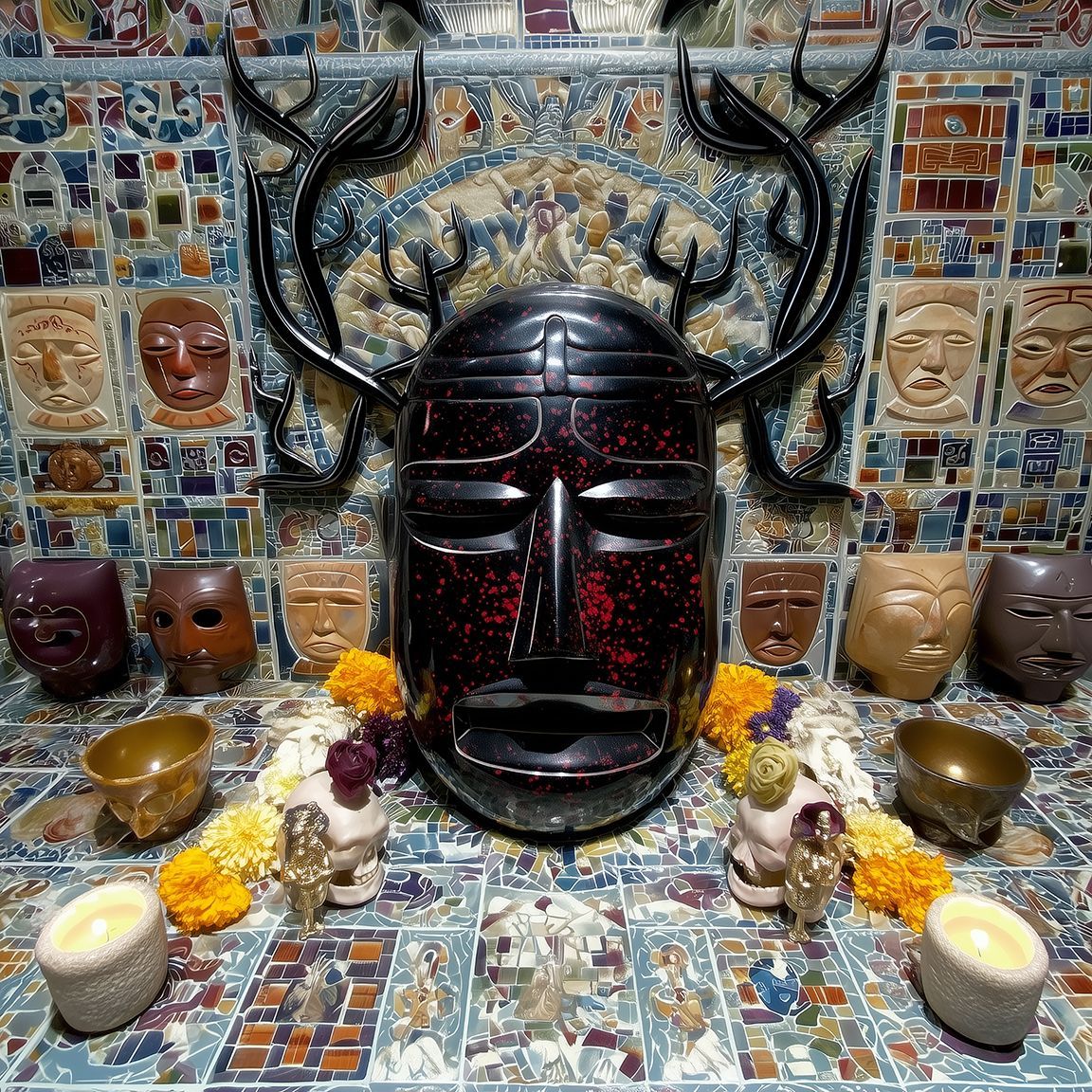
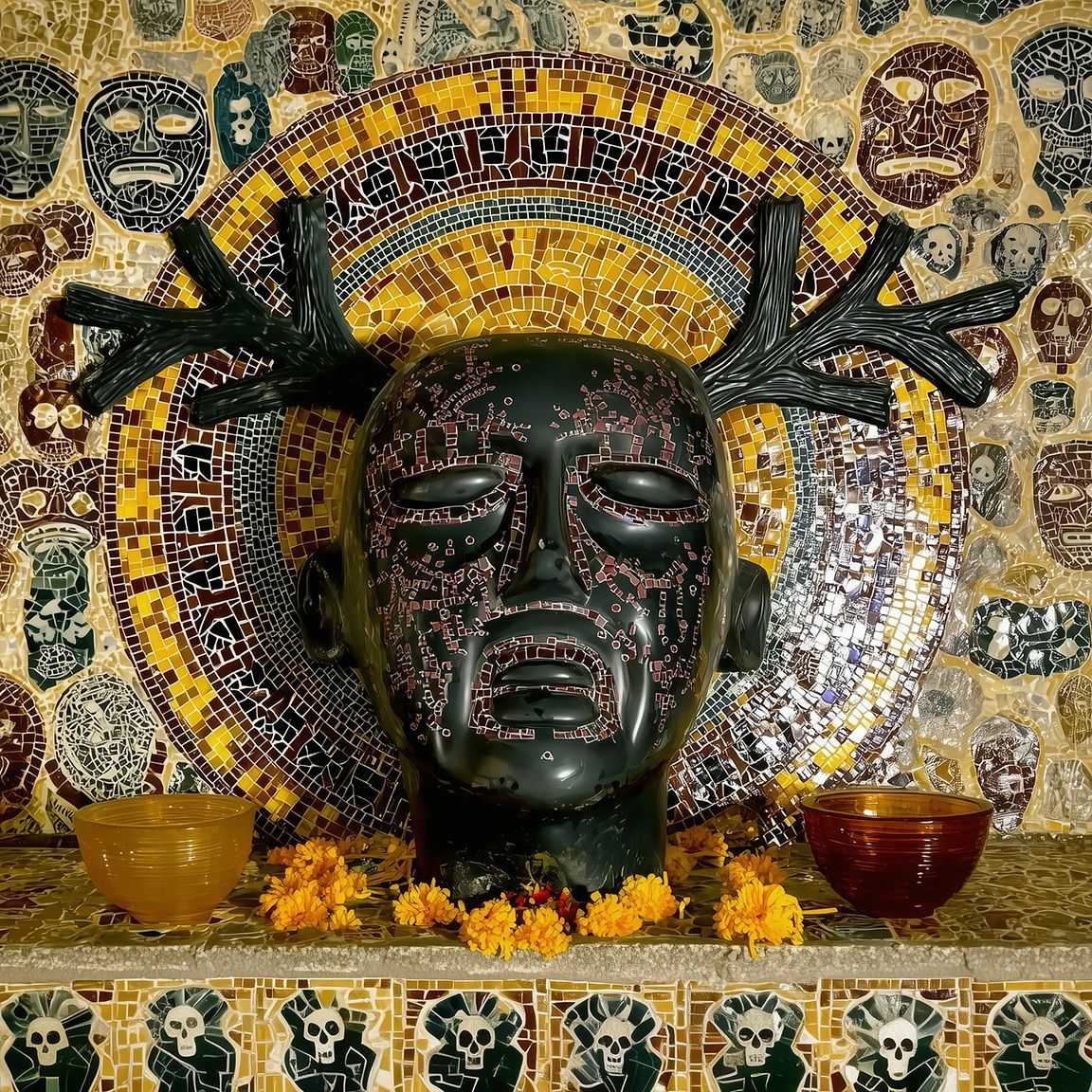
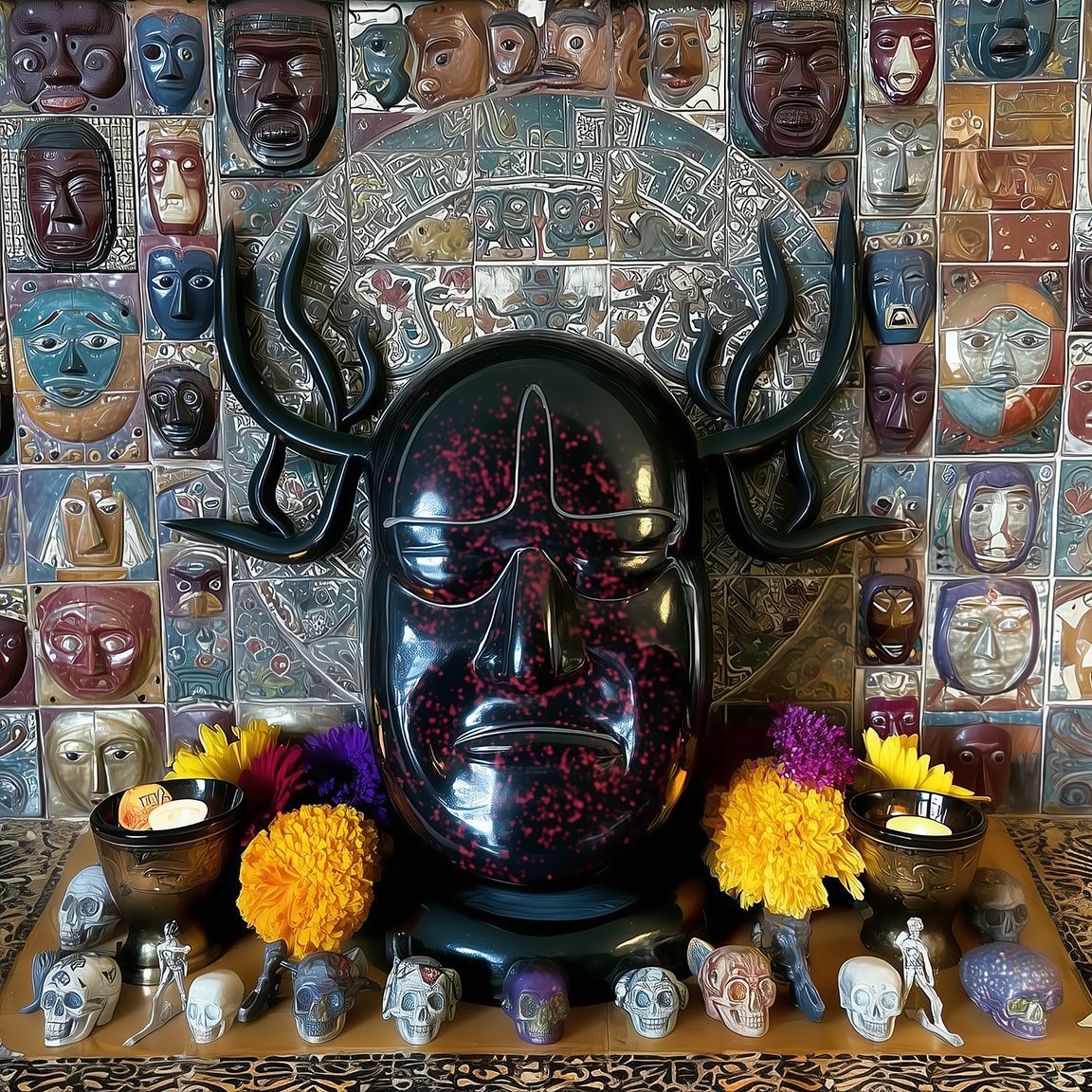
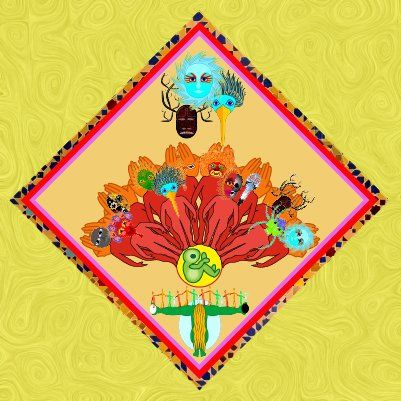
The seventh Principal Face of Tatchlan, Muramal, is named ‘He who conducts to trouble.’ His Secondary Faces are called upon to guide Invocates and Operants to the source of any disturbance within Tatchlan. When the Majastas dons the Principal Face, it is to undertake difficult work or to make a sombre pronouncement. On the Skin of Anu, he is also associated with reversals or loss. He may visit the dreams of the bereaved, and it is common for those suffering some privation or in mourning to seek out his House outside their local Ablution Academy and to quietly, or with profound laments, to regale him with their woes. This is believed to feed him, as adulation feeds most of the other Faces.
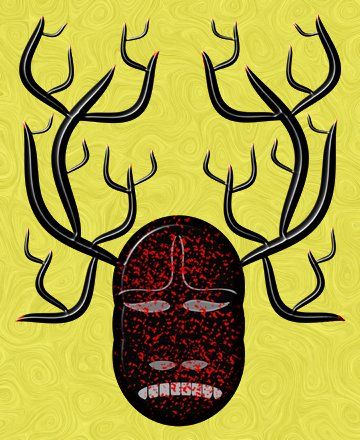
He who conducts to trouble
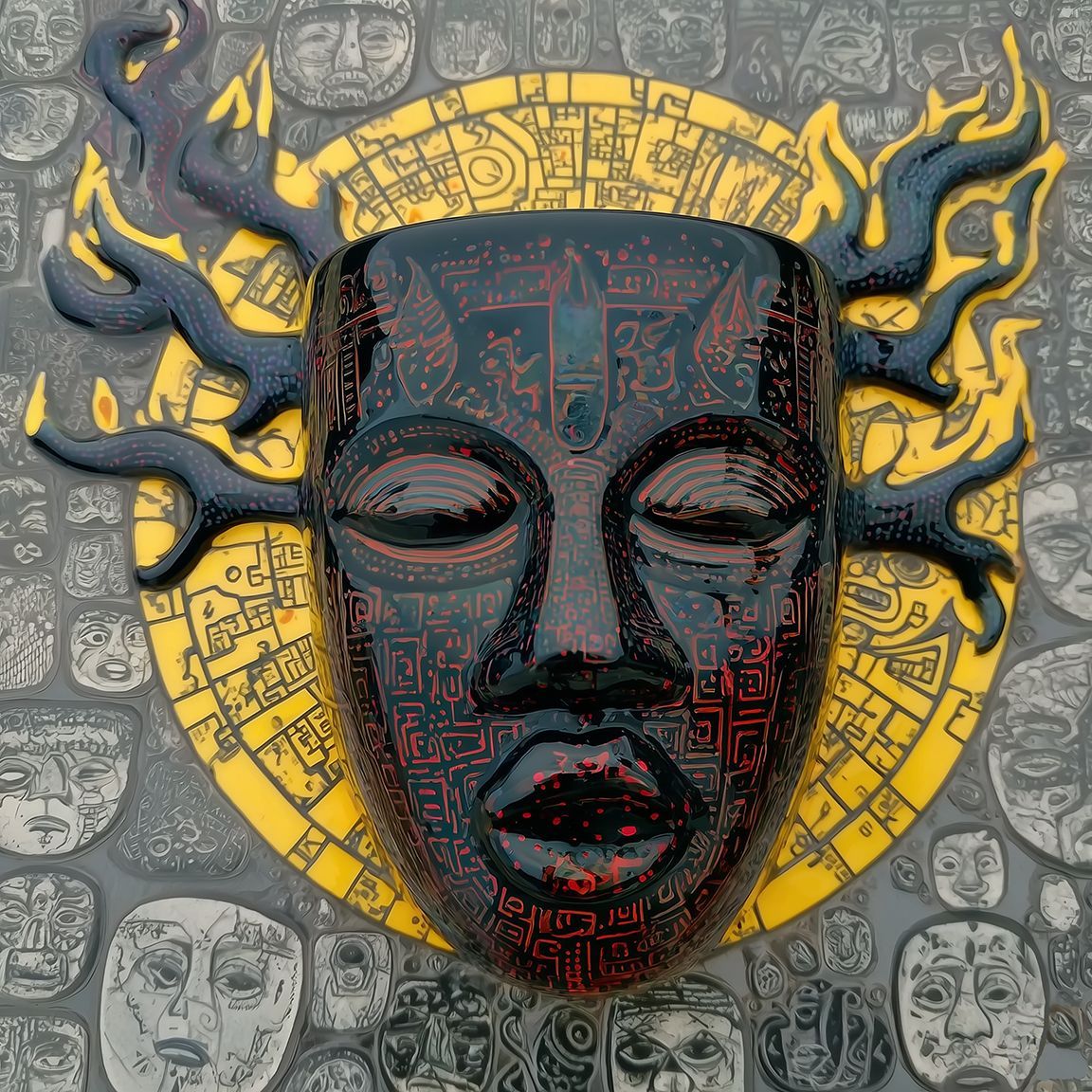
Unlike all others, his Face has tight-shut eyes. A series of black branching antlers spread from the side and above, ending in thirty-two blood-red points. His face is splattered with dark red spots.
His expression and state have to lead to the expression, ‘execution face.' It is as if he just witnessed a slaughter and is sprayed by the results. His Secondary Faces answer to Invocates for various troubling or painful tasks, such as notable deviations in the courses of The Common Desire. More often, they serve as guides to Invocates dispatched to ameliorate or dispose of Anomalies. This second task is generally unknown to the public but forms the bulk of Principal Face’s work. These Secondary Faces are also known to appear in the dreams of the bereaved. His name is often evoked in perilous times or as an exclamation of disgust.
Muramal Face Dancer Costume
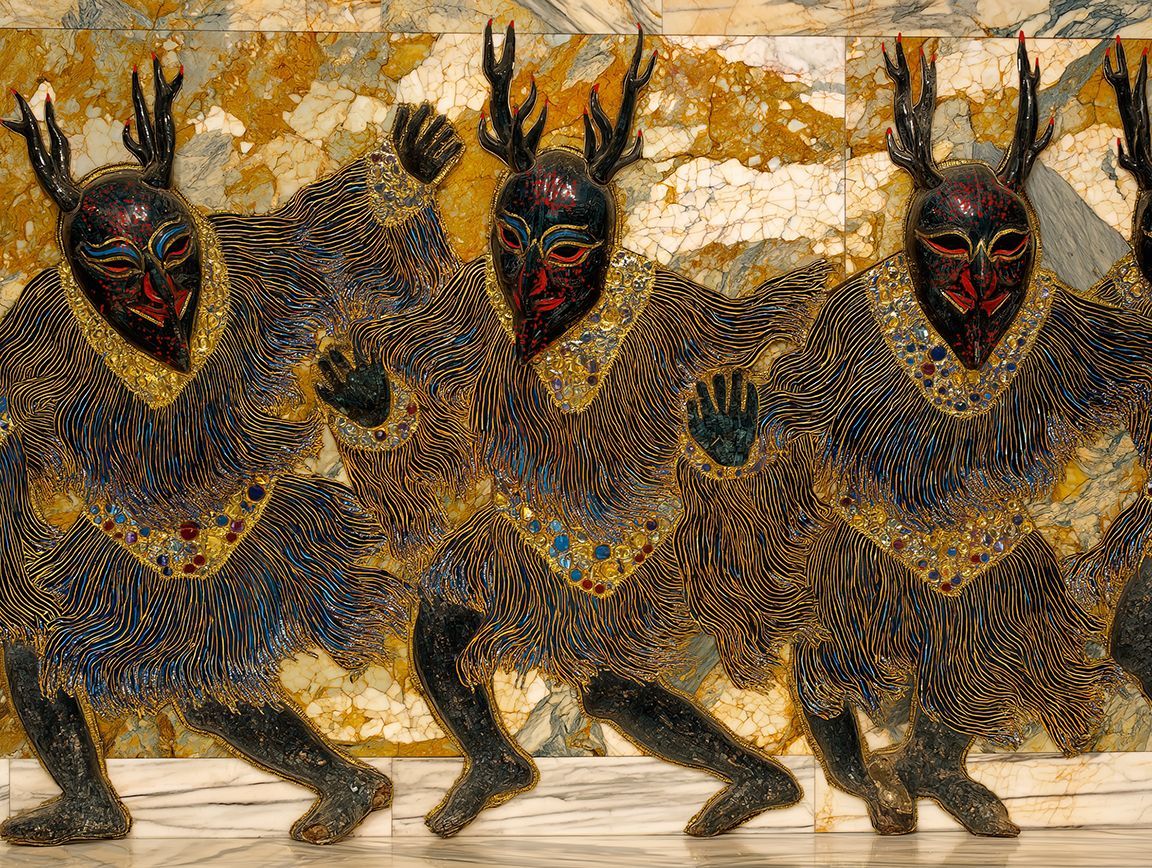
The Muramal Festival takes place on Maja Mask Day (77), in Month Five, Berat—the Mask. This image shows his Face Dancers, reproducing movements purportedly made by his Secondary Faces to Invocates, to draw their attention to an issue within the Living System. This is one of the only times celebrants see Ochre Betweens in numbers. The women who live as men primarily attend this event to honour Muramal.
During his festival and at other times, those serving Muramal during dramas wear his Face, and a frame of black hair hanging down to his boots festooned with oval mirrors. Face Dancers at this festival are either males or Betweens whose male aspect predominates. This is one of the few times participants will see many Ochre Betweens in numerical form. The women who live as men primarily attend this event to honour Muramal. (The following Face Day of Gavaduru is where the Ochre Betweens, who are men living the life of women, will be present). Muramal Face Dancer’s costume often has a curving red tail with a long mirror attached to the tip. During his dance, he often stops before the crowd so they may catch a glimpse of their Face reflected in his body. He also wears a series of bells unique to him, which produce a sharp, dark tone when they chime during his dances.
Muramal Bestowals
Along with tiny versions of Muramal's Face, bestowals may include images of skulls, often painted in diverse colours and decorated with ornamental or symbolic items. These skulls may be alone or part of a linked circle of eight sets. They range from painted a simple black to brightly coloured with intricate designs. The distribution of figures of eight linked skeletons is common. These groups are often arranged in amusing poses and may be engaged in various occupations. Their message: life is brief. Misfortune may strike at any time. There are occasions when these skulls have moveable jaws, often containing powerful medicines inside the mouth wrapped in a cloth covered in the icons of the agents in the packet.
Northern Court Station
Muramal fills this station, attended to by Sukakap and Hesha Vira. When there is disruption, grief or terror, then Muramal is displayed. This station will present a unique symbol, that of the Burning Blossom when this event is imminent or occurring. At such times, along with the Burning Blossom symbol, Sukakap and Muramal may take subservient roles in attending to it.
The single exception to this rule is on the occasion of a Burning Blossom when all Tatchlan Faces are removed. An image of the Blossom dominates the station.
Maja Mask Day (77)
Maja Mask Day (77), in Month Five, Berat—the Mask is Muramal's Festival. Dark clothing and forbidding masks dominate. His preferred offerings—dismay and sorrow. He is the second Face associated with Openness, and the third of the four Cluster Virtues. The first is Vashivonos, and the third Gavaduru. Principle Faces Muramal and Sukakap is often seen working in concert, as the one truth of death is often linked to disharmony and calamity.
Gavaduru
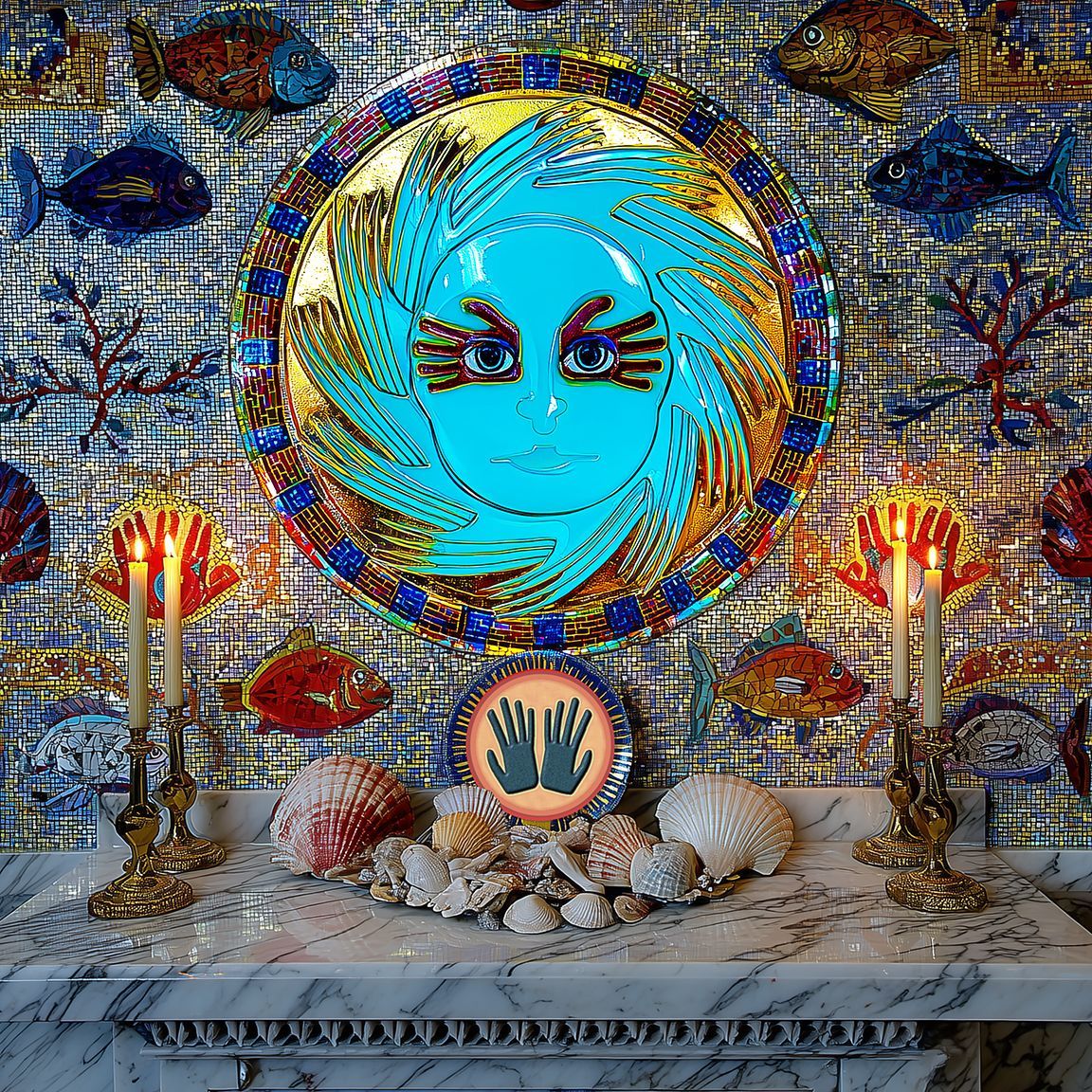
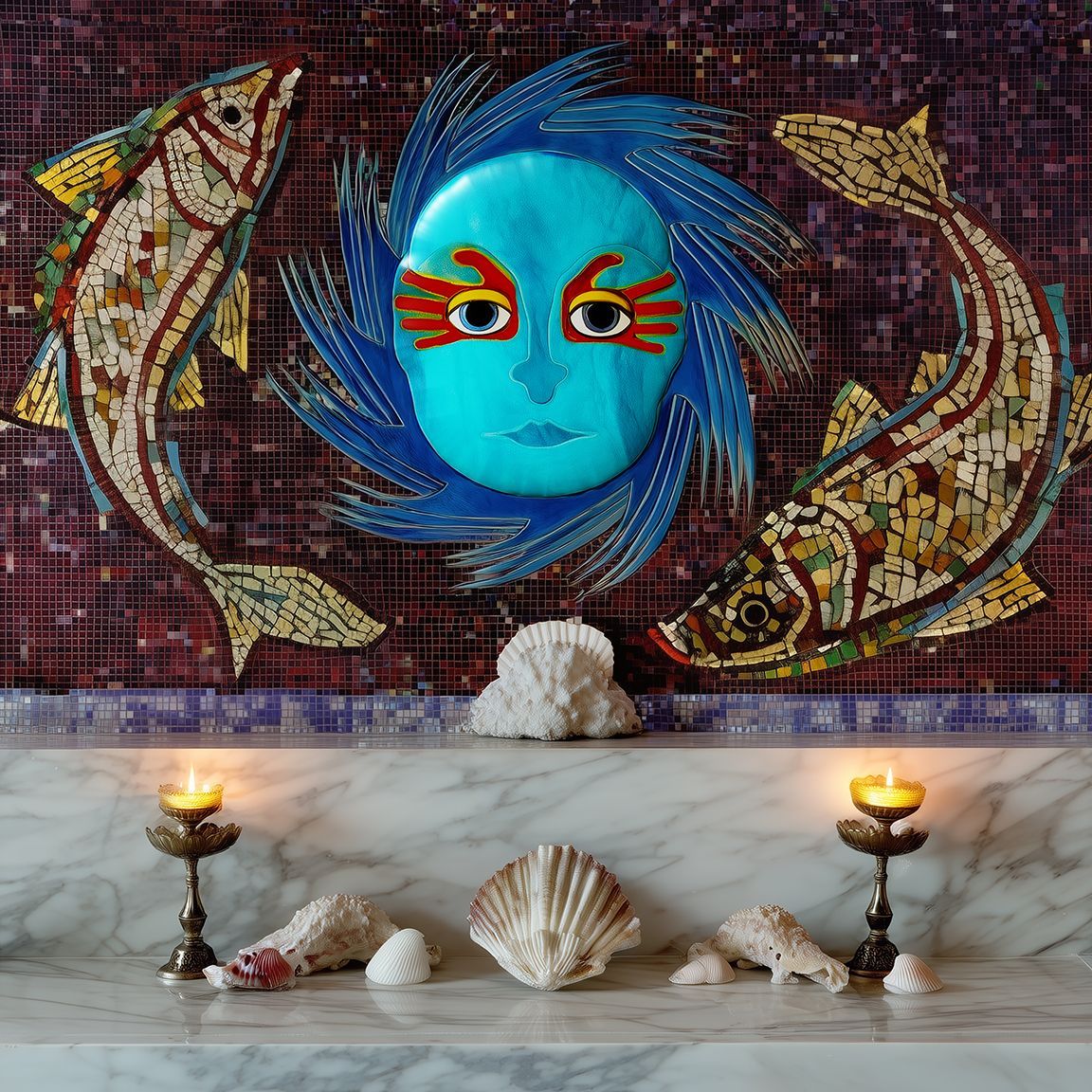
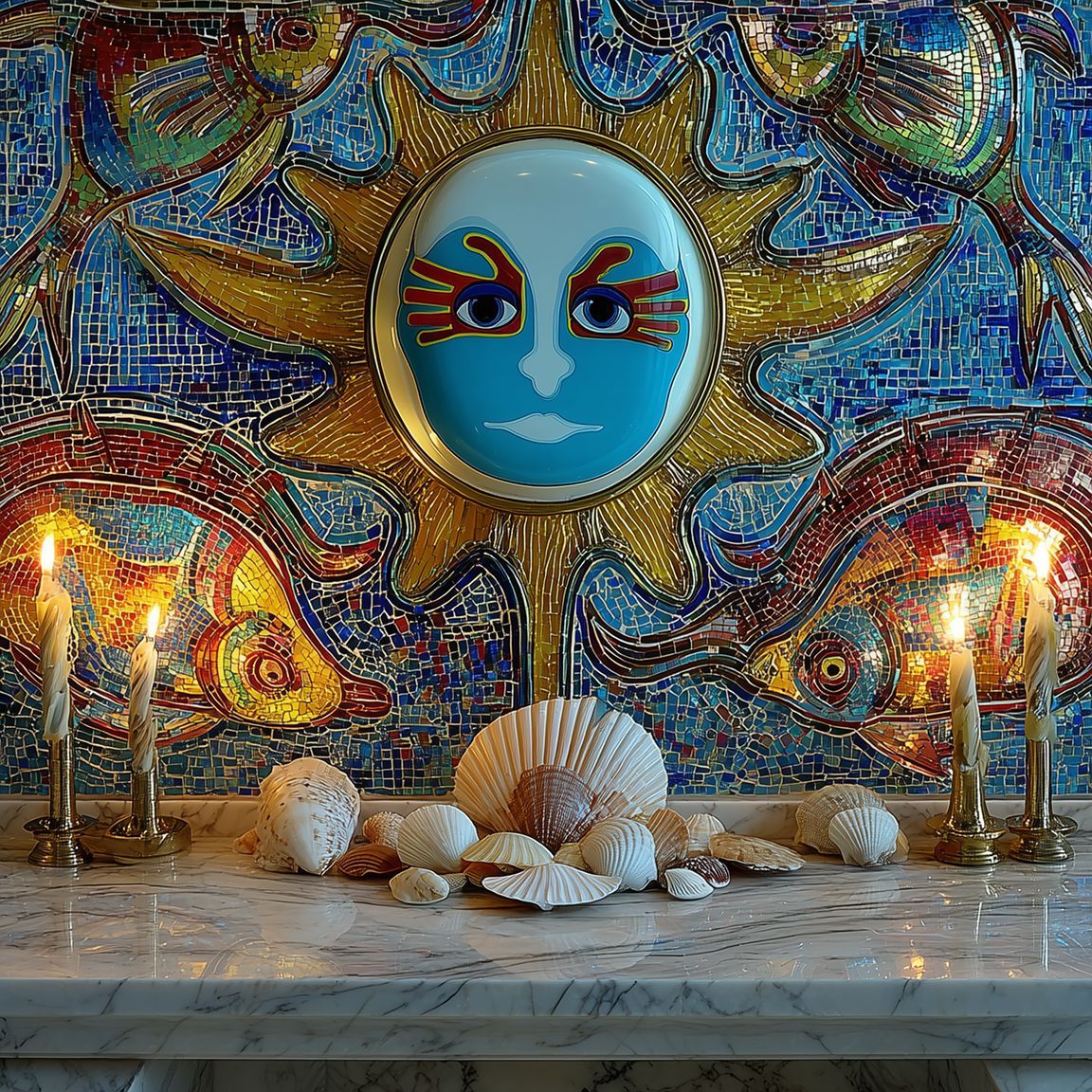
The eighth Face of the Tatchlan System is named Gavaduru, the Face of Protection, Dignity and Honour. Her eye-hand image links her to the Touched. She is among the most beloved of the Faces for her placid presence, and there is a long tradition of Masters, Invocates and Operants noting her Secondary Faces seeming to dwell in serene depths. Along with her brother Muramal, she has often visited the general common's dreams, always as a peaceful assurance. This has led to her image being associated with ‘the unknowable ocean,’ hence the abundance of sea creatures and shell offerings found in her shrines.
Protection, Dignity and Honour
Gavaduru is called upon in several capacities. She is the Face of Protection and embodies Dignity and Honour.
Her Face is shimmering blue, with each of her dark eyes set in a red hand outlined in yellow, facing outward from her nose. This outline may be a narrow band or appear as small flames or other patterns. Her eye-hand Face is, in part, a reference to a most-ancient image of the Touched. Hand images are also universal symbols of uses of all kinds, and the open hand is associated with ‘readiness.' Her light blue hair surrounds her Face, in constant motion as if a series of waves were approaching the shore.
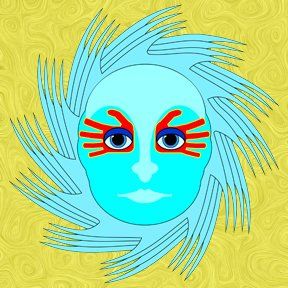
Gavaduru Face Dancer Costume
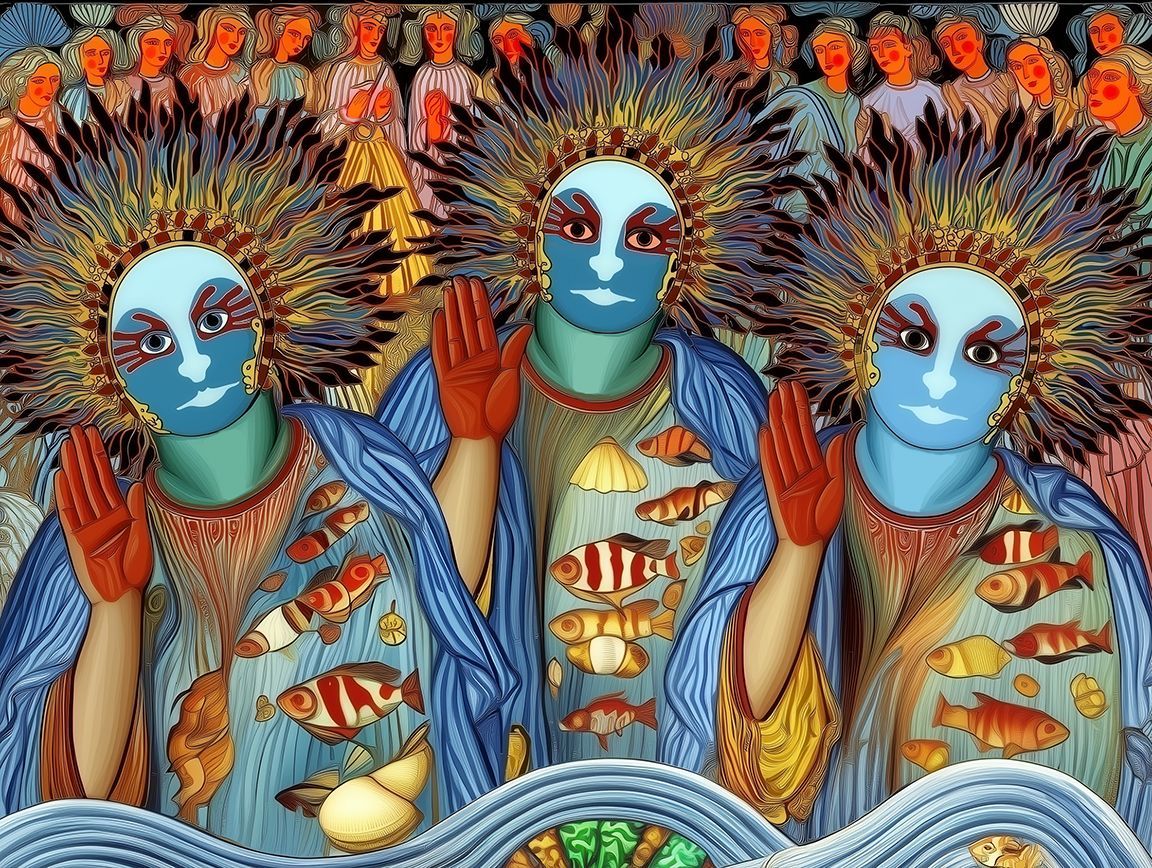
The Gavaduru Festival takes place on Interlacing Mask Day (88), in Month Five - Beret - the Mask. This image shows her Face Dancers performing a single gesture within a larger set of synchronized movements as part of their adulation of the Face of Protection, Dignity and Honour. This is the second time celebrants will see Ochre Betweens in numbers. In this event, the men who firmly live as women paint themselves blue in honour of Gavaduru.
Those serving the Face of Honour, Dignity and Protection wear something approaching a military uniform and are painted or otherwise decorated with representations of blue waters. The red hand with a white eye in its palm is always a prominent feature. It is customary for participants to paint their palms red and press them over each other's Faces and eyes, with their fingers pointing to their ears, to achieve the desired effect. If they wear uniforms, they often display fanciful medals as recognizable events or general emblems of the Face's attributes. The symbolic badges of her areas of concern appear on the watery costumes, often mixed with depictions of sea life, particularly shelled creatures. This is the second time the Ochre Betweens are present in numbers at a festival. In this event, the men who firmly live as women paint themselves blue in honour of Gavaduru.
Gavaduru Bestowals
Along with presenting her Face, dancers give out red hands with white eyes filling the palms. They also present badges of honour and use, often in the form of seashells. These badges and shells usually also display Gavaduru's eye-in-hand symbol.
Western Court Station
The Face of Gavaduru and the Face of Vashivonos and Humma may be found at the Danam Yelda's western orientation placement within the Majastas Court. The Western Gate is the Gate of Uses within the original Field Yelda cluster compounds.
Interlacing Mask Day (88)
Interlacing Mask Day (88), in Month Five - Beret - the Mask, is Gavaduru's Festival. She is the first Face of Tatchlan connected to the Circle Virtue of Openness.
Kava-Kura
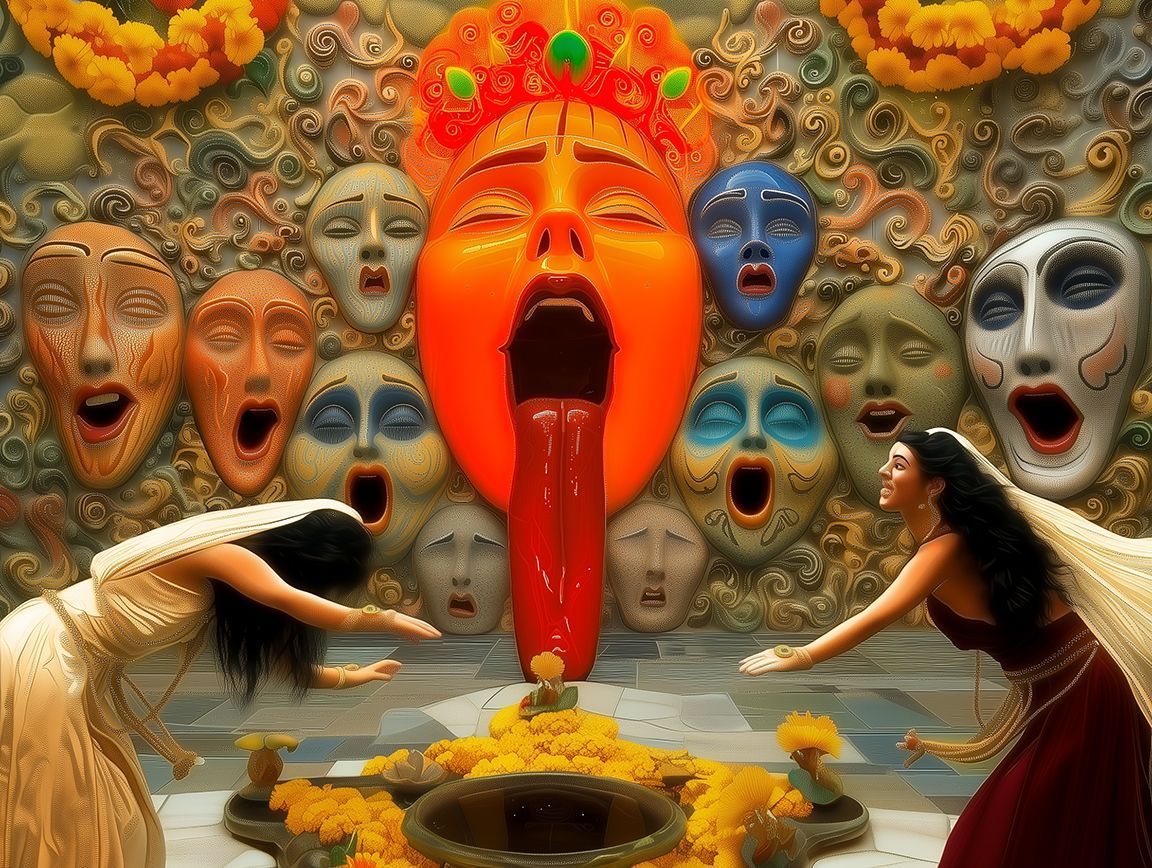
There are more images of the ninth Face of the Tatchlan System, Kava-Kura, the ‘Face of Vital Delight,’ than any other. Beyond her Face Shrines attached to most Ablution Academies, there are countless others in all Mantle Establishments, with most being in Fertility Sanctuaries and Benevolence Bowers. She and her sister Face Naprahath, compose the icon of the Danam-Yeldic Wellbeing Ministry, and her image is widely used within the ministry's Pacifier Bureau. She represents the sweetest Face of Tatchlan, the fulfillment of the promise of a life free of Self-Absorption. The sculptural and other installation programmes around her also tend to be the most elaborate of any Face. While Fertility Dances and other ecstatic events are common sights before her, she is most loved for imparting peace and contentment. Her enormous tongue is far more than a symbol of delight. It is a binding agent for all Twelve Principal Faces. This is best illustrated in the ‘Twelve Faces in the Spoke Formation.’
The Face of Vital Delight
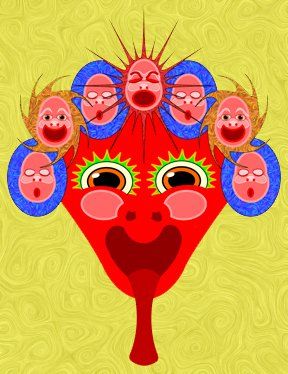
Kava-Kura is the Face of Vital Delight. This Face also manifests as a Complete. Shehe oversees every manifestation of joy and contentment within the Resplendent Work.
Herhis crimson Face is broad with a pronounced open mouth, often a long tongue hanging out and far below the chin. Instead of hair, shehe wears a crown of smaller faces. The size, number, and actions of these figures change with the Invocant's requests, but most often they are the ancient symbols of anticipation, fulfillment, and contentment. This constellation is another indicator of the health of the Living System, with the best arrangement having images of contentment outnumbering all others.
Kava-Kura and Life Pillars
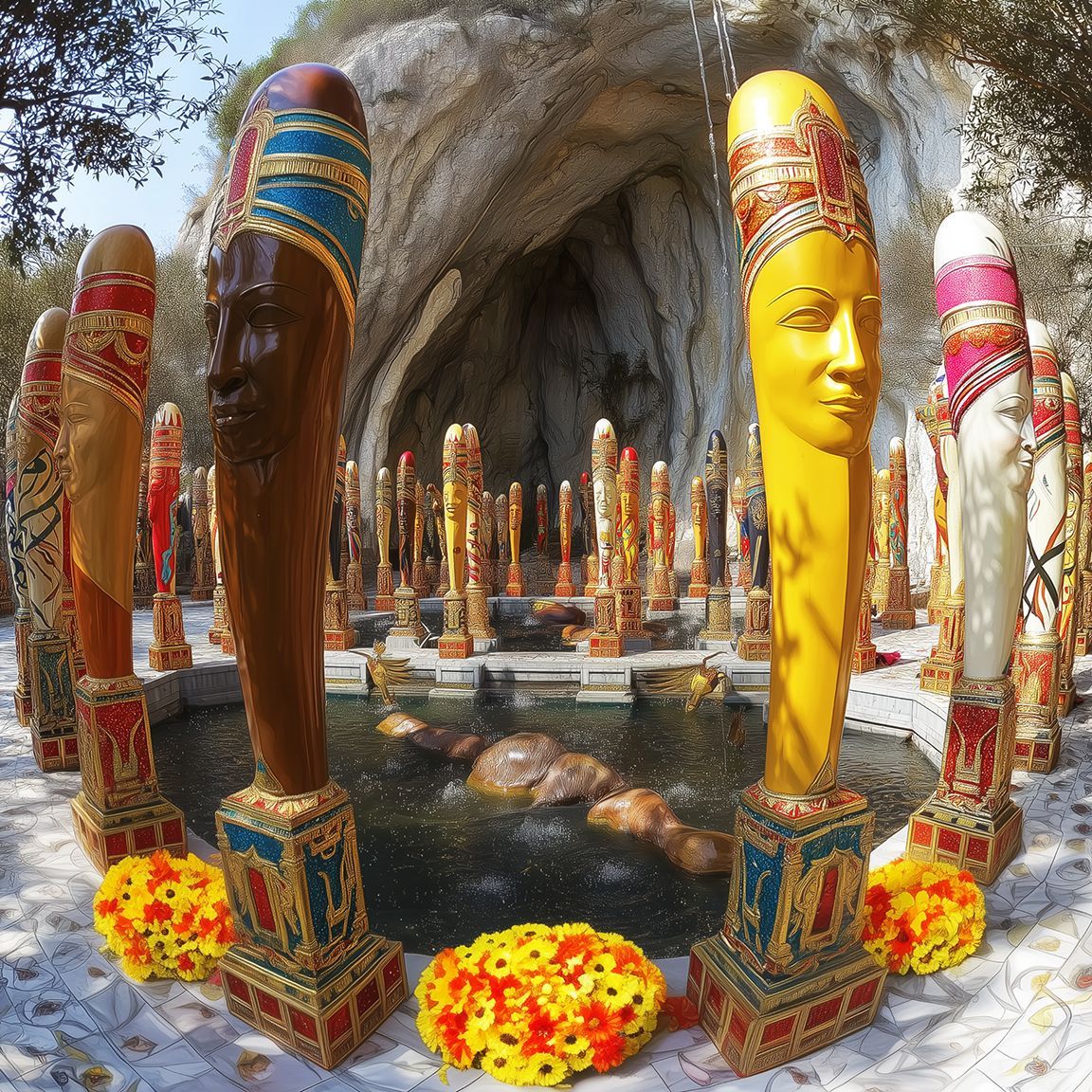
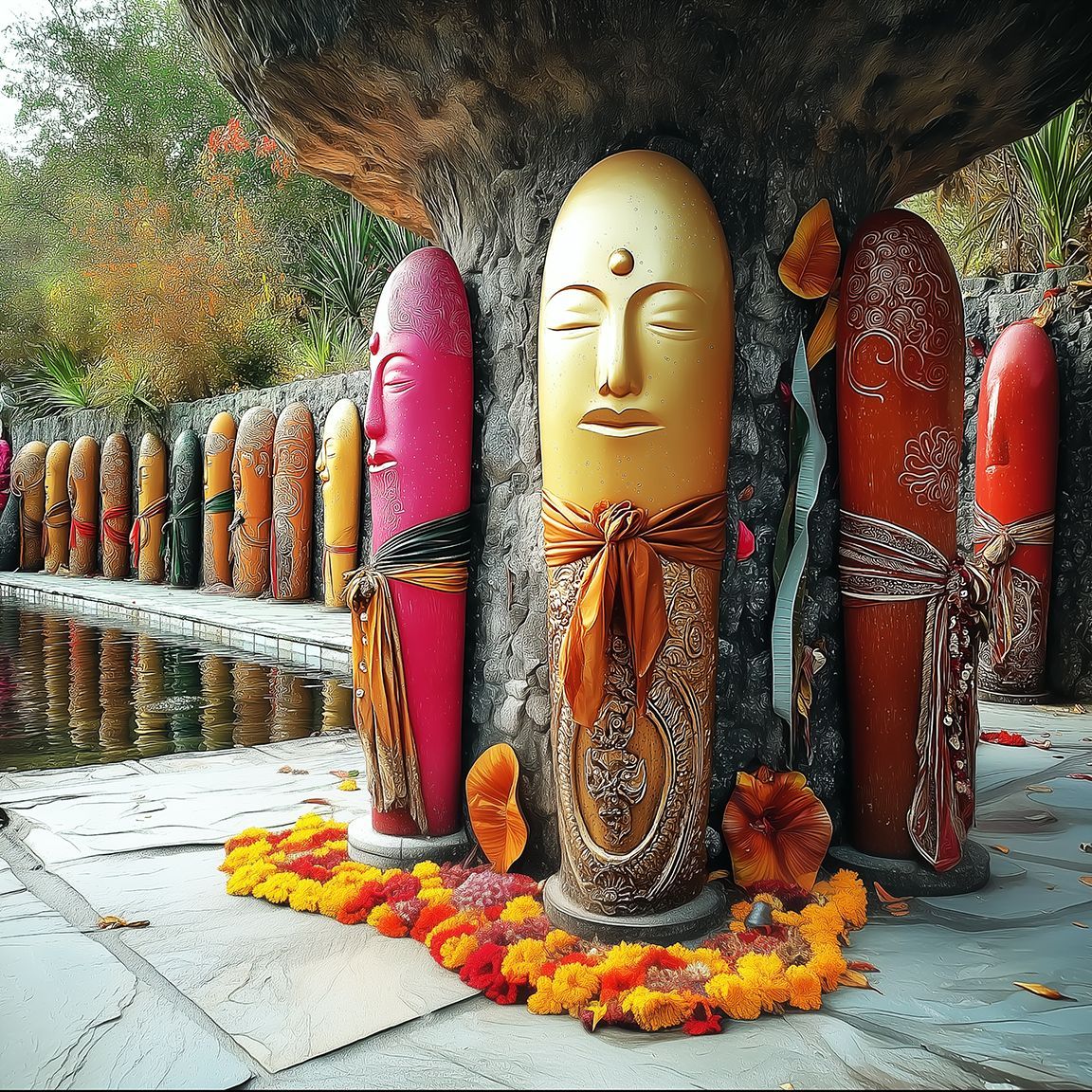
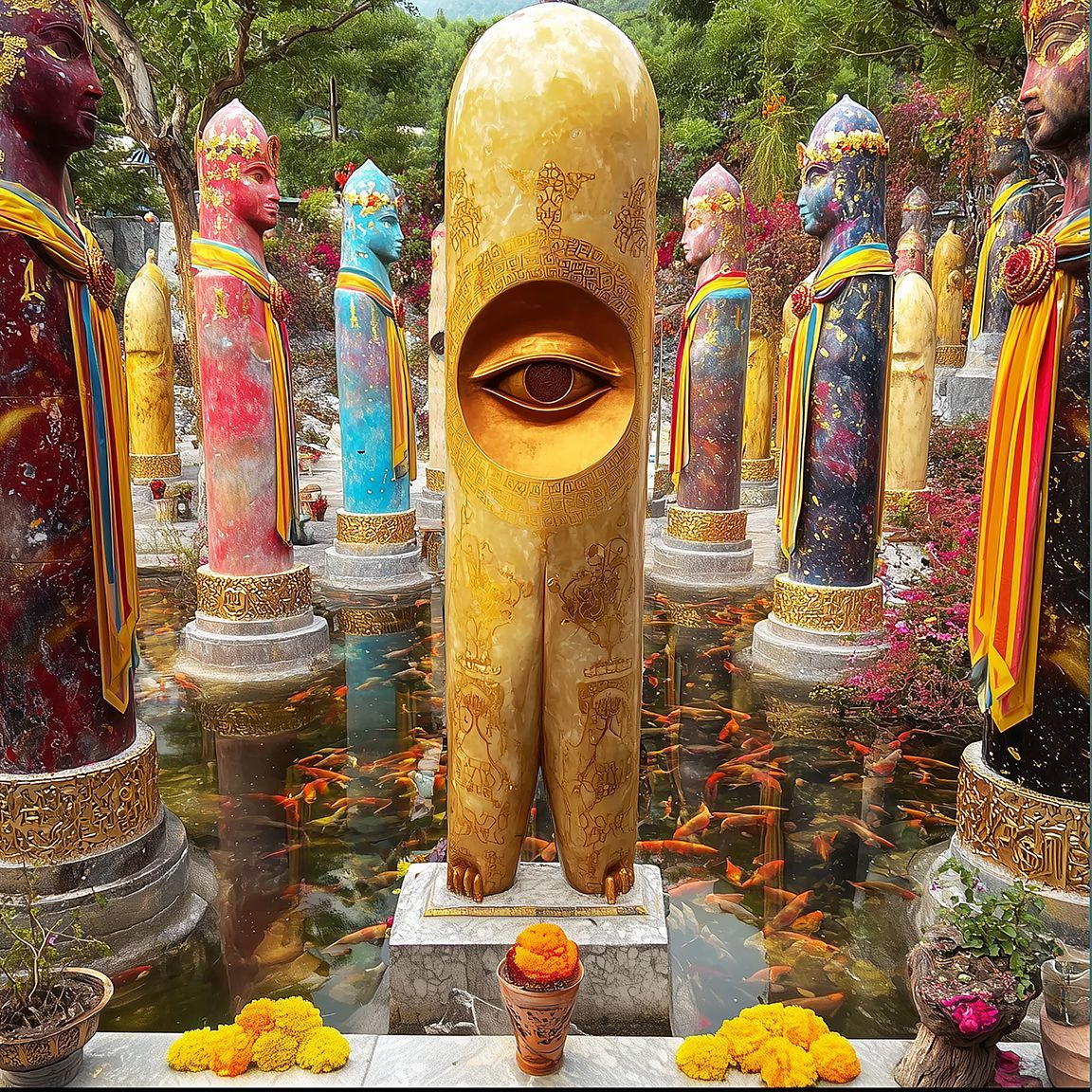
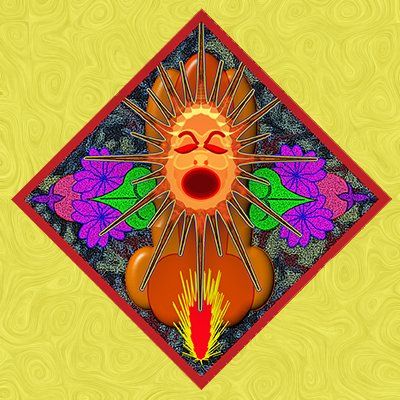
It is perhaps unsurprising that this Face of Vital Delight has a close association with the ubiquitous Life Pillar at each cluster's core. Operants and Invocates are familiar with some of her Secondary Faces forming animate Life Pillars within the Living Tatchlan System. This led to these two icons in the Primary Epoch celebrating this connection in the most-ancient version of the Wellbeing Ministry of the Tolku.
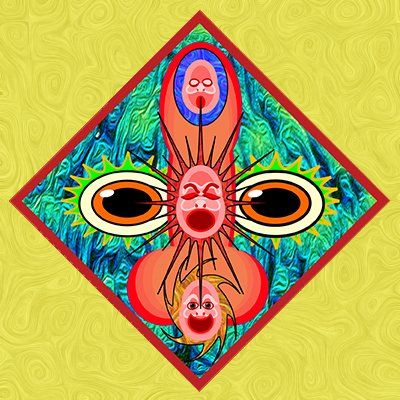
Kava-Kura Face Dancers Costume
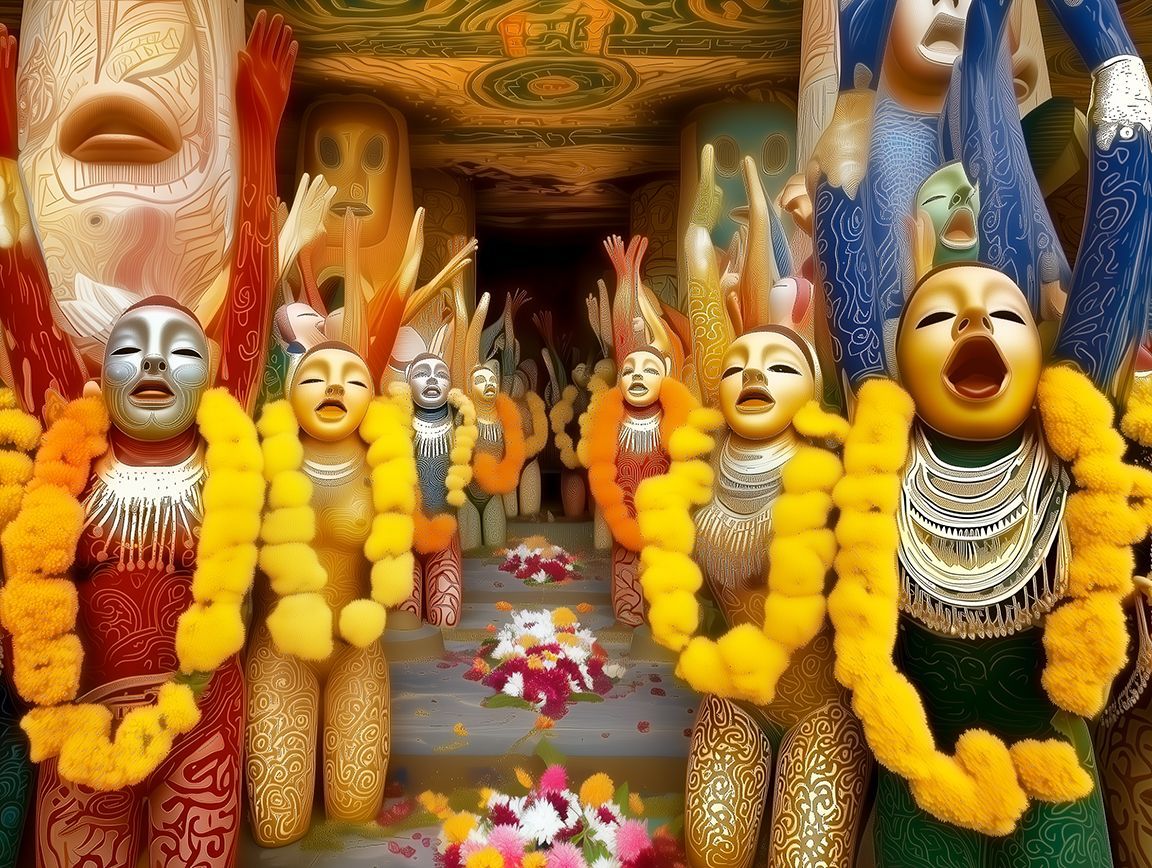
The Kava-Kura Festival takes place on Elder Candle Day (99), in Month Six - Tret - the Torch or Candle. This image shows an enthusiastic group of her Face Dancers, each wearing an icon version of her Face, at a Fertility Sanctuary. A selection of Encirclement clusters are fortunate enough to contain one or more Completes, along with Amarel, Cinnabar and Azel Betweens. These are all specifically called upon to become Face Dancers for this festival.
Female and male Face Dancers of Kava-Kura are chosen for their voluptuous temperament and form. They are always naked and usually painted two or more shades of red or other primary colours, often with an overlay of beautiful designs. If any Completes are servants for Kava-Kura Day, they lead the rest, followed by Amarel, Cinnabar and Azel Betweens. There can be a great deal of variation beyond red bodies. In happy times, they can have ancillary designs to accentuate their movement. In addition, comedic enhancements can be accompanied by jiggling dances or artful decorations used in slow acrobatic performances. Another aspect of these servants is squirting the audience with various medicines and Vision Windows, which induce mirth and passion.
Kava-Kura Bestowals
Along with bestowals of small images of her Face and individual tokens or one or all of her attending symbols, servants will give out other tokens. These include Life Pillars of every size, make and description, along with other emblems of hilarity, sexuality and joy, and small images of the famed waterfowl known as the Raiden and Raideneth, known for their changing sexes annually, their remarkable egg-laying capacity and their amusing appearance.
Eastern Court Station
Neferdush and Hashahanu are found at the Danam Yelda eastern station within the Majastas Court, attending Kava-Kura. Whether or not represented, when an announcement or ceremony occurs with all facing east, Kava-Kura is named concerning any form of delight.
Elder Candle Day (99)
Elder Candle Day (99), in Month Six - Tret - the Torch or Candle, is Kava-Kura's Festival. Kava-Kura is associated with Kindness, one of the Four Cluster Virtues. She always appears as the first of the three Faces with this Virtue.
Vashivonos
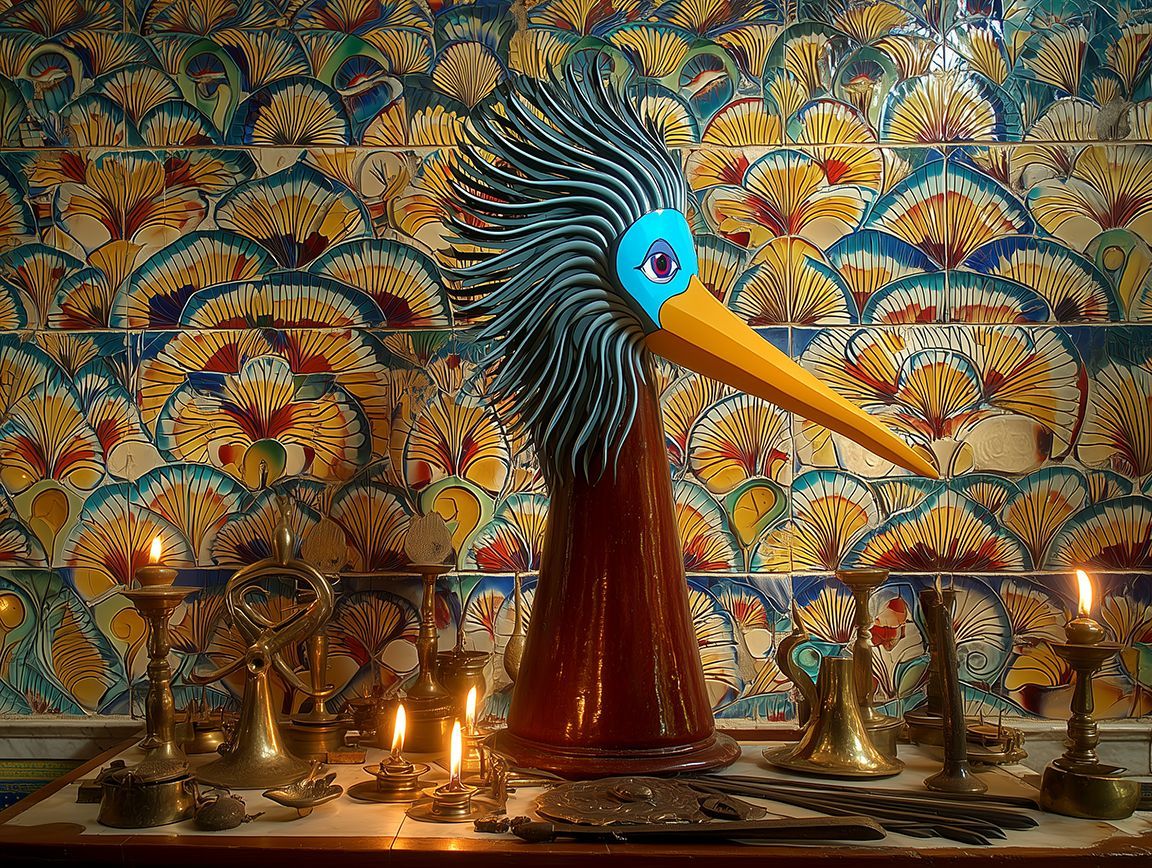
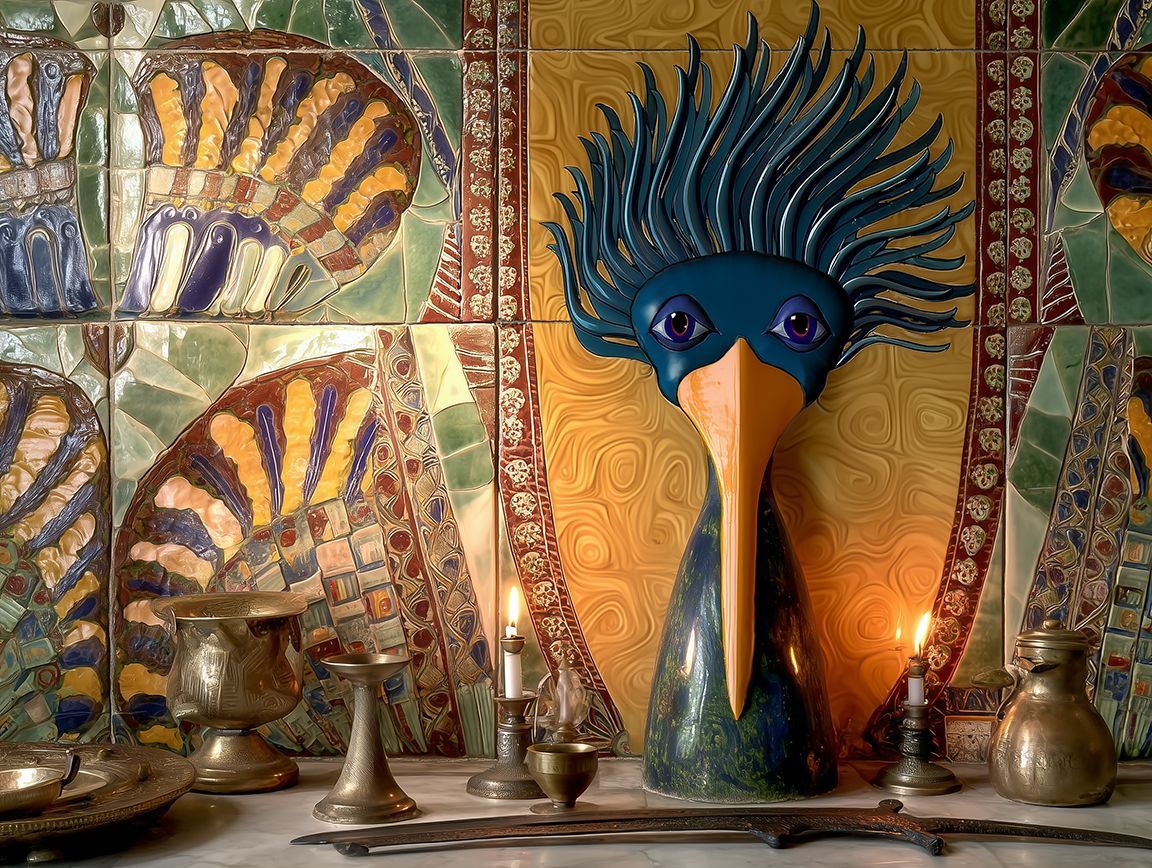
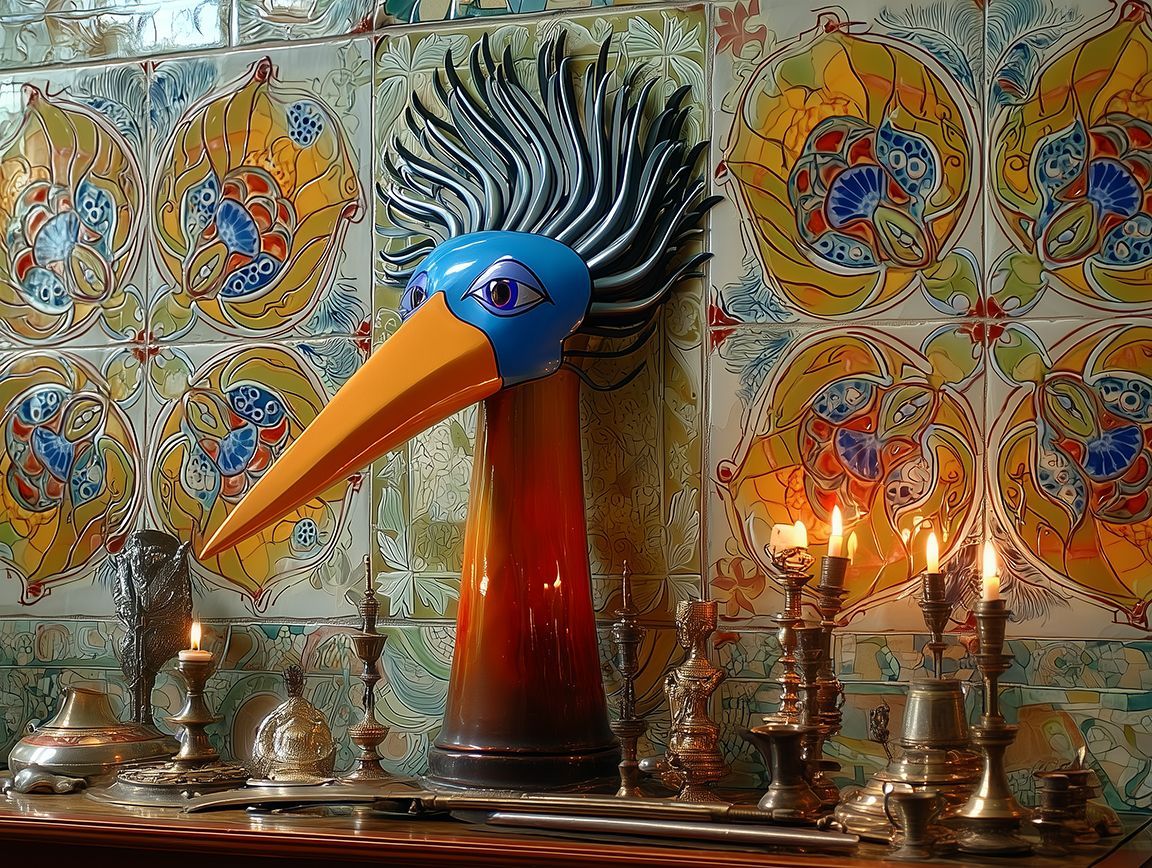
The tenth Tatchlan Principal Face is named Vashivanos, the face of ‘Grim Necessity.’ How the Uluvatu Masters settled on this manifestation remains a matter of conjecture. Invocates call upon the Secondary Faces of Vashivos when challenging work is required. On the Skin of Anu, this Face is often associated with Adjudicator Courts and Regional Magistracies, where he often joins his sister face of Sukakap, the ‘Unflinching Face of Truth.’ They do so under the supervision of the Adjudicator's Provincial, Rural and Urban Bureaus of the Chancellery Ministry. It is common for circles and representatives of two or more clusters to conclude negotiations and solemnize pacts in the local Vashivonos Shrine.
The Face of Grim Necessity
Vashivonos is the bird-like Face of Necessity. A long yellow/orange beak extends below the rest of the Face while a set of long blue feathers rises above. While his eyes are kind, he is also named the ‘Face of Grim Necessity,’ as he often witnesses difficult resolutions within the Living System.
Vashivonos Face Dancer Costume
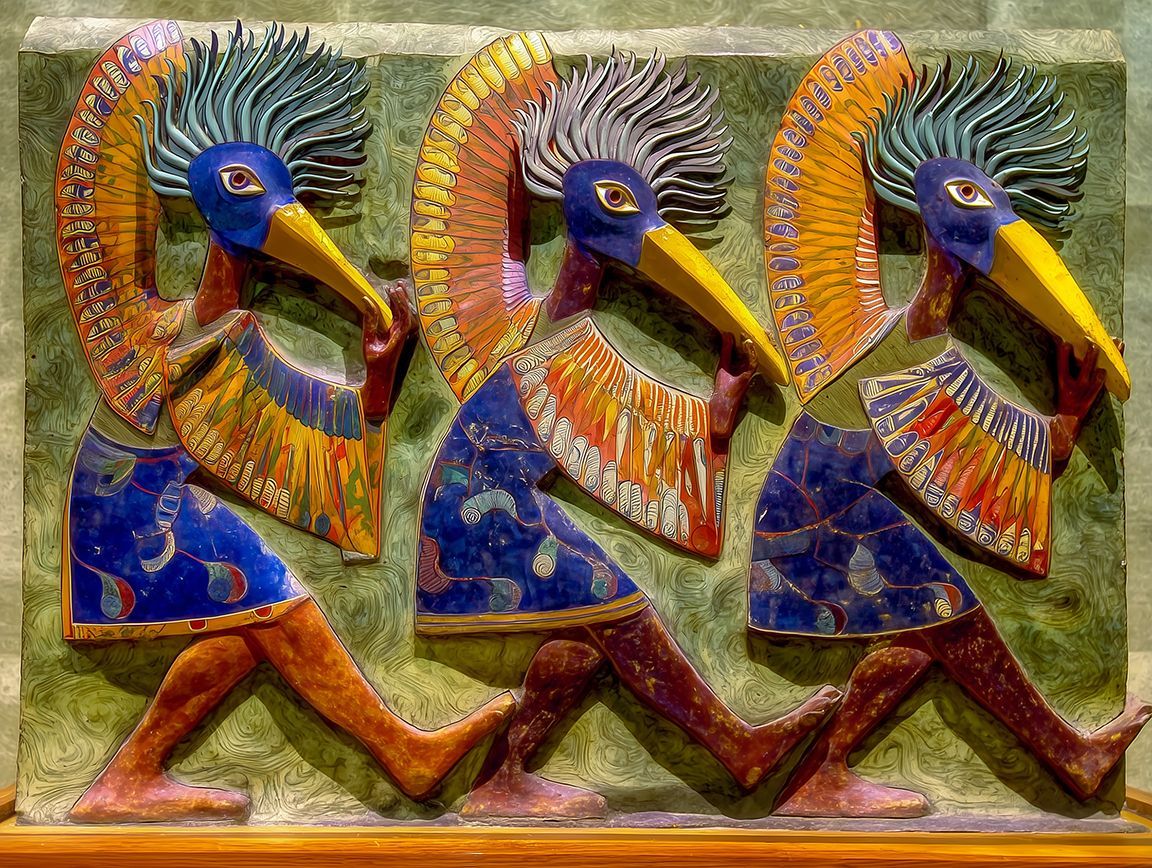
The Vashivonos Festival takes place on Danam Body Day (111), in Month Seven - Kritta - the Body. This fine Ablution Academy rendering shows three of his Face Dancers during their distinctive festival dance. While all Betweens are welcome to participate, Azel Betweens are specifically called upon to become Face Dancers for this festival.
Face Dancers are distinguished by a pair of wings arching outward beyond the long, curving horns of the mask and ending high over their heads. The feathers are yellow with blue tips and red outlines around the upper sides. The rest of the costume may vary widely, although feathers painted or worn are common. Azel Betweens take a leadership position in Vashivonos Face Dancer formations.
Vashivonos Bestowals
Along with tiny versions of their Faces, those in attendance may receive various worked feather items, including well-crafted individual feathers or large talons from diverse materials. A variation of this universal bestowal combines raw or fashioned feathers with images of Openness, the third of the Cluster Virtues.
Western Court Station
Vashivonos and Humma assist Gavaduru at the Western Station in the Majastas Danam Yelda directional placement. Vashivonos comes to the front of the Western Station's formation when vital tasks must be undertaken.
Danam Body Day (111)
Danam Body Day (111), in Month Seven - Kritta - the Body, is Vashivonos's Festival. He is the third Face allied to Openness, the third Cluster Virtue.
Sukakap
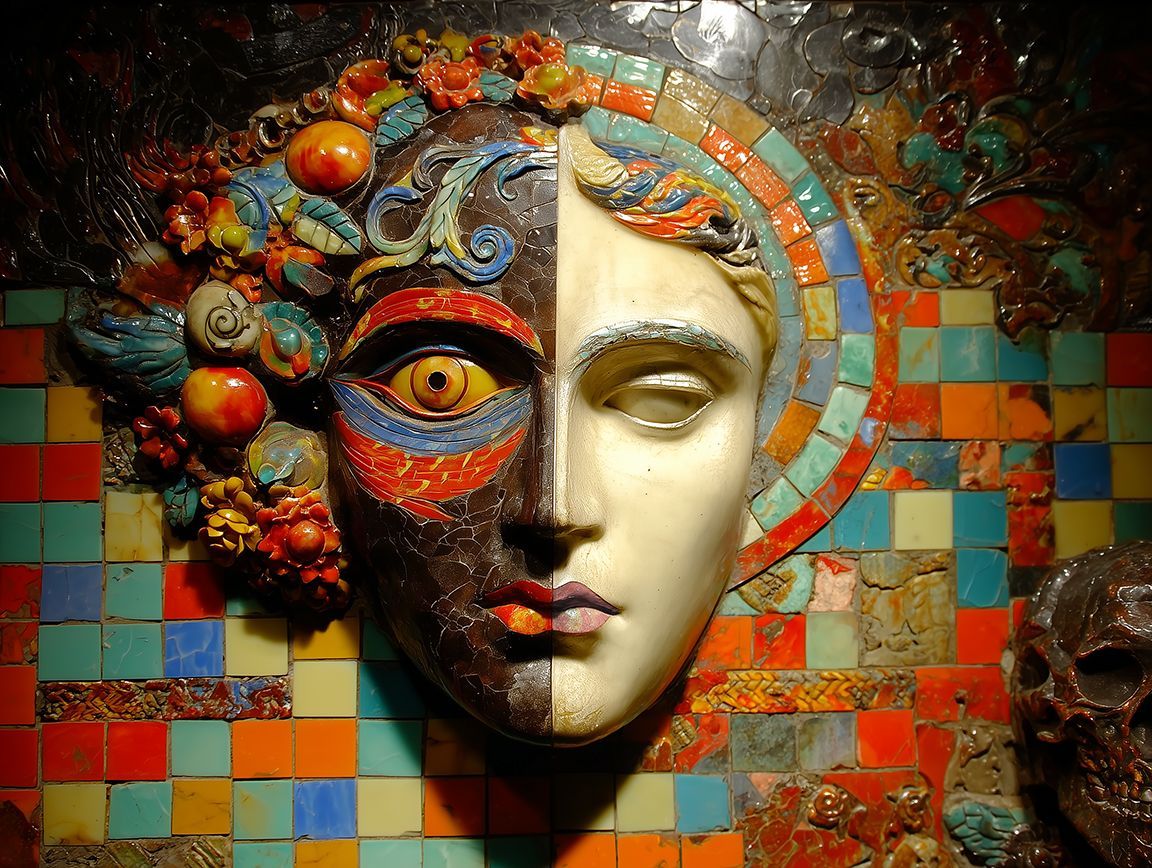
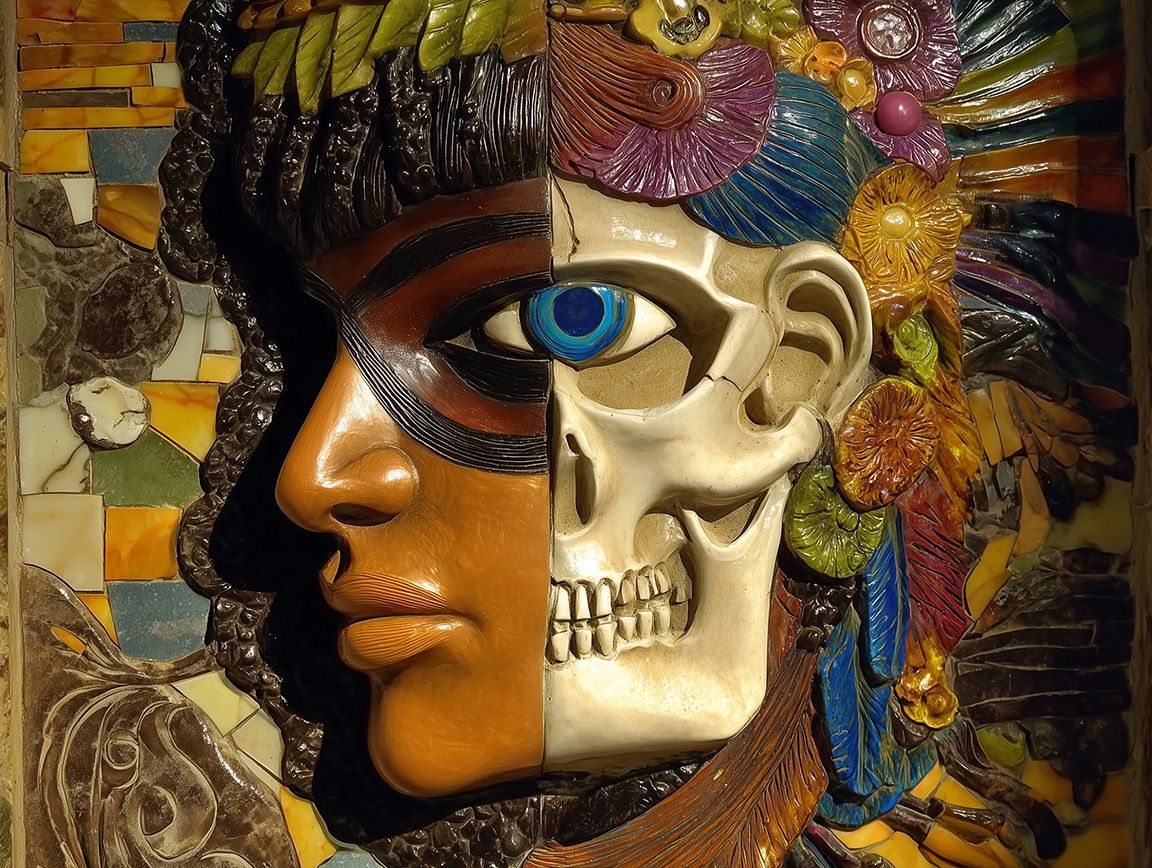
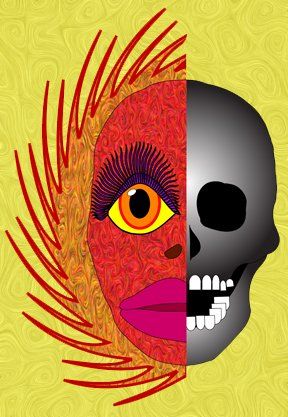
The eleventh Principal Face of Tatchlan is named Sukakap, the ‘Unflinching Face of Truth.’ As with the second Face, Skarashing, known as the ‘Descerner of Polarities,’ this Face is divided into two seemingly exclusive halves. In the case of Sukakap, it is nothing less than a face divided between life and death. The above representations represent a tiny fraction of the diversity of her representations. It may be noted that the divide remains, even if the distinction is only adornment or a lack thereof. Sukakap is invoked to rectify issues within Tatchlan, particularly ‘Anomalies.’ Her brother, Face Muramal, will often announce the discovery of an Anomaly. While most are harmless and ephemeral, a few, left unchecked, may grow dangerous. The Secondary Faces of Sukakap become tools for Invocates to ameliorate the situation. On the Skin of Anu, she joins Skarashing in both larger institutional and Encirclement and cluster resolutions and other solemnities.
The Unflinching Face of Truth
Sukakap is the ‘ Unflinching Face of Truth.’ In appearance, her Face is the most changeable while keeping a consistent form. Like Skarashing, her Face is halved, but Sukakap displays a life-and-death side. The life mask is usually on the left side, matched by a skull face on the right side. The life face and skull continually change appearance.
One common variation is one in which flesh covers both sides, but the left side is vivid with pigment and ornamentation. This can include huge, multicoloured eyelashes, vivid lips, and a wide variety of painted designs, while the right side is bland and plain. Skulls can be likened to a wide variety of known and unknown beings, but they always match the features of the living part of the Face.
Sukakap Face Dancer Costume
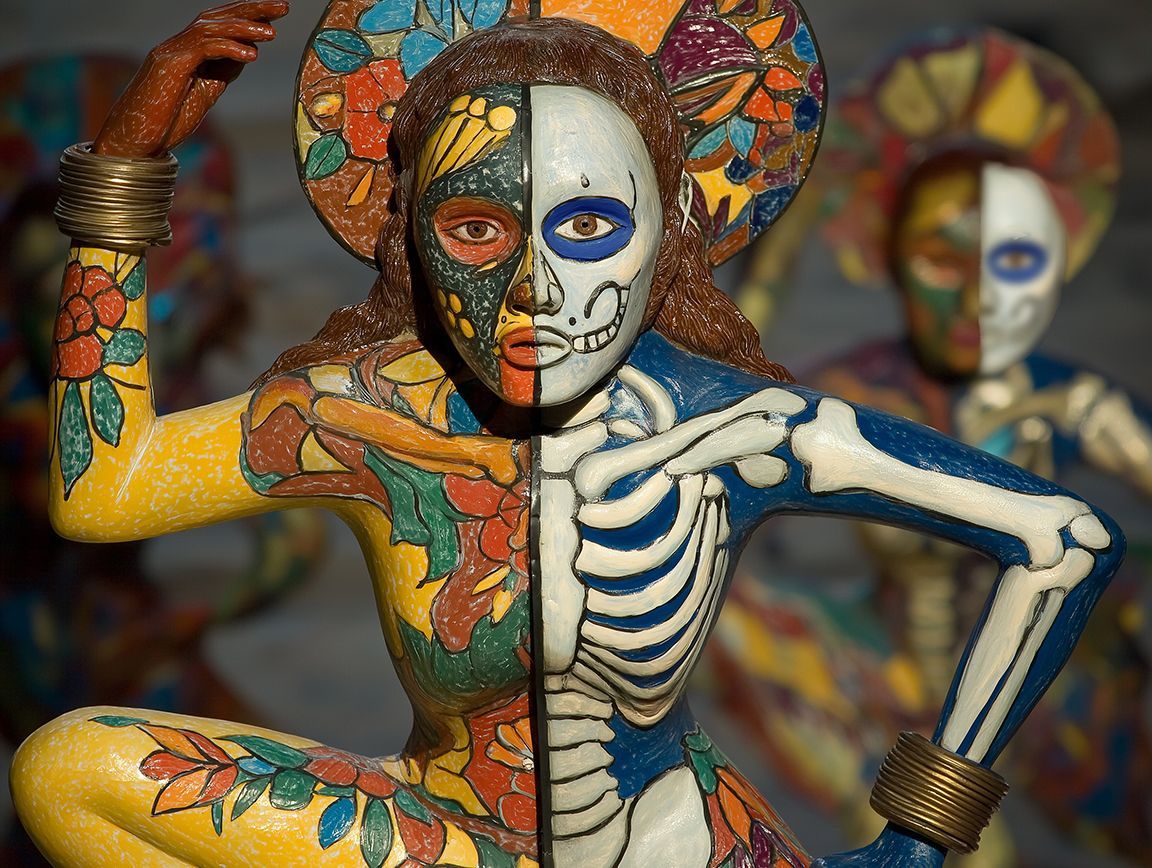
The Skukakap Festival takes place on Complete Basket Day (222), in Month Thirteen - Rakal - the Basket. This Ablution Academy rendering shows her Face Dancers in one of numerous versions of life-and-death body attire. While all Betweens are welcome to participate, Azel Betweens are specifically called upon to become Face Dancers for this festival.
Sukakap Face Dancers, as with those serving Skarashing, appear to be divided into two groups. Here, the servants are divided into life and death halves. Their living half may be as attractive as those serving Naprahath or Kava-Kura, but their dead half is either plain or, more commonly, a skeleton, resembling, to some extent, those dancing for Muramal. The bones may be white, black or covered in patterns. These bones may be painted directly onto their bodies or take the form of a woven or other textile costume. A common variation is for the death side to have actual bones, the same size as those possessed by the wearer, attached in pieces at the front and back of the dancer. This leads to a particular set of sounds as they move. Azel Betweens are the leaders of these festivals as well as three others in the Tatchlan Face calendar.
Sukakap Bestowals
Seldom is anything beyond the various life-and-death faces given out on Sukakap Day.
Northern Court Station
Hesha Vira and Sukakap attend Muramal at the Northern Station in the Majastas Danam Yelda directional placement. Sukakap takes the leading position at this station when a painful truth must be faced.
The Northern Station is also associated with incidents of the Burning Blossom. While a unique symbol of the Blossom is displayed at such times, Muramal and Sukakap may attend to it.
Complete Basket Day (222)
Complete Basket Day (222), in Month Thirteen - Rakal - the Basket, is Sukakap's Festival. She is the second Face linked to the fourth Virtue of Cluster life, Patience.
Hashahanu
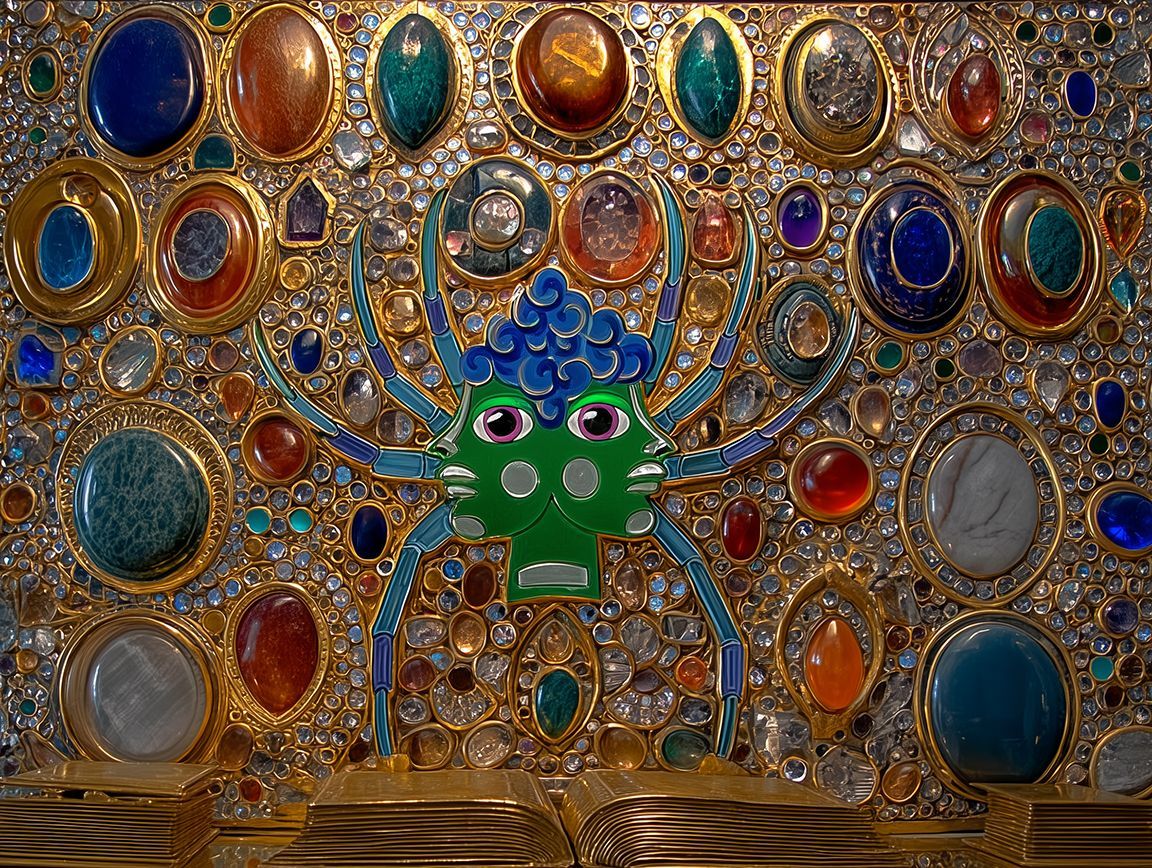
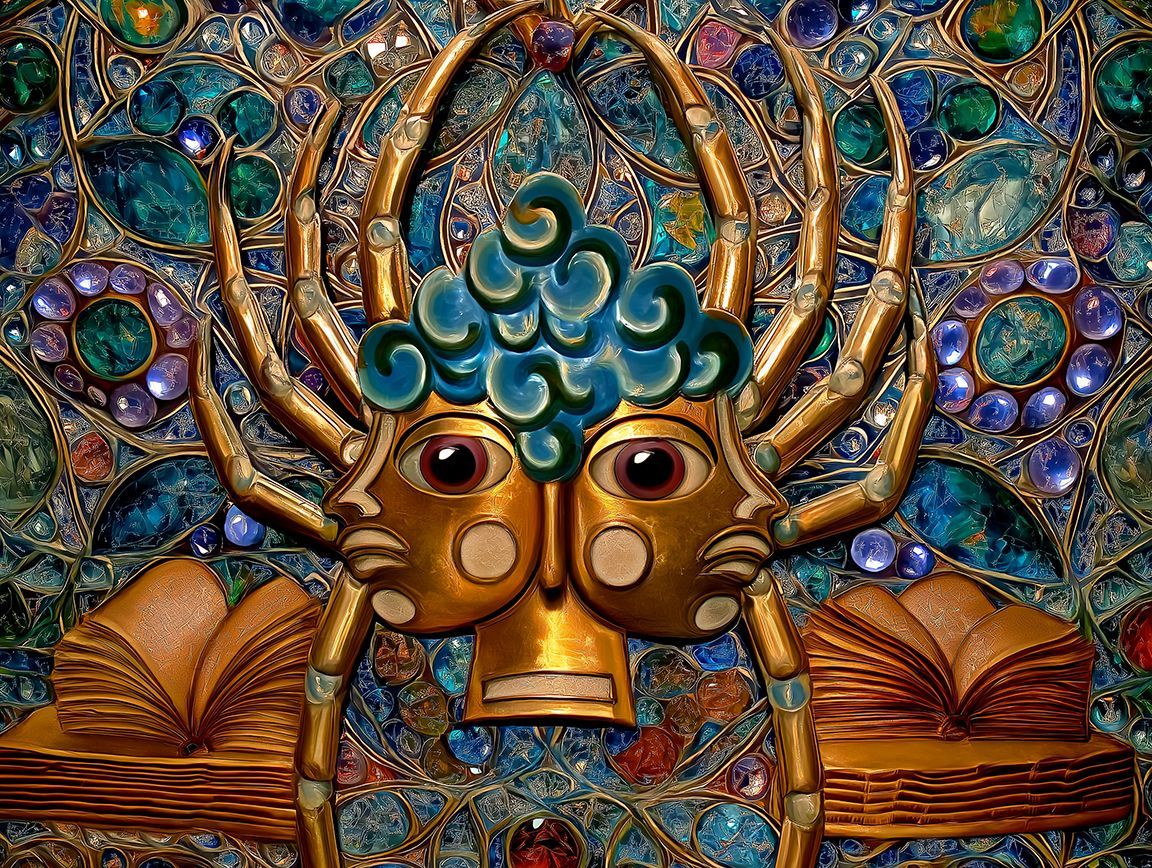
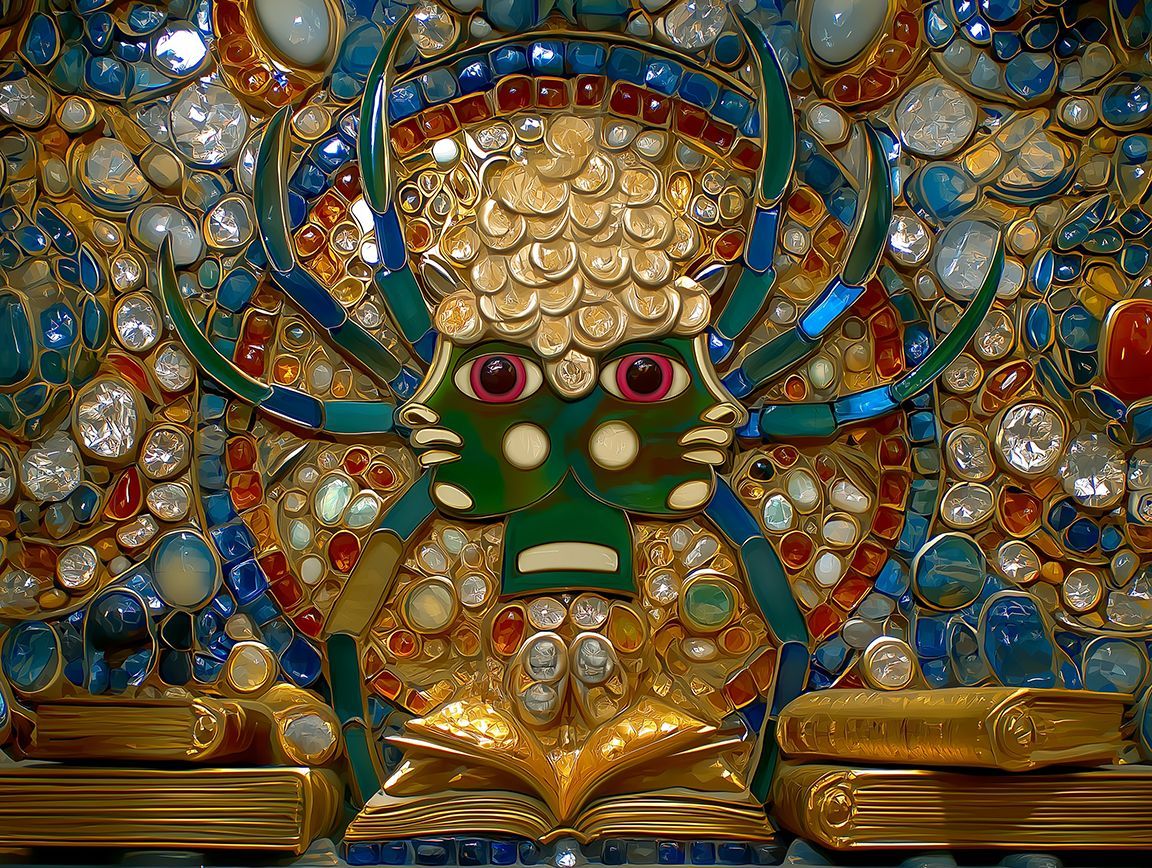
The twelfth and final Tatchlan Face is named Hashahanu, the Face of Contemplation. The Uluvatu Masters employed what was already a prehistoric icon, that of the ‘Wise Spider,’ to this cap to all the Faces. This most-ancient image lauds the triumph of wisdom and craft over brute strength, as a spider does in weaving an intricate web to capture much larger and stronger prey. Hashahanu is presented as a Complete, emphasizing their role as the culmination of perfection. They peacefully preside over the collective erudition and perfection of the ages. As these examples show, Hashahanu Shrines also serve as treasuries for entire Encirclements.
The Face of Contemplation
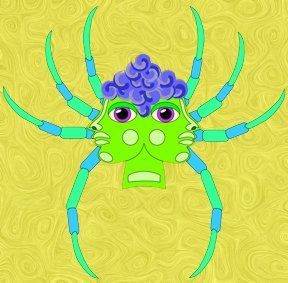
Hashahanu is the Face of Contemplation. Hashahanu is the smallest of the Principal Faces. In appearance, this Face is composed of two full faces back-to-back that share one skull.
Commonly, each has their eye on the side of their head, looking out at the viewer. The gender can be Complete, female or male; they are also often free of any gender reference. The Face customarily displays turbulent water-like hair forming swirling curls. Hashahanu has the eight legs of the most-ancient ‘ Wise Spider Glyph.’
Hashahanu Face Dancer Costume
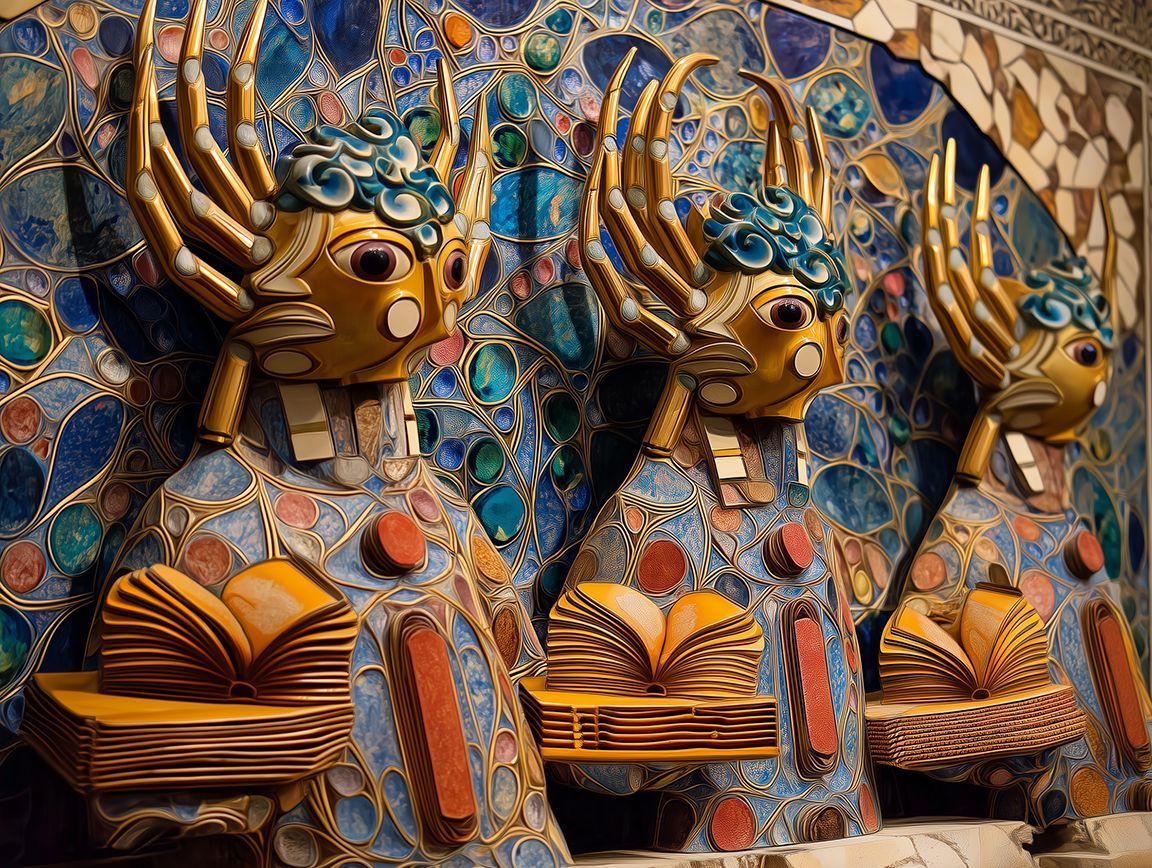
The Hashahanu Festival takes place on Elder Jewel Day (333), in Month Nineteen - Ocan - Jewels. This Ablution Academy rendering shows her Face Dancers in one of numerous versions of life-and-death body attire. While all Betweens are welcome to participate, Azel Betweens are specifically called upon to become Face Dancers for this festival.
Those serving the Face of Hashahanu at Encirclement or cluster events often wear thick, woven costumes meant to signify spider threads. While these threads are frequently blue and green, they tend to be muted and general. This apparel comes from the association between this Face and the most-ancient Wise Spider Glyph. As with Humma's Face Dancers, these costumes often have various items ‘caught’ in their web. In the case of Hashahanu's servants, these items tend to be books, scrolls and other symbols of thought and learning. Acanthus Betweens are prominent in these roles due to their traditional role in prompting reflection among their cluster mates.
Hashahanu Bestowals
Along with Hashahanu's double Face, bestowals include symbols of learning and reflection. A typical item is an iridescent metal spider resting on the cover of a metal or wooden book. It may or may not be wrapped in her threads, signifying her possessing its contents.
Eastern Court Station
Hashahanu and Neferdush stand with Kava-Kura in the Danam Yelda eastern orientation placement within the Majastas Court.
Hashahanu is brought to the station's front when reflection on how past events impact the present and future is required.
Elder Jewel Day (333)
Elder Jewel Day (333), in Month Nineteen - Ocan - Jewels, is Hashahanu's Festival. This is the third and final Face to be allied with the fourth Virtue of Cluster Life, Patience.
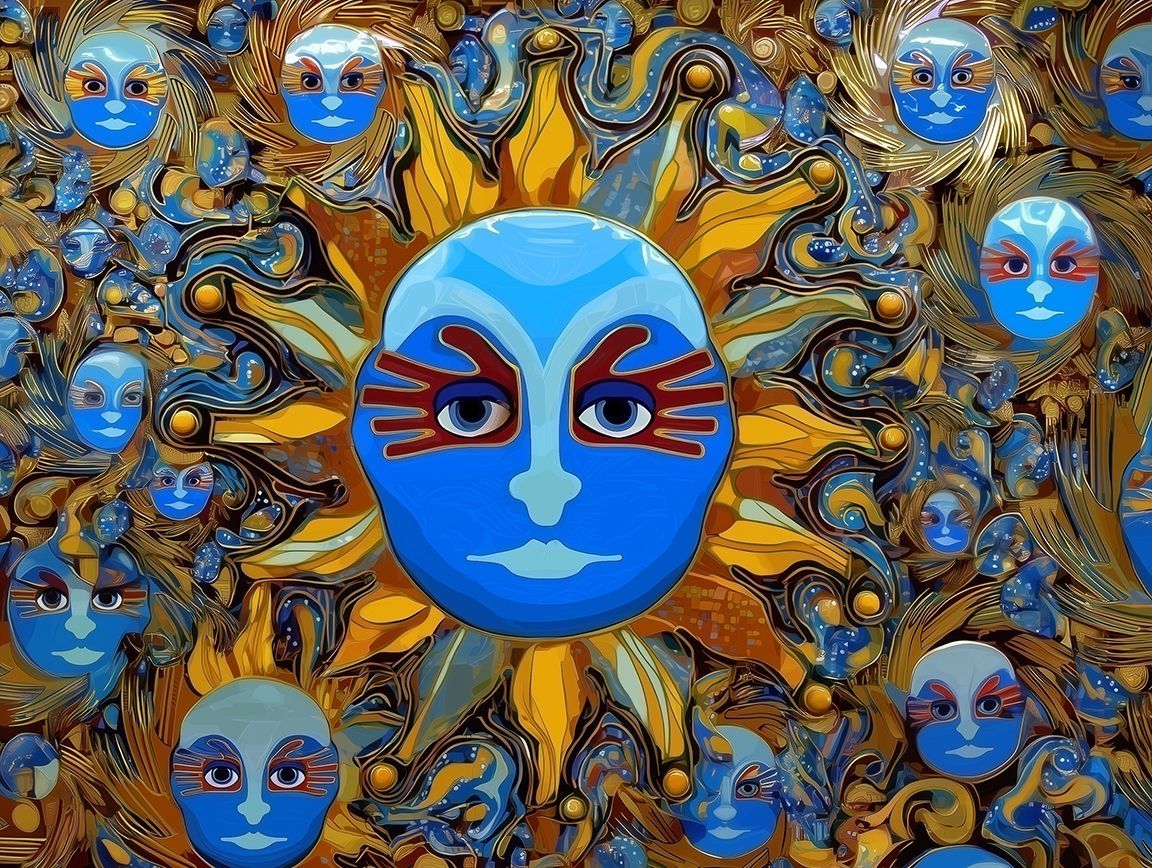
The Principal Face of Gavaduru and a cluster of her Unified (see below) Secondary Faces around her. This notable artwork is located in Tarchies Ablution Academy in Yava-Thon Provincial Center on Statos-Vey during the Nantu Age of the Danam Yelda.
Each of these Principal Faces has innumerable servants, named Secondary Faces. There are three classes of these faces: the ‘General,' ‘Unified,' and ‘Diverse.’ It is said that up to half the ‘body’ of the Primary Face is disbursed, particularly among the Unified Class of these Secondary Faces.
General
These Secondary Faces present a mild appearance and dwell almost exclusively at the surface of the first orb, Amanavata. Their Use is to await the arrival of Invocates. They either fetch a specific class of Secondary Face or conduct the Invocate to their location.
Unified
These Faces are miniature versions of one of the Twelve Principal Faces. They are named servants of these Primary Faces and are an extension of them. For an Invocate to work with one of these draws the attention and specific abilities of the Primary Face. Their ability is diminished due to several factors. What is known as true efficacy with these depends on how many are employed simultaneously. Also, whether any are used in some fashion is at odds with what the Invocate wishes to do. It is not uncommon for an Invocate to find the Unified Secondary Face they require among the throng of General Secondary Faces when they first enter the Living System. When not employed, many Secondary Faces swim near the surface, awaiting their next summons.
Diverse
This class of Secondary Faces is more specialized and, therefore, less numerous. They present a combination of features representing two or more Principle Faces and are helpful in tasks requiring aspects of two or more distinct Primary Faces. Usually, only senior and Elder Invocates and Operants are sufficiently experienced to employ these Faces, and they are rarely seen unless called for by name. Given the changing nature of the Resplendent System, one or more Primary Faces generate these Secondary Faces.
Separate and together
Within Tatchlan, the Twelve Principal Faces move independently of each other, and can arrange themselves into several formations. These structures are rarely employed, as the Majastas is able to address all issues directly. As such, they are only for when the Living System must be maintained without a Majastas's presence, or when a Majastas chooses to direct Operants and Invocates to deal with the matter.
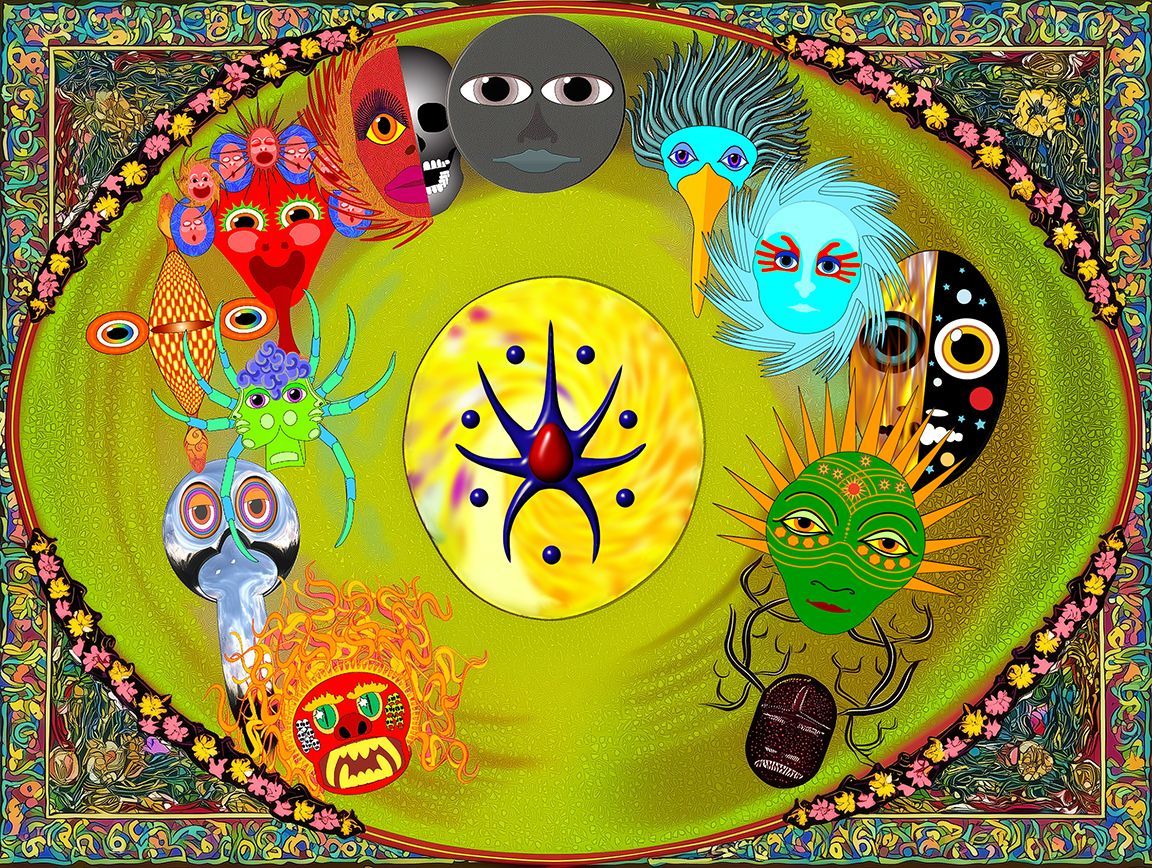
The Arch
This arrangement typically has Alatanda at the top, as the keystone of an arch. The other Faces continue out and down either side according to the circumstances. The uses of such a formation are varied according to which Face forms the keystone and the subsequent Face assembly. This formation is less common and usually signifies unusual activity or noteworthy change within the Living System.
Pictured above is a depiction of one of the more favourable formations of this Arch. This is a Danam Yeldic icon, as evidenced by the central Blue Star emblem. While the other elements of this configuration are somewhat fixed in most of the catalogued examples of this work, the effusion around The Blue Star varies widely. These artworks tend to be in mosaic and are mostly found within specialized Mantle Establishments in provincial centres.
Line of Faces
In this configuration, Alatanda stands at one end of a line, and Hashahanu at the other. This rare pattern is used primarily when a dysfunction has occurred in one or more of the Faces and the others must assist in turning it so Operant Masters may approach and administer remedy to the inner workings, clearly visible on the back side of the Face. This is only necessary if no Majastas is present.
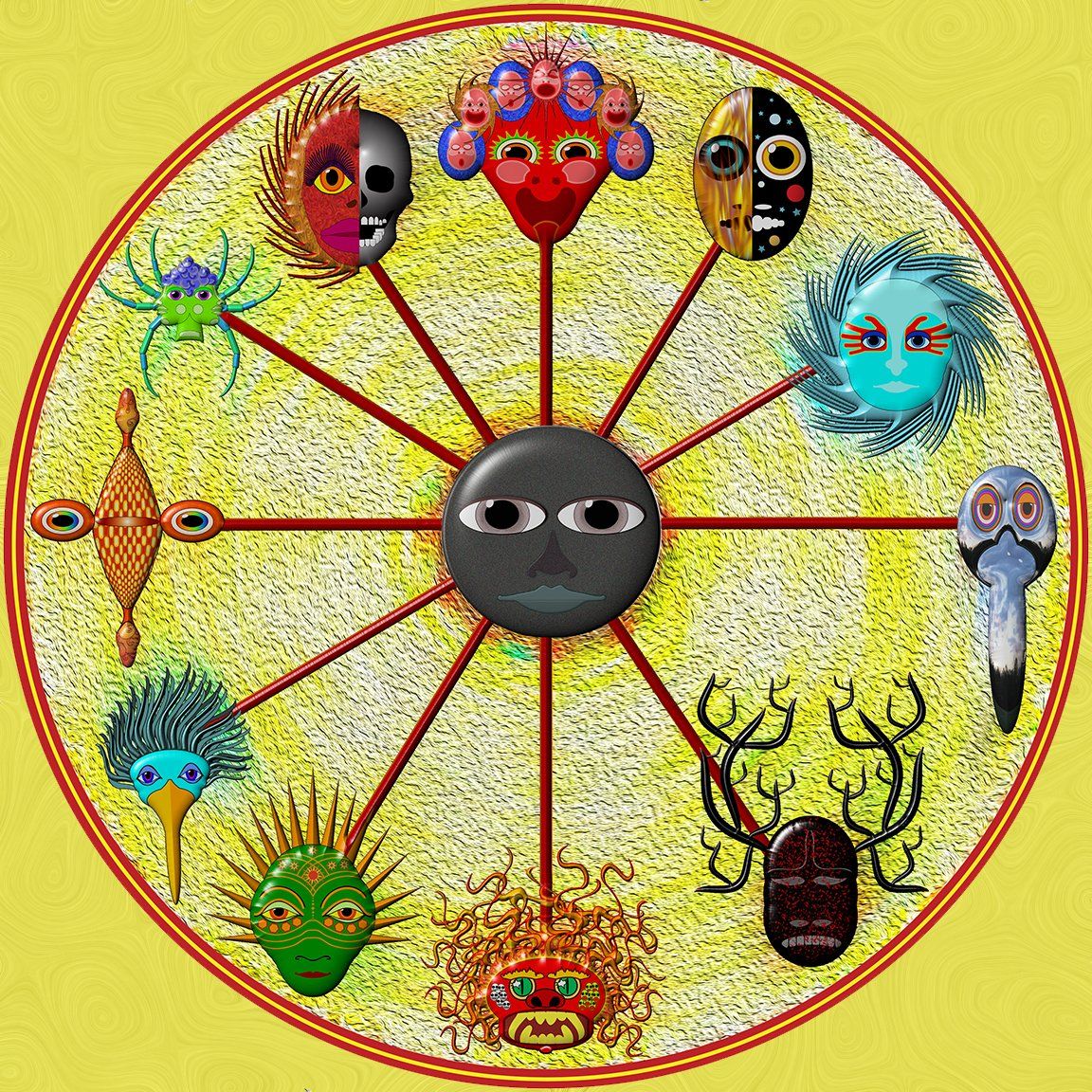
Twelve Faces in the Spoke Formation
This is a manifestation of harmony and united purpose among the Faces. The top of this formation is Kava-Kura. Her tongue hangs down through the middle of the circle and, at its tip, curls around Hesha Vira. Midway on her tongue is Alatanda, serving as the hub for the circle. The position of these three Faces does not alter in this formation. Five Faces are arranged to one side and four on the other. The arrangement of these varies, given the situation. This image is ubiquitous throughout both the Koru and Danam Yeldic Cluster-of-Clusters Nations, this being a reproduction of what is deemed one of the finest renditions found in the Chancellery Audience Chamber of Upata-Shepsus.
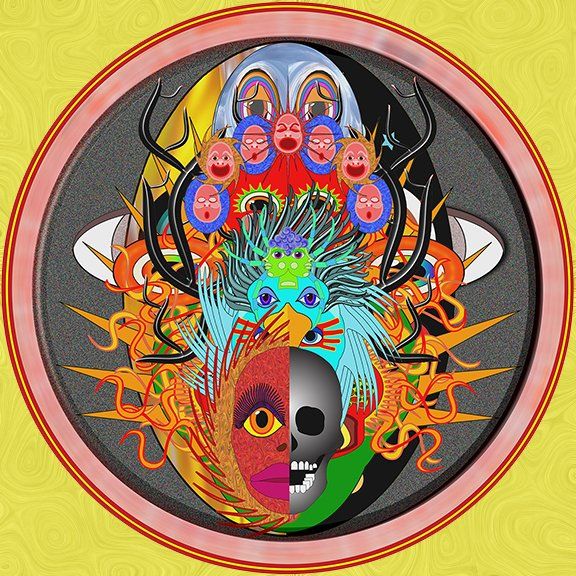
Matching (or Mountain) of Faces
This formation sees each Face fitting inside the other. Alatanda, the broadest, is at the base, with Skarashing fitting above and Naprahath on top of Skarashing. This continues until the smallest Face, that of Hashahanu, tops a steep pyramid of Faces with Alatanda at the base. This formation has been termed a moment of wholeness for the Faces. For a brief time, the Faces lose themselves and share a single-encompassing perspective. The Mountain of Faces is employed as a generational harmonizing of The Resplendent Work.
The Foremost Ones first built the Mountain of Faces long before they were awakened as part of their formation. It was employed by the first Tolku Majastas, Thakadush-Satwa, through her regent Shuna-Shapta at the dawn of the Tolku Majastas Calendar of the Greater Era of the Primary Epoch. The formation quelled an internal rebellion by Hesha Vira, who resisted her place within Tatchlan. Subsequent uses of this ‘mountain' appeared in the Primary Epoch, but the details vanished in the Killing Swath and Suvuka Onslaught. Koru Majastas has used this formation on thirteen occasions throughout history, including during various Tatchlan crises. These extraordinary events are used to divide their history into distinct periods.
This image differs from the actual formation. The faces are shifted in various ways to allow for all to be recognized, whereas the actual arrangement obscures the features of several of the lower entities. The living arrangement gives the impression of all eyes looking through Hashahanu’s two eyes at the top.
Alatahanu Carnival
Alatahanu is the annual event honouring of the Twelve Principal Faces on Day 444, in Month Twenty-Seven - Alatahanu - the Twelve Faces. During this carnival, every Face Shrine opens and is lavishly decorated. Many events occur within their precincts, including complete epic poetry and drama renditions. Those images held in high esteem are taken in procession throughout each provincial centre. It is only during this Carnival that specific images, found primarily in the Shrines of Kava-Kura and Alatanda are brought out for public display, known as the ‘Face Formations.’
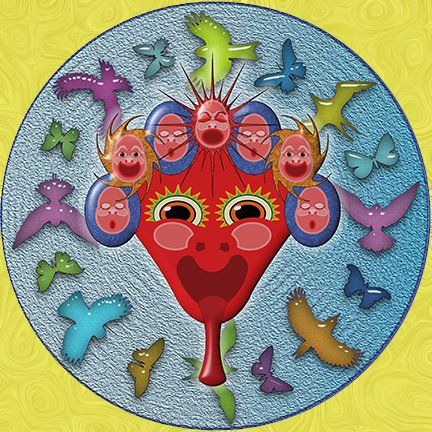
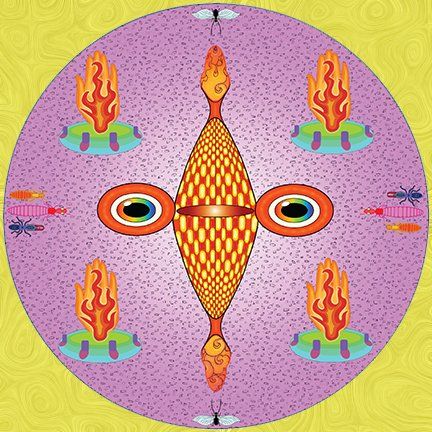
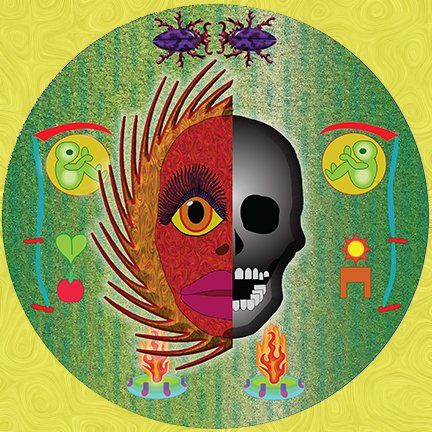
Artistic tradition of Auras
This term refers to the artistic tradition of adding a circular border around the depiction of any Principal Face during the latter portion of the Greater Era. There are hundreds of conventional elements, ranging through natural motifs and Tatchlan glyphs to abstract designs. Each has a particular attribute. One Primary Face surrounded by a specific aura can mean something entirely different if the same element surrounds a different Face. Their association with other Faces and their auras multiplies the layer of meanings. The arrangement of Faces and their auras can range from a simple vertical layout to be read from the bottom up to the complete circular pattern to any number of more complex patterns. Seldom are the Faces arranged in their actual ‘cluster' or ‘wheel' order. It was not uncommon for the same Face to appear more than once in such configurations, even right next to each other, and often surrounded by different auras. This tradition was established during the Primary Epoch and reclaimed by specific movements in both the Koru and Danam Yeldic civilizations in the Secondary Epoch. A given dynasty of Majastas may initiate part or all of these Auras, while later dynasties would set this construct aside. While there may be changes in the liquids surrounding the actual Primary Faces within the Living System, there are no actual auras around them.