
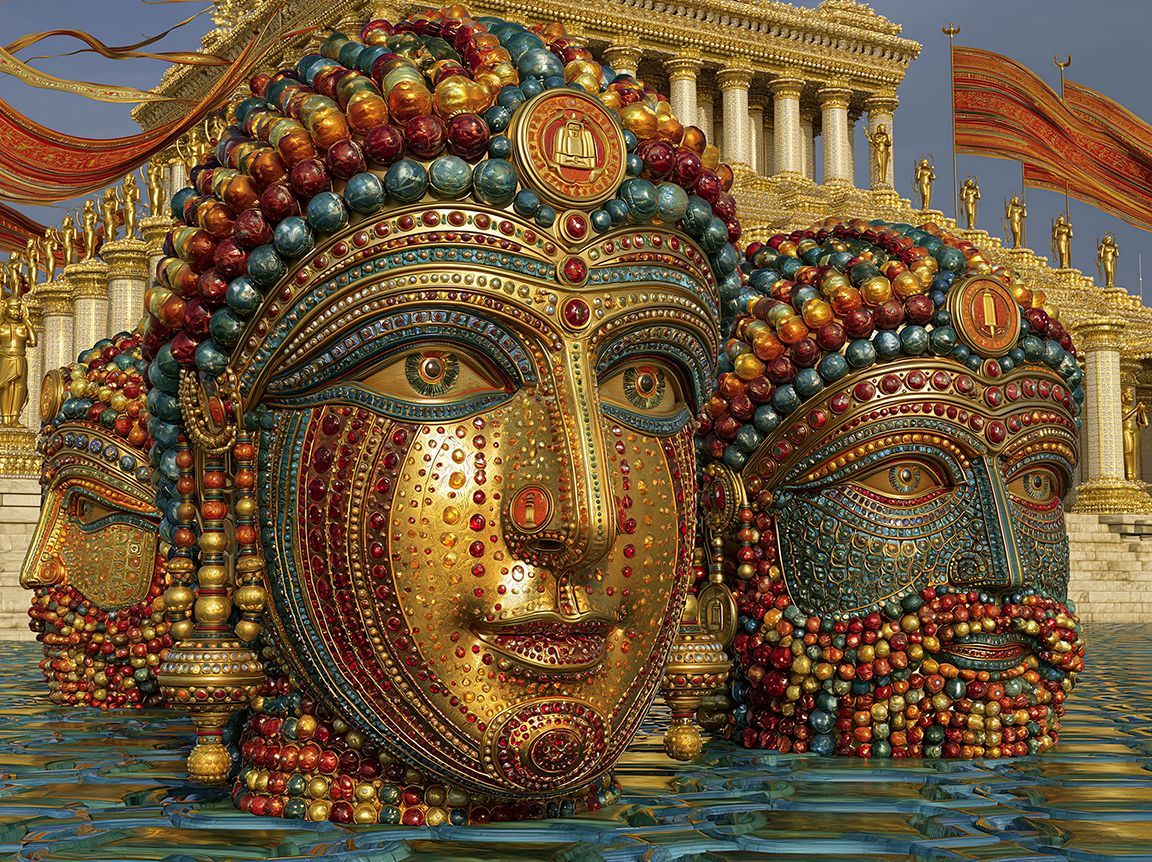
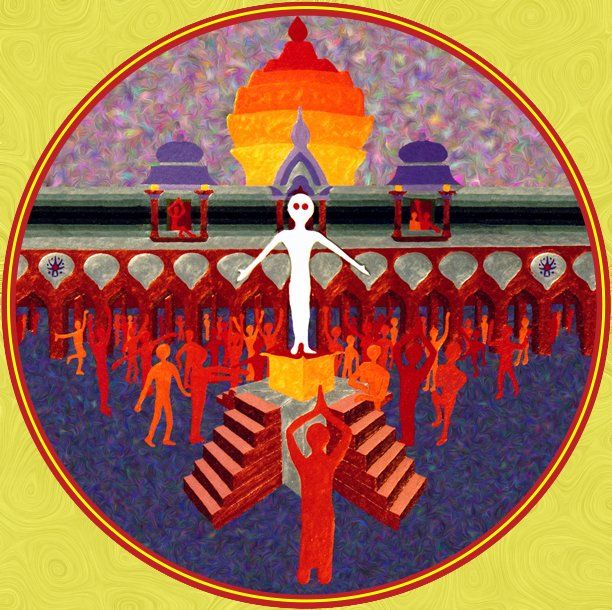
This is a detailed reproduction, based on extensive Treasury descriptions and some illustrations, of what was once a common sight in Upata-Shepsus, and to a lesser extent elsewhere, in the Primary Epoch. Known as ‘Mantle Faces,’ these colossal heads depicted Majastas of all dynasties of the Tolku. The current dynasty had the most recent of its members' heads lining the periphery of The Plateau. Over time, the older monuments were removed to that dynasty's Mantle Museum and elsewhere. This is illustrated by a perfectly preserved image found in a volume recovered from the first Mount Rongu crate to be opened from The Treasuries in the year 252 of The Interim. During the Second Suvuka Onslaught, after the Killing Swath ended the Tolku, it appears that these unambiguous symbols of the Tolku's Cluster-of-Cluster's Nation were subjected to the most virulent hatred by the Suvuka, who destroyed them without stint until none remained.
Majastas Nature
Majastas Mantle, Supreme Operant, The Common Desire, Koru and Yeldic Majastas may uncover each other's General Will, Danam Yeldic Majastas Horm Unu's insights into The Common Desire, Majastas Bakasha-Duta II admonition, Generational Plans, Branches of Generational Plans, Perennial Plans, Targeted Plans, Epochal Plans, Collective Pull, South to North Movement, Generational Pause, Majastas Inhibition, Majastas Salt, Life Must Live with Life, Converting Machines into Animals, Corrections and Rectifications, Yeldic Momentous Correction, Majastas Betweens, Majastas Touched, Majastas Complete, Majastas Dreamer, Majastas Multitude, Majastas qualified absolutes, Majastas Cluster, Majastas Cluster has limited influence over Majastas, Majastas becomes The Throne, Resplendent Hands, Majastas Gathering
Majastas Hours
Service Supercedes Self, Majastas Annotations, Majastas Exegesis, Entering the Presence
The Eight Day Phases
First Day Phase, Second Day Phase, Third Day Phase, Fourth Day Phase, Fifth Day Phase, Sixth Day Phase, Seventh Day Phase, Eighth Day Phase
The Eight Night Phases
First Night Phase, Second Night Phase, Third Night Phase, Fourth Night Phase, Fifth Night Phase, Sixth Night Phase, Seventh Night Phase, Eighth Night Phase
Primary Epoch Mystery
Majastas Court
Time and location of Court may change, Court layout, Chancellery, Grandee Secretariat, Enumerators, Cycles, Wellbeing, Commandant, Preeminent Works, Ceremonies, Servant Ranks
Majastas Cluster Dissolution
Dissolution Ceremony, Chancellory Declaration, New Majastas Procession to former Majastas Cluster, Body Casts made by Enumerator Ministry for Mantle Museums, Wellbeing Ministry directs the dissolution of late Majastas Body into Healing Vats, Majastas Emblem Devices collected, Public Memorials, Scent Separations overseen by the Completion Bureau, Anniversary and Gifting
Mantle Museums
Tolku Mantle Museums, Koru Mantle Museums, two homes, Yeldic Mantle Museums, Layout and content, Mantle Museum pilgrimages
Moment of Disturbance
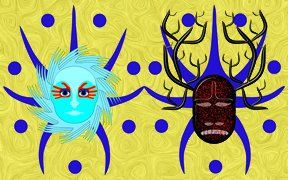
Distortion and shift of perceptions, Koru Disturbance icon, Danam Yeldic Disturbance icon
“In the vast ocean of Yeldic existence, many tides and currents are perceived. The Mantle may gently guide and direct these currents as needed. Through Tatchlan, we occasionally encourage or discourage the development of a multitude of interlocking idea systems that recur with changing and returning circumstances. Some arise only to fall within a single decade; others persist for millennium. One of the great unknown labours of the Mantle is managing innumerable thought eddies with a relatively small number of larger main currents in a continuous equilibrium. With rare exceptions, mainly created by unique circumstances, these eddies are the short-lived cults and associations forming predictable scale and range of activity. Most are emotion-based and local to a given cluster or location. They burn bright, serving to highlight and enliven the larger outline. This novelty may stimulate new comprehension or recall forgotten insight. Once a benefit is found and secured, the novelty sinks back into the larger pattern.”
Danam Yeldic Majastas Kitheshal VIII 58,722 UKC, N 10,003
Majastas Nature
The Majastas Mantle
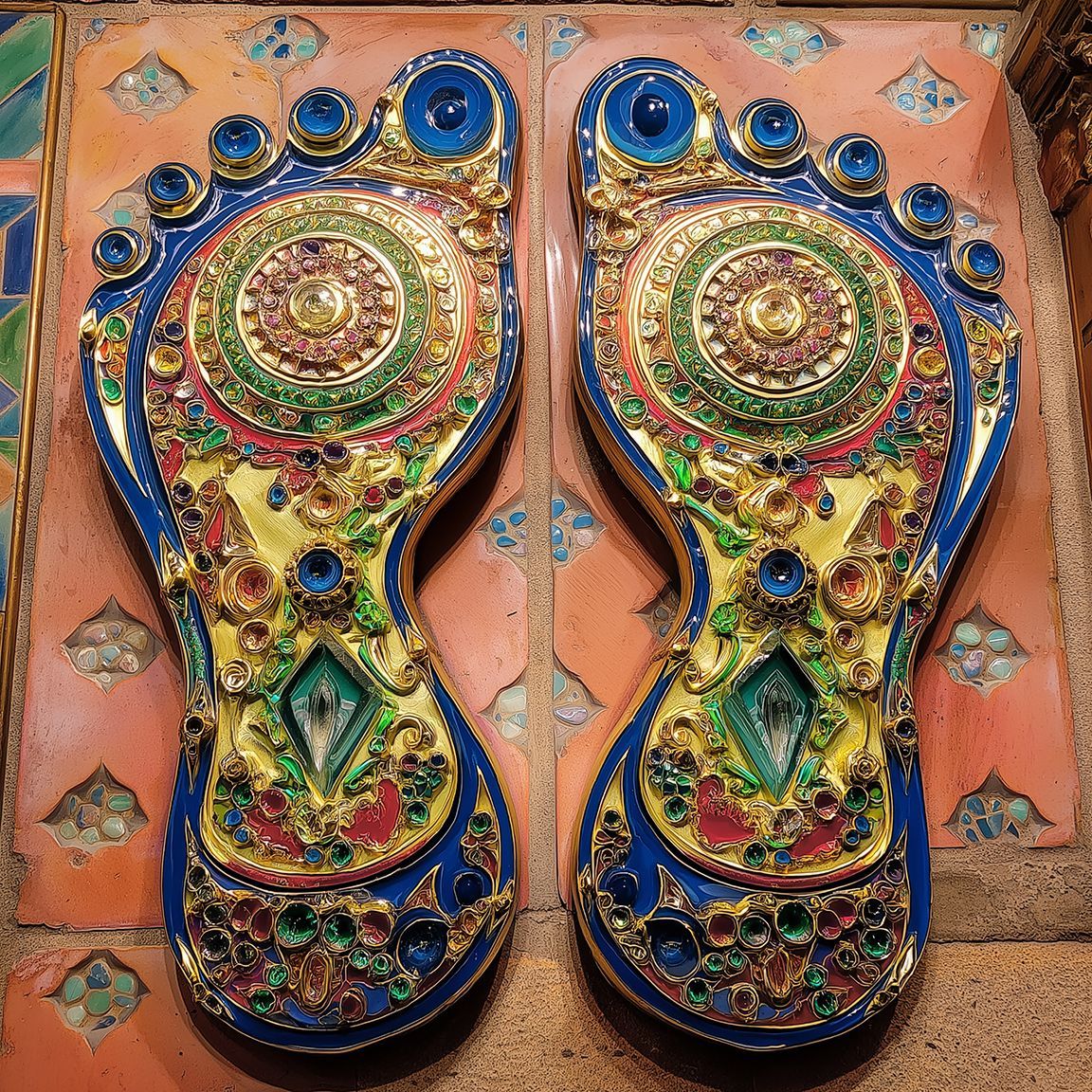
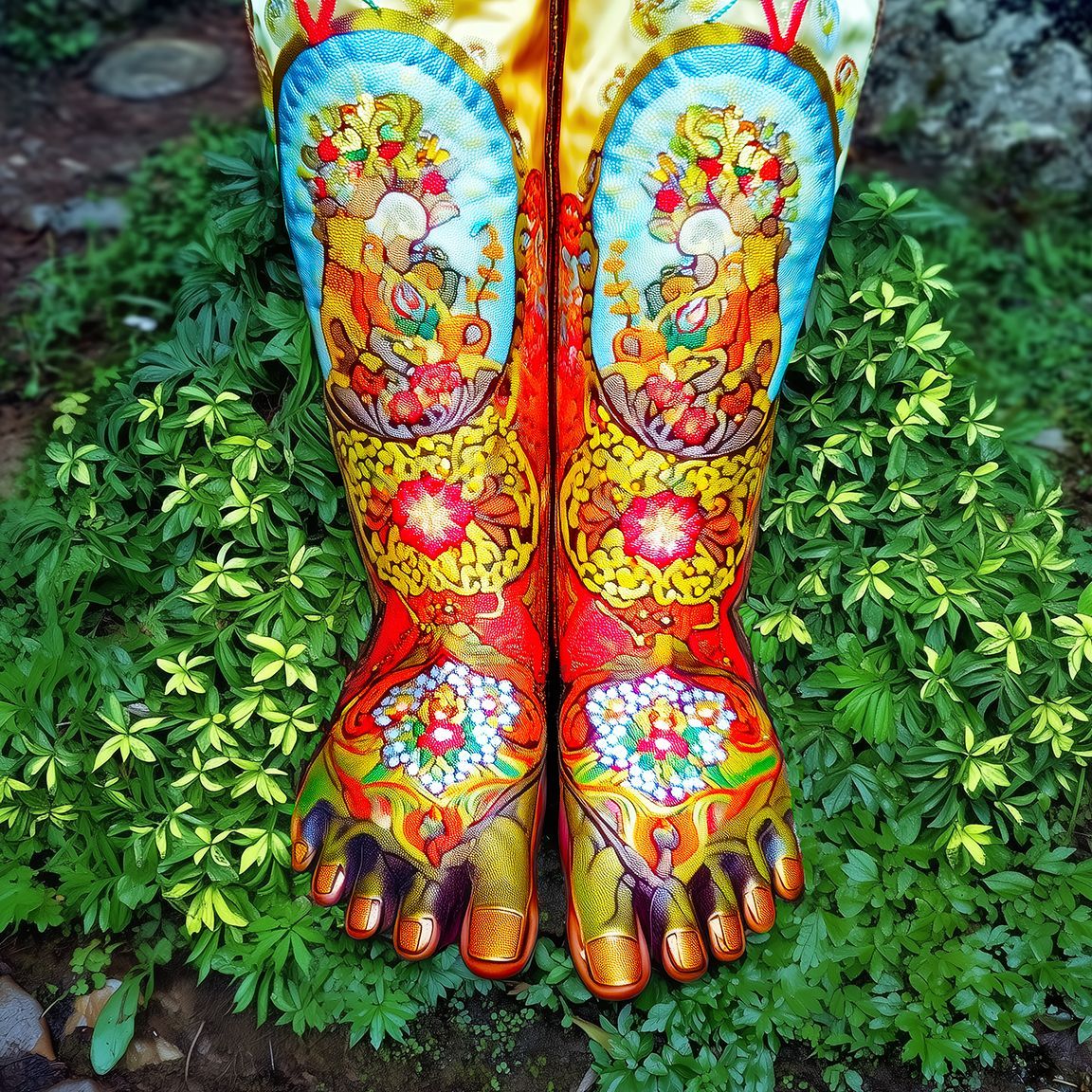
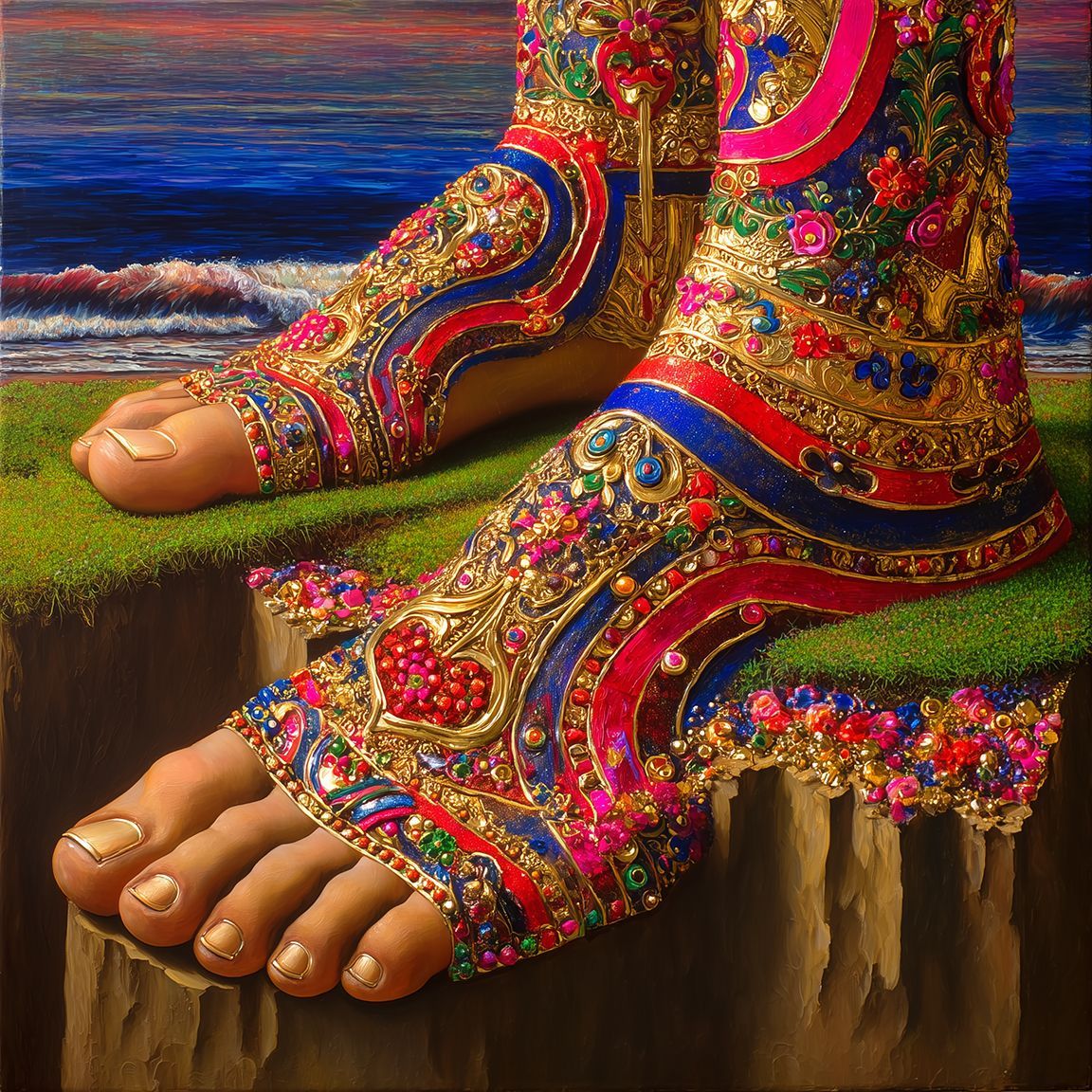
Perhaps one of the most mysterious processes captured by the Dictum Art tradition is that of the Mantle ‘enveloping the feet’ of the next Majastas. This is the end process of the Mantle ‘Migrating’ from one Majastas, usually at their death, to the next. This can be a simple process if the next is found within the Majastas Cluster, or more elaborate if the Mantle Migrates to another cluster, triggering the formation of a new dynasty. While many Majastas have reported this experience, few have elaborated on it. This leaves the subject open to creative speculation. The general belief is that the Mantle departs the dying Majastas through their feet before travelling through the Skin of Anu and Tatchlan to arise in a worthy successor. Some of these images include a face in the Mantle, meant to signify the latent presence of The Throne in the future Majastas. The left image is the most common and appears many times in each Ablution Academy; the footprints are meant to symbolize the instant the Mantle contacts the feet of the next Majastas. The third image is meant to illustrate the Mantle possessing the feet, and the middle image of it ‘enveloping’ the new Majastas.
The Living System of Tatchlan selects the next Majastas when the current one dies or is otherwise unable to serve. It is tradition to say, at such times, that the ‘Mantle Migrates’ either to another cluster-mate of the Majastas Cluster or to another cluster entirely. The term ‘Mantle’ dates back to the Uluvatu Masters, who themselves recall that it referred to assuming the royal seat in most-ancient times. Some Majastas have reported that at the onset of their new life, it does feel like a presence arising through their feet and ‘enveloping them’ as with a mantle.
Supreme Operant
During the Duamang Age, the final period of the ‘ Lesser Era’ before the emergence of the first Majastas in the Primary Epoch, Tatchlan Masters noted the occasional appearance of a powerful version of Invocate. Unlike all others, these could enter the Tatchlan System without recourse to Dreams, Vision Windows or Living Instruments. They passed directly from mundane existence into the core of the Resplendent Work and could discern the actual internal structure of the Living System. They called these extraordinary individuals ‘Operants.’ They were early versions of a Majastas prior to Tatchlan ‘Quickening’ and fully functioning. The most famous Operant lived in the last decades of the Duamang Age and was named Shuna-Shapta. Her story unfolds in the first novel of this series, ‘Heshavira's Challenge.’ She is also the first Operant to co-exist with the first true Majastas, Thakadush-Satwa, who was noteworthy for coming into full majesty while still an infant. From this point forward, the long succession of Majastas, through their dynasties and across the vast Primary Epoch, were among many other titles given the name of ‘Supreme Operant.’ This ultimate manifestation of the Resplendent Work reasserted itself in the Secondary Epoch, first among the Koru and finally the Danam Yelda.
The Majastas' other titles include ‘The Hub of the Wheel,’ ‘The Waking Eye,’ and ‘the place where all strands bend and disappear.’ The Maja at the core of each Circle of Eight, within every cluster, is said to be rooted in the Majastas. As the Maja is the core of each circle, collectively, they unconsciously form the body of the Majastas within the Resplendent System. Roughly one in ten Maja become Invocates. They constitute the senses of ‘The Splendid Yeldic Body.’ Unlike all Invocates, the Majastas may possess any or all of the Twelve Principal Faces of Tatchlan and wear them as masks to see general and specific aspects of the Living System, along with the current disposition of The Common Desire, and any ongoing Beneficial Derivations, and address them accordingly. In a conference with Invocates, the Majastas usually don one of these Principal Faces, according to the matter.
The title of ‘Supreme Operant’ is not to be confused with ‘Superior Operant.’ Superior Operants are fifth among the Eight Living Jewels. While they possess profound depths, they never approach the Majastas as Supreme Operant.
The Common Desire and the General Will
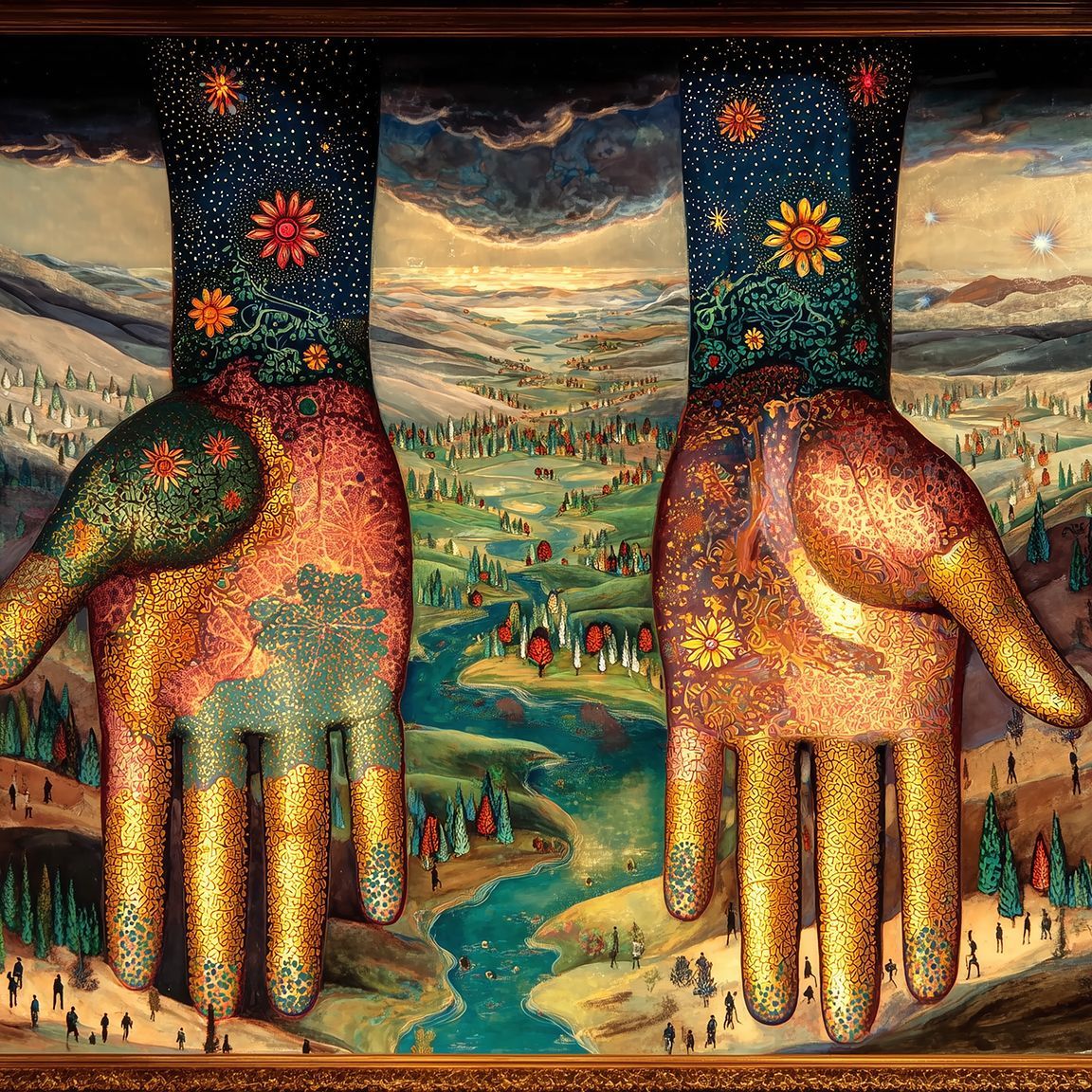
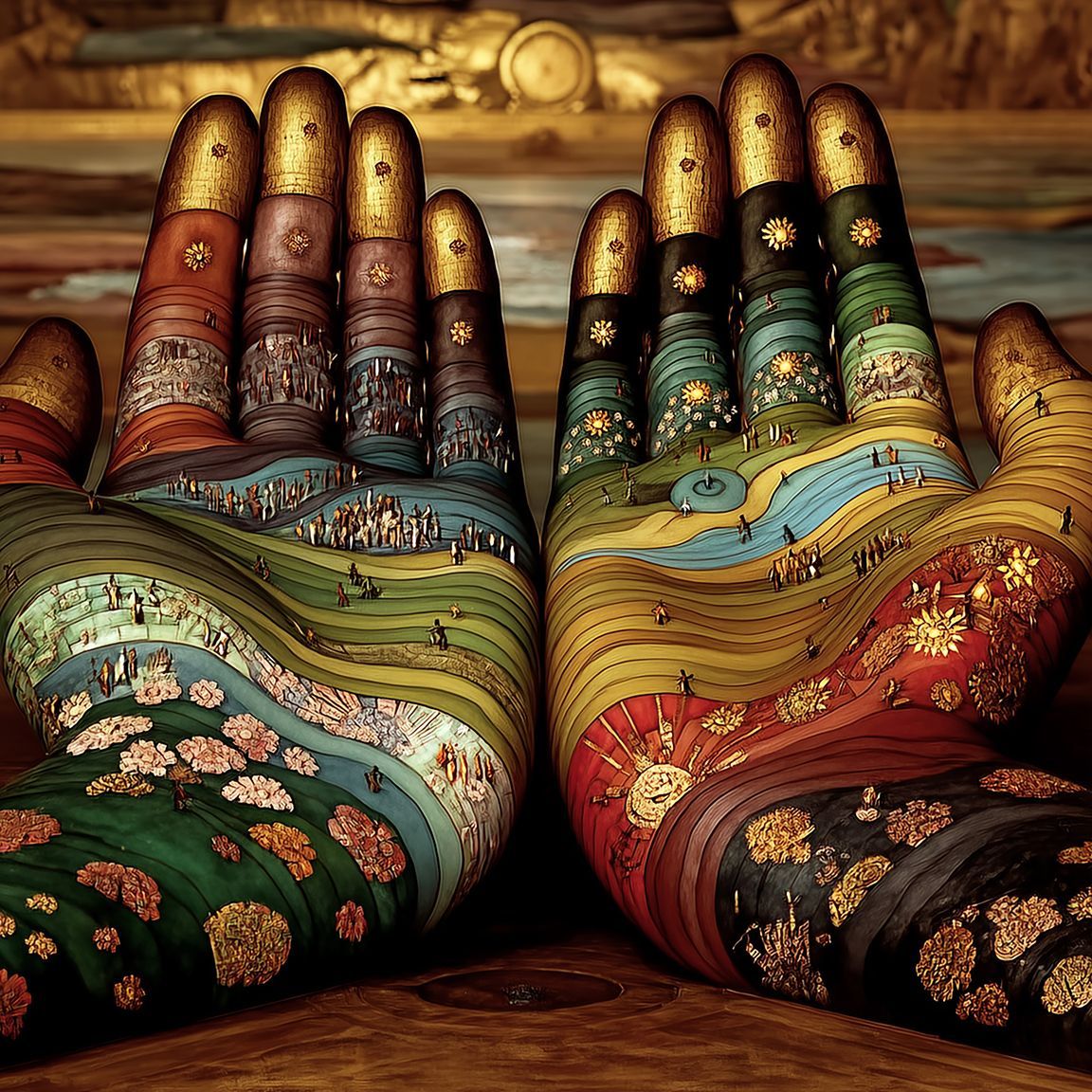
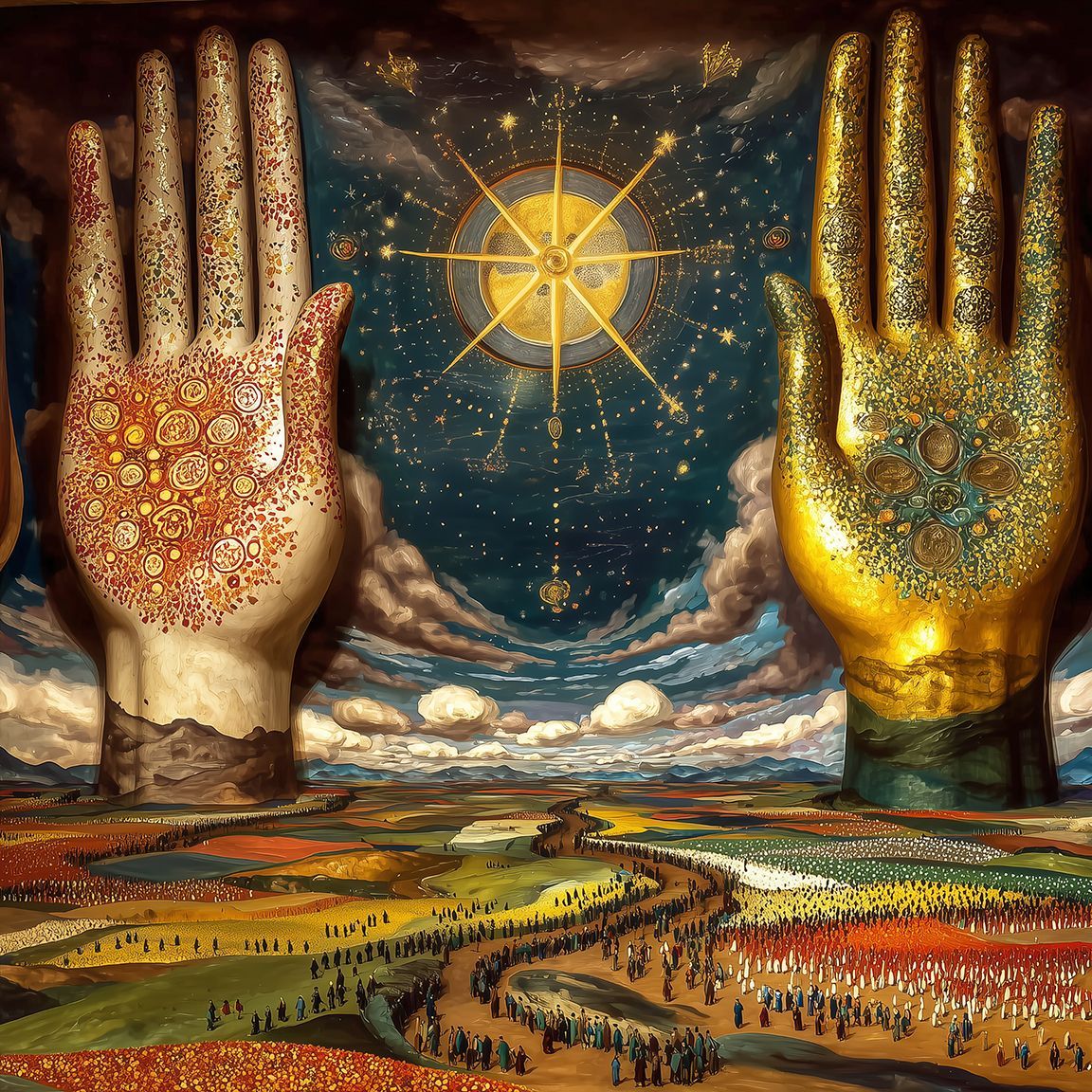
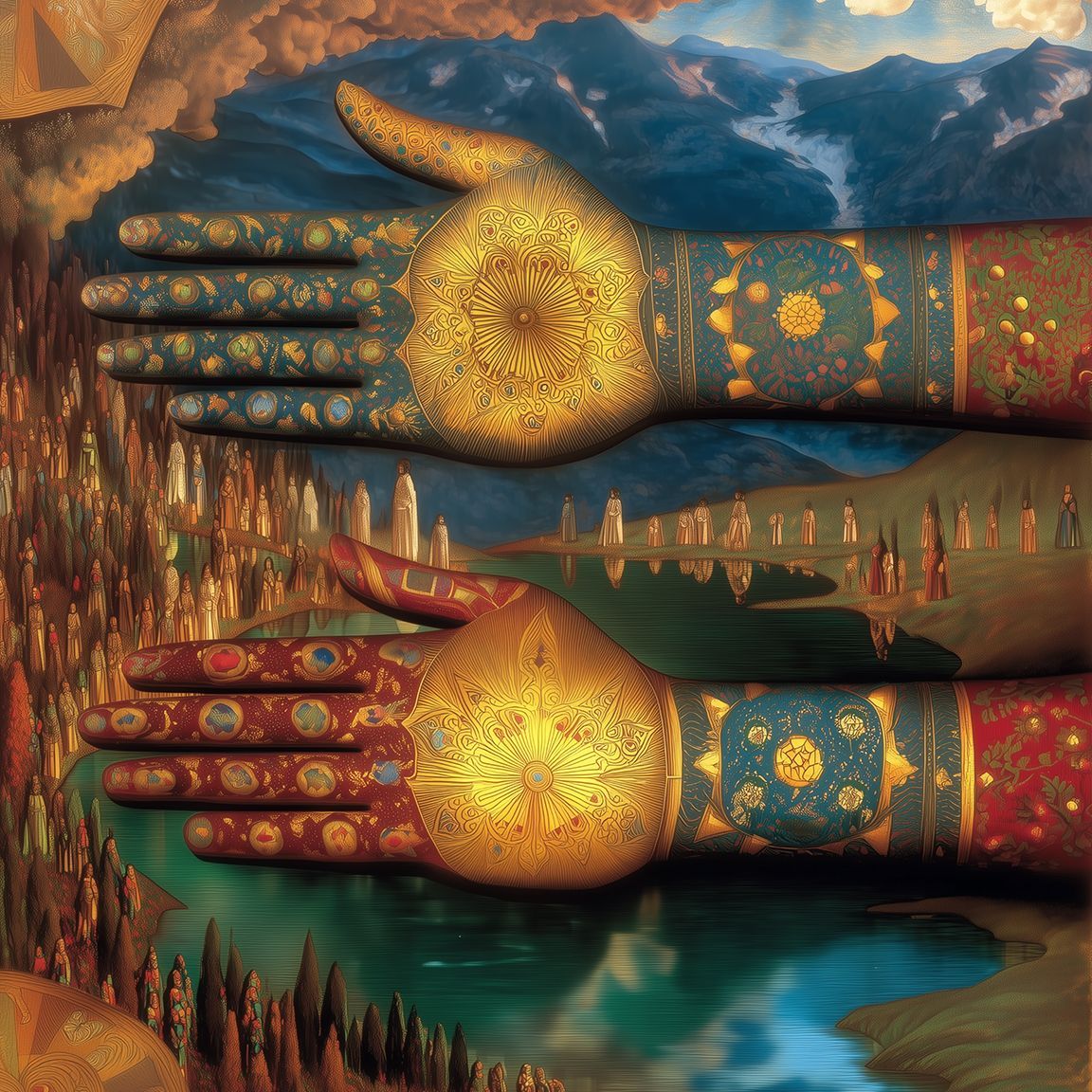
These Dictum Art images are meant to depict the inner landscape of Tatchlan. There, the collective whims and inclinations of the general population appear as rivers moving over the surface. During the Majastas Hours, both the Koru and Danam Yeldic Majastas allot time to enter Tatchlan. While many pressing matters may be at hand, one regular feature is the monitoring of ‘The Common Desire,’ also known as ‘The General Will.’ While the Primary Epoch icon (immediately below) shows the worst form of these cumulative shifts, popular art has always chosen to display a harmonious interplay between these currents and their Majastas. As shown here, the General Will appears as tiny crowds moving around and over the Resplendent Hands.

This term refers to the collective temperament the
Majastas encounter across various parts of the
Living Orb and elsewhere within the
Living System. While the terms are singular, ‘The Common Desire’ is an extensive series of tendencies coalescing into notable ‘streams, rivers and oceans’ making their way across the Living Orb’s surface. They may bubble to the surface gradually or spout out as a geyser. They may cover a wide extent or be localized. They may have a far-reaching impact on the ‘landscape’ around them or be contained in a local context.
Monitoring and modifying these phenomena comprise much of the Majastas' work within the Living System.
These liquid manifestations represent the pooling of themes and emotions across broad sections of the population. Many Invocates and Operants are stationed throughout the Resplendent Work to monitor small portions of this dynamic presence and make corrections.
When difficult areas are discovered that cannot be remedied or are seen as signs of a more significant issue, their observations are gathered and presented to their Majastas.
A primary task of each Majastas is to monitor all collective manifestations of The Common Desire at once to see the larger patterns. A note is made of each presentation for its content and quality. Different streams are diverted to join one another where deemed necessary. On other occasions, a large flow may be divided one or more times to separate challenging aspects. On rare occasions, The Common Desire displays a self-destructive tendency. When the Majastas determine this, they make an ‘incision’ into the Living Orb ahead of its path so that when it arrives, it empties into the interior of the Orb, where it loses all cohesion.
This icon depicts the worst possible aspect of this standard set of tendencies. It is a head without eyes, ears, or a nose, only an open mouth and a giant tongue blindly consuming all before it. This head and mouth are diseased and surrounded by Self-Absorption's blackness.
Danam Yeldic Majastas Horm Unu's Insights into The Common Desire
Danam Yeldic Majastas Horm Unu the First (61,567 to 62,233 UKC and 12,848 to 13,514 of the Nantu Age) wrote an Encyclopedic-level set of volumes on theLiving System of Tatchlan in three parts over his six-hundred-year reign. Each section has a title: ‘Authentic Origins,’ ‘Diverse, Successive Purposes,’ and ‘The Two Persistent Obsessions.’ While approved by subsequent Majastas as a faithful and insightful account of their work, it remains an arduous study for Venerable Scholars and Esteemed Librarians.
In this last work, the first of ‘The Two Persistent Obsessions’ is a section titled The Common Desire. This has proven more accessible than most of the work, although the observations and insights are profound. Summaries of this section are the most onerous portion of the ‘ Maja Tutelage and Inculcation ’ of Maja, initiated into the Kitheshal Traditions. The study of this material is the primary reserve of those Invocates reaching the Fifth Level of Depth and becoming Commencement Delvers.
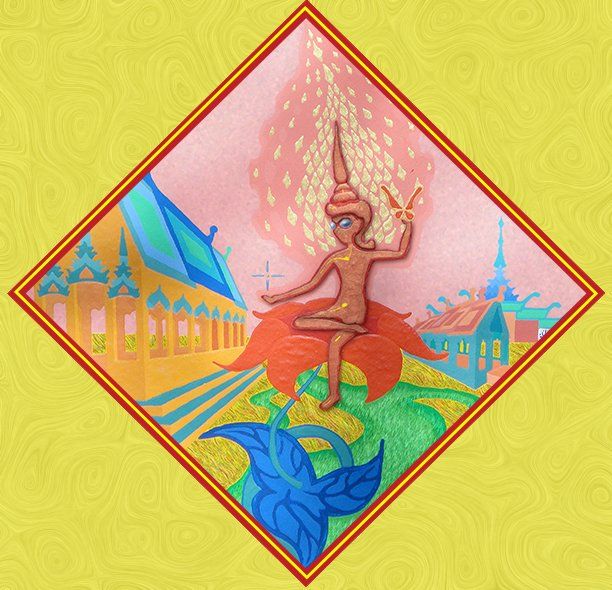
Within ‘The Two Persistent Obsessions,’ the vast complexity of The Common Desire is described in great detail, along with the significant labours expended by the Majastas to manage them within the Living System. By no means do they only manifest as bodies of water, although for the most part, fluid in form, the Common Desire may present in many other dynamic and shifting ways. For those able to penetrate the depths of this work, a measure of appreciation for the challenges that a Majastas may face in managing this one aspect of The Living System may be gained.
Majastas Bakasha-Duta II admonition
In 153,508 UKC, the year following an extreme breakdown in cluster order, this Majastas made the following admonition on the Common Desire:
“Have a care! There is a far harsher, relentless and unforgiving taskmaster than the Majastas, awaiting the moment the Mantle withdraws its protective wings. Who is this creature, you ask? Yourselves! Authority never ceases to exist. ‘Liberty’ has a brief existence. Once external authority is removed, internal authority takes its seat. ‘Independence’ is slavery to the mediocrity of mass perception. What cry accompanies the single being, living in isolation, but the anonymous voice of insufficiency and uneasiness?”
Generational Plans
These are immense endeavours undertaken by a single Majastas before being continued by several successive Majastas or even one or more Majastas Dynasties. Most of this is accomplished within the Resplendent System of Tatchlan, where incremental actions, referred to as the ‘Collective Pull,’ followed in a specific sequence, lead to the modification of many aspects of life upon the Skin of Anu, or to the perfecting of cluster behaviour. Due to the extended time scales and the subtle nature of the changes, these Plans often only become apparent in hindsight. Esteemed Librarians and Honoured Historians can best view the past outlines of these prodigious undertakings. Even they grapple with the daunting scope of these long-term Majastas undertakings and marvel at the complexity of often multiple Generational Plans nested elegantly within one another.
On occasion, a particular Generational Plan is paused in favour of another. Spontaneously occurring ‘Beneficial Derivations’ within the Danam Yeldic portion of the Splendid Yeldic Body may also impact on a particular set of Majastas initiatives. It is exceedingly rare for a Generational Plan, once begun, to be abandoned. This depth of continuity reveals much about the influence of The Throne in harnessing Majastas' diversity to subsume the blindly capacious nature of the Common Desire.
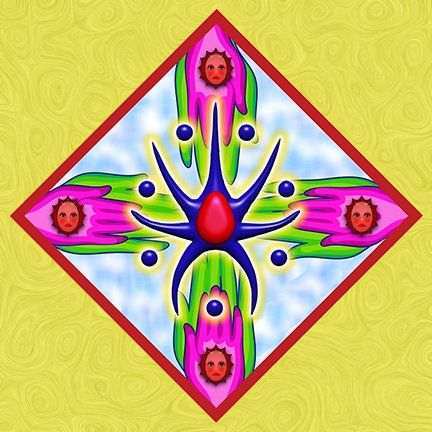
Reviewing the history of the Koru and Danam Yeldic Cluster-of-Clusters Nations, it is clear that these plans surpass the willful chaos of pre-Tatchlan civilizations. The only instances of a Generational Plan being confused or abandoned occurred when the entire Living System was disrupted, such as during a Burning Blossom Series. The two most famous Generational Plans of the Secondary Epoch were the Koru’s fashioning of the Danam Yelda and their fashioning of the Upata Bulb. Both of these took several consecutive dynasties to bring about. An illustrative example involves the history of the Upata Bulb. This was done by innumerable geniuses directed by what is now known as the ‘Rota of Upata Majastas Mothers.’
Branches of Generational Plans
Honoured Historians created this classification structure to organize the varying types of Generational Plans they have discovered. What follows is the briefest of summaries of the three largest categories, each of which is the general title for a large gathering of subdivisions that is not detailed. The majority of instances in which such Majastas' work is revealed within the novel series fall within the third broad category of Epochal Plans.
Perennial Plans
The most common and least discernible are known as Perennial Plans. These essential maintenance and facilitation protocols are carried out continuously, in perpetuity, or brought forward at regular intervals. They also continue for the most prolonged periods, usually in the background of other Majastas' work. With the exceptions of some Majastas Multitudes, a Majastas seldom wakes and commences such a Perennial Plan and lives to see its completion. Perennial Generational Plans are said to ‘run beneath our feet.’ This phrase is meant to denote that they are both invisible, eluding general perception, and fundamental, as they underpin all else.
These Plans are also the most amenable to having additional Generational Plans attached to them for portions of their extended term. These supplemental Plans may be of shorter duration and specific focus. Still, they must, of necessity, harmonize with the larger Plan’s focus. It is not uncommon for one or many complementary Targeted Plans (see immediately below) to be attached, like beads on a thread, to an extended Perennial Plan. Such associations add depth to these short-lived Targeted Plans. It is also possible to suspend these slow, quiet initiatives relatively quickly in exceptional circumstances and revive them when normalcy returns. These ongoing Plans are the most integrated into Tatchlan and, once inaugurated, require little close attention. At regular intervals, they produce outcroppings, which the Majastas open to inspect. If all is well, they are closed and immediately sink beneath the surface of the Living Orb. These are the least visible, and their influence is the most subtle of all the Generational Plans manifesting on Anu's Skin.
Targeted Plans
In contrast to Perennial Generational Plans, Targeted Plans are specific to a particular time and place and have a far shorter lifespan. These are, with few exceptions, the product of a single Majastas. Most are limited to a portion or all of their reign. Most recorded instances of Targeted Generational Plans are so fleeting that they are launched and completed within a single generation. They also tend to focus on a specific region or locality. Such a keen focus may even extend to a single Encirclement, particularly one made visible within Tatchlan due to a unique distinction or deficit manifesting.
These Targeted Plans bear the stamp of a specific Majastas Hand and are said to ‘issue directly’ from it. As such, should that Hand be withdrawn due to the aims being achieved, a significant interruption, or the Majastas dying before its completion, it usually dissipates. This is partly because the Targeted Plan only ‘sits on the surface’ of the Living Orb. Given its keen focus and tenuous nature, on occasion, it is possible for those possessing sufficient depth to see its outlines within a single lifetime. It is more common for two or more generations to pass for this to be generally discerned. While such plans appear and disappear on the Living Orb's surface, the particular sets of complex actions performed in a predetermined sequence from a pre-existing Targeted Plan may be repeated with exactness through the ages. Among many other reasons, it is said that this is partly due to The Common Desire lacking all memory and repeating a range of particular follies every few centuries.
Epochal Plans
These are the most ambitious, and often the most audacious, of all Generational Plans. They are Targeted and Perennial, with a solid focus that extends through entire dynasties. Examples touched on throughout these novels include the South to North Movement (see immediately below), Tolku ’s Rectification, the fashioning of the Danam Yelda as a Majastas -producing Cluster-of-Clusters Nation by the Koru, the Danam Yelda’s creation of the Upata Bulb and the Yeldic Monumental Correction. In these and other examples, a sense of urgency may be expressed to inform us of these enormous endeavours. Unlike Perennial Plans, they often have few or no precedents and require radical change to ensure success. Some of these Epochal Plans have, among other features, interrupted or altered long-standing Perennial Plans as a vital part of their distinctive mission. While some involve the creation of new Living Instruments or the improvement of an entire species, others address profound issues with the Tatchlan System. These latter works are also known as ‘ Corrections .’ Epochal Generational Plans are the most understood and well-documented due to their far-reaching impact and extended life. The exception to this rule is the Rectification, also known as the Killing Swath, which involved terminating the Primary Epoch as part of its terrible mandate.
The Collective Pull
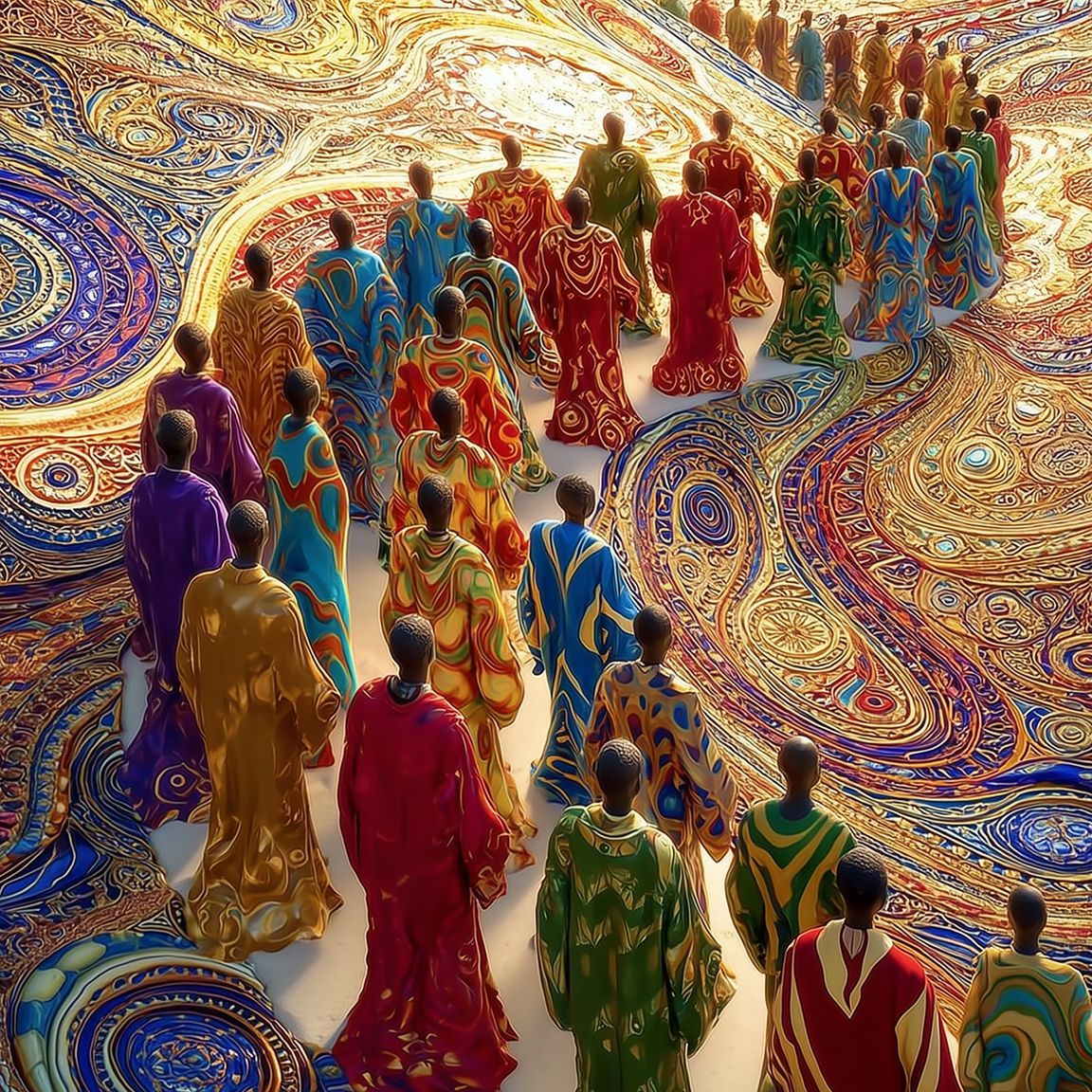
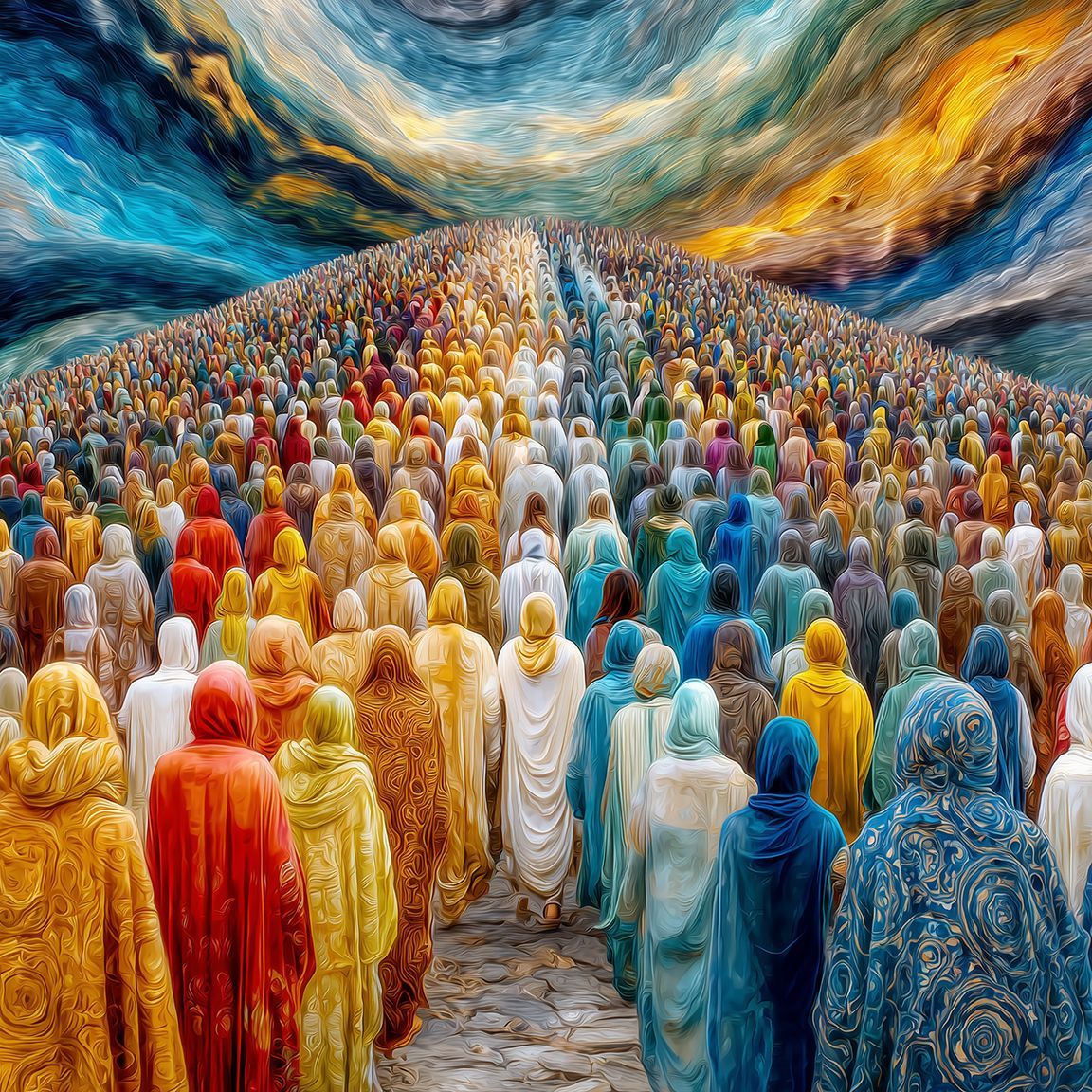
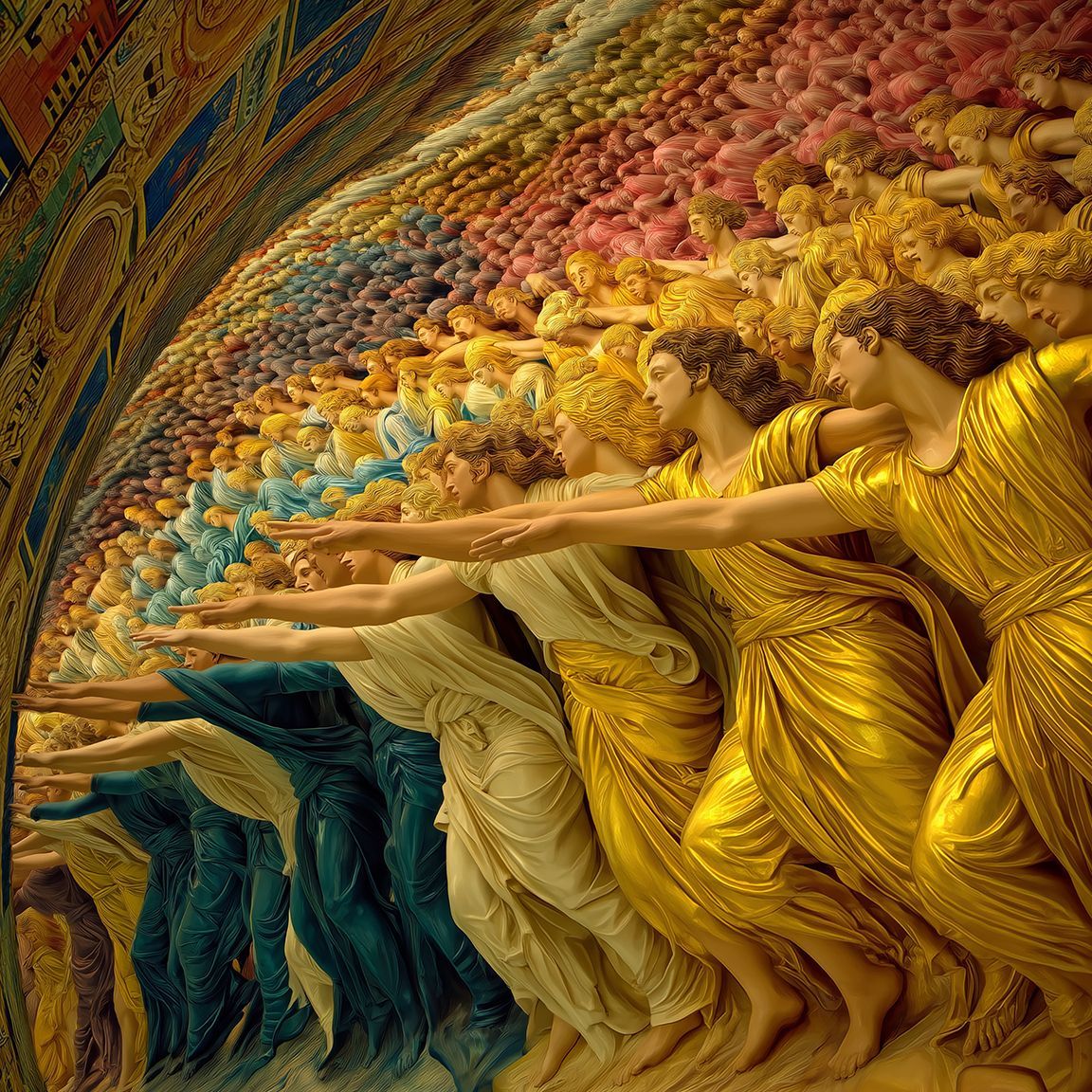
As with other such arcane notions like the ‘Generational Pause,’ these Dictum Artworks depict something that, for the most part, only Esteemed Librarians, Venerable Scholars and Honoured Historians see. It is the review of archival and historical material going back to at least four generations that manifests this sign of the ‘Resplendent Hands’ at work in the gentle, incremental guidance of the fleeting generations. The term ‘Collective Pull’ was coined during the Primary Epoch, and there are innumerable instances where Secondary Epoch academics see clear evidence of it. With only exceedingly rare exceptions, this Pull is invisible to the current generation.
Generational Pause
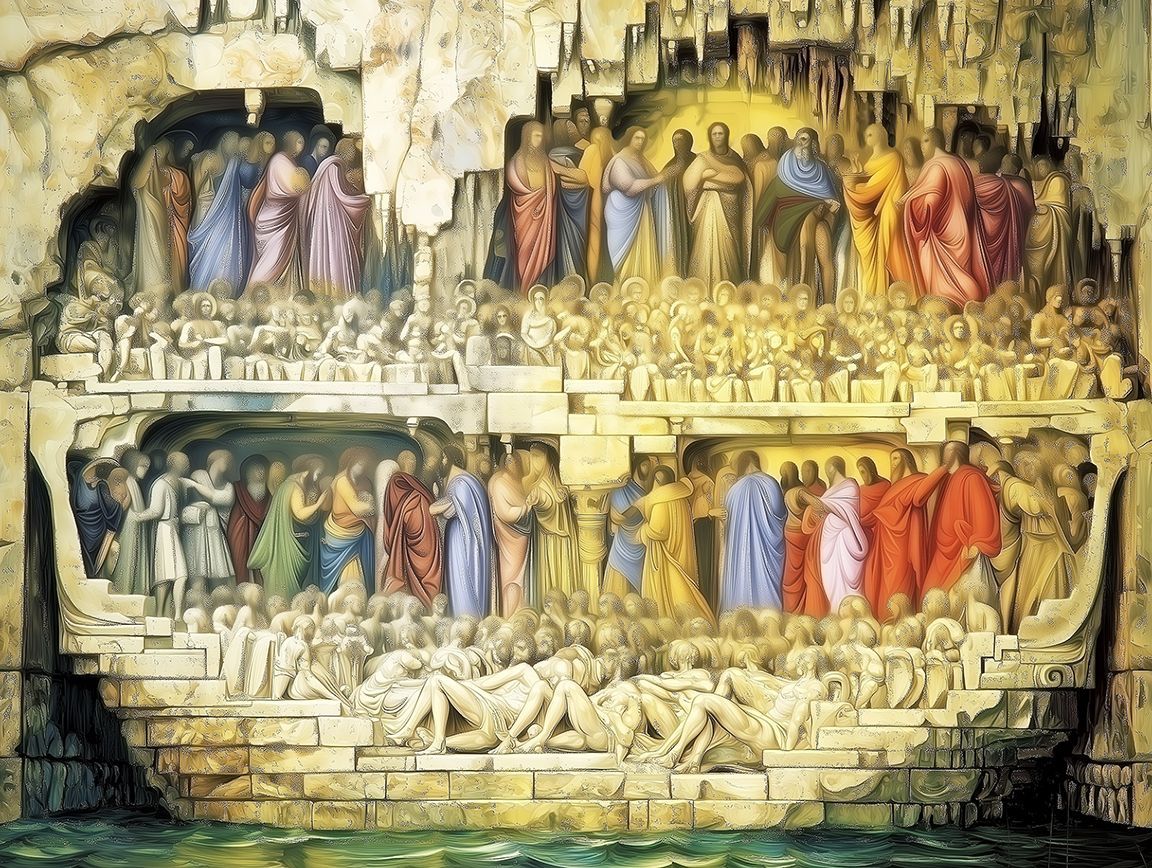
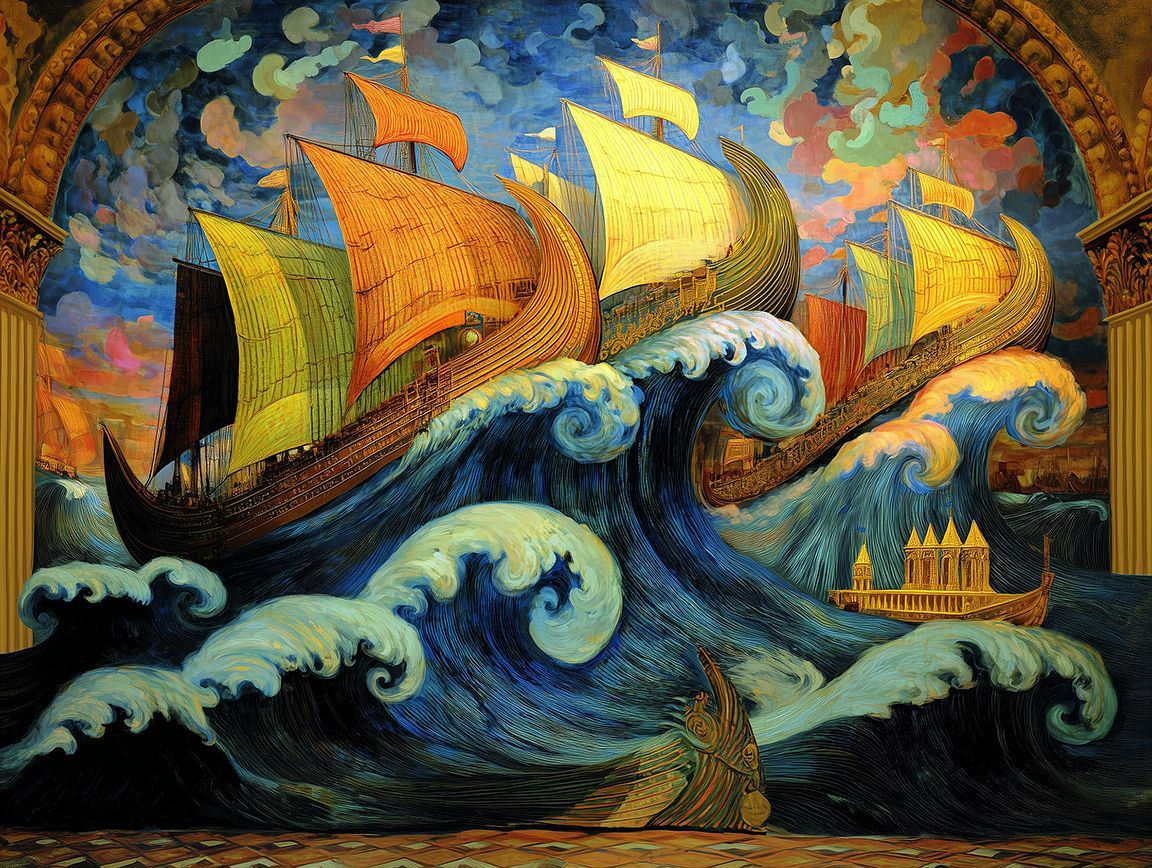
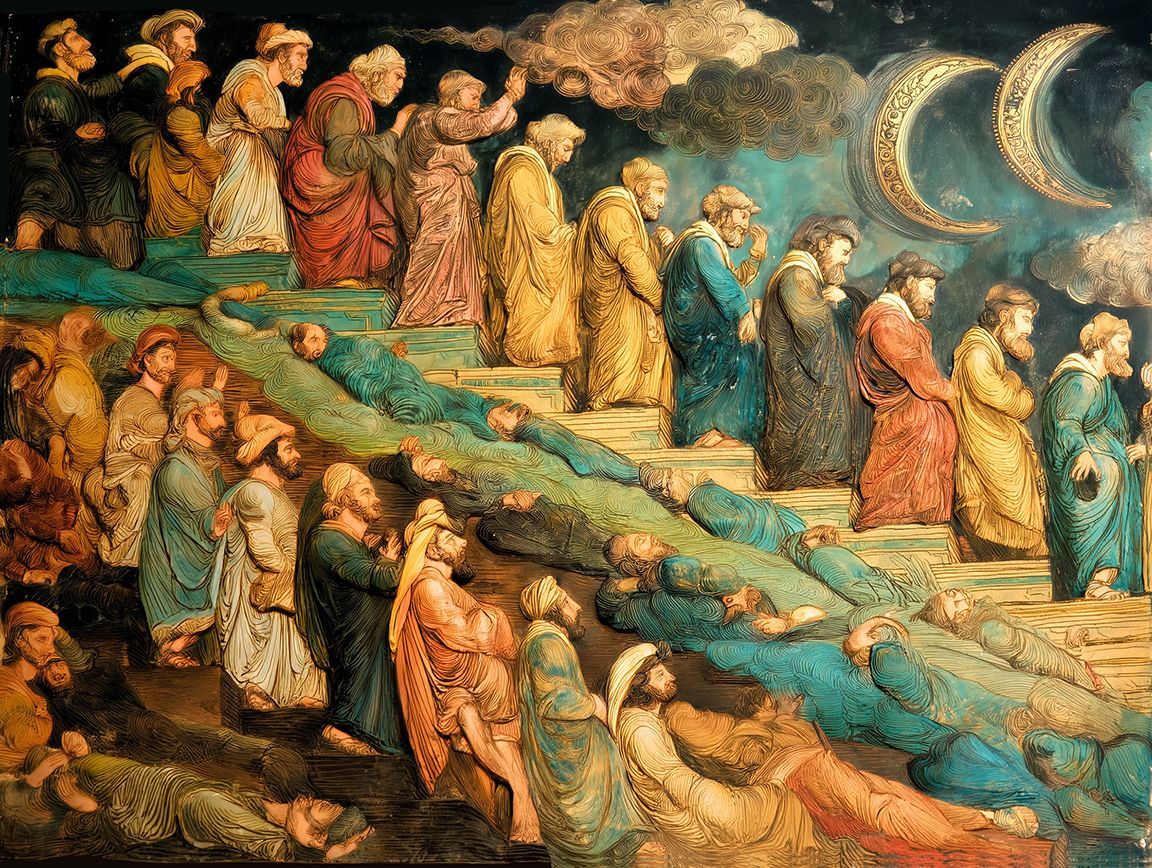
As with the abstract and unknown concept of the ‘Collective Pull,’ this is another popular subject found within the Dictum Arts that no individual has direct experience of. Only the rarified eyes of Venerable Scholars and other academics can discern the outline of these movements. Simply put, a ‘Generational Pause’ often denotes a generation at rest between periods of dynamic collective change, as part of one or more Majastas' Generational Plans. In different ways and from widely divergent historic periods, these alternating generations are represented. The first and last images show layers of standing and reclining figures representing successive generations active and at rest. The middle work shows the same notion in a novel way, with brilliant ships riding the crest of a wave, while smaller, less colourful ships occupy the trough.
Most of these immense undertakings take place nearly invisibly over many generations. This ensures stability and continuity for each generation as they live their lives. There are occasions when some of these events must take place in a comparatively brief time frame, meaning one or more generations may see their initiation and conclusion. In the case of these more dramatic changes, the Majastas ensure these events are followed by what is known as the Generational Pause. This usually takes the form of an entire generation arising and falling away after completing the work. This way, all disruption is concluded, and a peaceful adaptation may occur before any new commencement of Majastas' labour.
Majastas Inhibition
As with much of this monumental activity, this episode, which may extend over several generations, is invisible to those affected. The laying of this Inhibition is usually a portion of a larger Generational Plan, requiring The Common Desire to be diverted from specific areas, leading to blindness, and allowing for painless modification. Honoured Historians have also interpreted these periods as another version of the Generational Pause, separating at least one generation of past drama from the present resolution. There are notable cases where certain Sensitives, or others of profound perceptive abilities, are disquieted by a growing awareness just as the Inhibition is relaxed. With the general release, they are the first to apprehend the contents of the now-opened door.
Life Must Live with Life
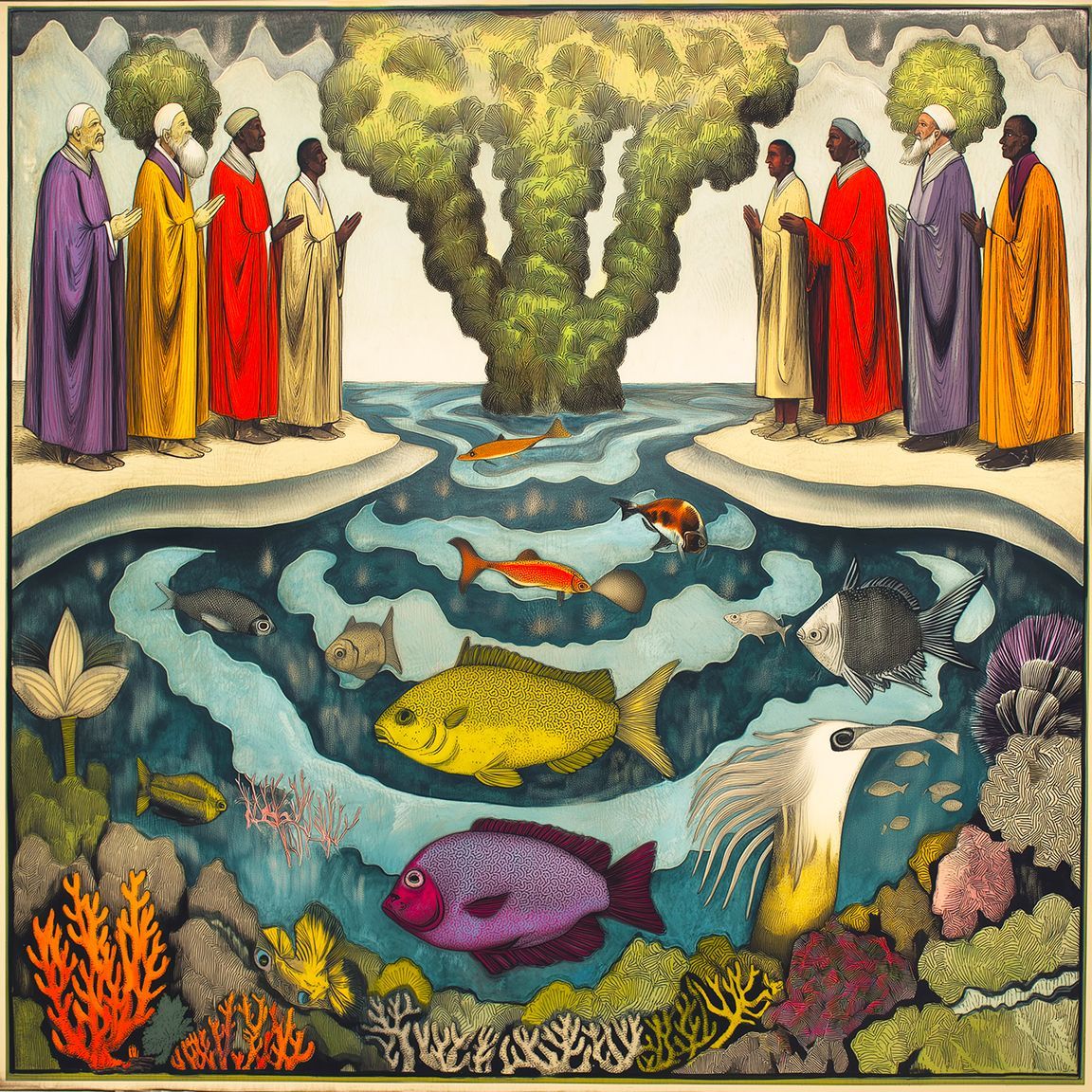
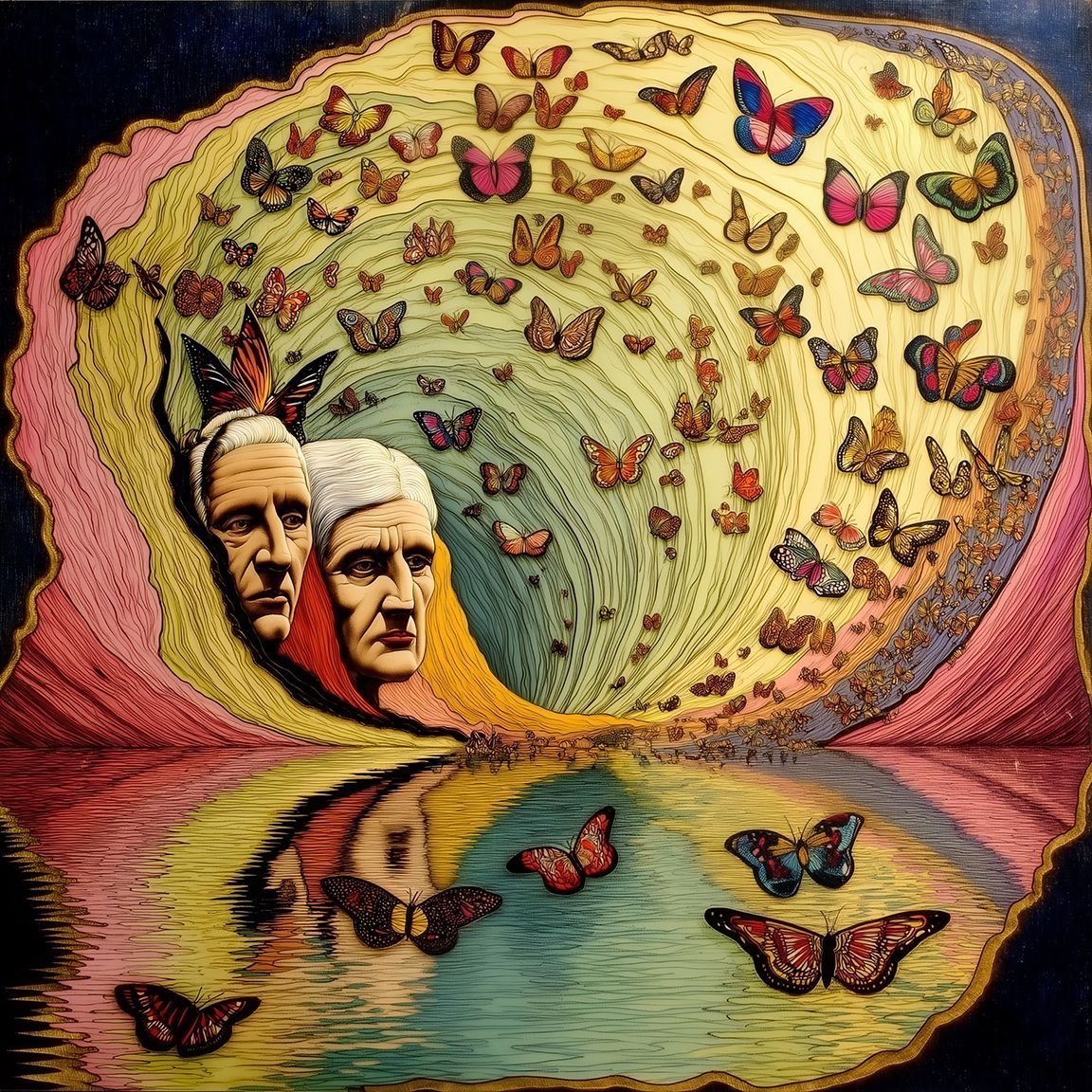
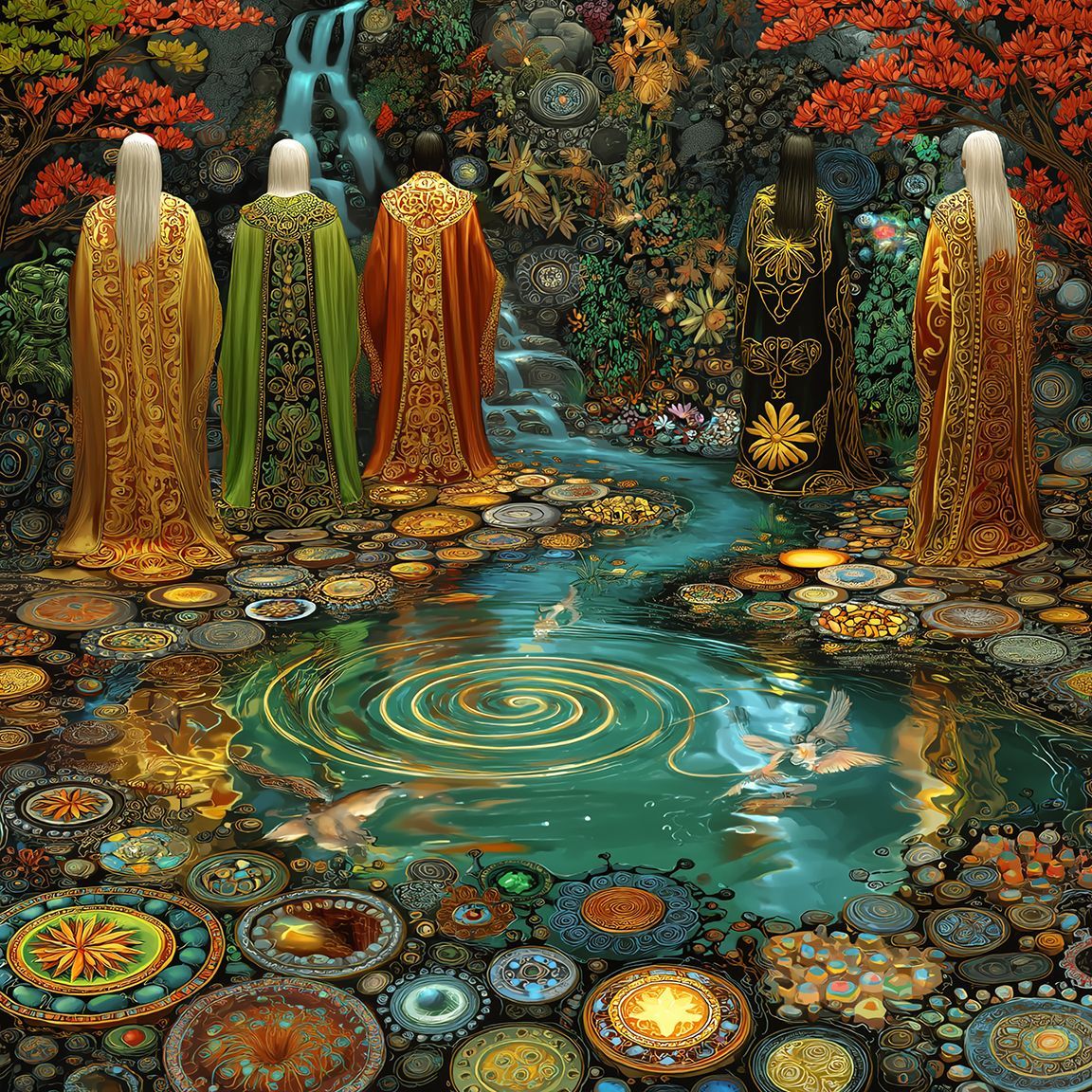
Until the arrival of the Upata Bulbs, this most-ancient adage took a wide variety of forms within the Dictum Arts. Tradition holds that it began with the Hathnal Religion early in the Lesser Era of the Primary Epoch. It took on new urgency as the Menem Religion embraced machines during their supremacy in the World City of Thithanu. While all this changed after the First Suvuka Onslaught, the propensity of fashioning devices that often inadvertently bred Self-Absorption endured into the Cluster-of-Clusters Nation of the Primary Epoch. While some were benign, early Majastas deemed it necessary to domesticate other crafted implements (see Converting Machines into Animals immediately below). With all clusters within Upata Bulbs, this maxim takes on full relevance.
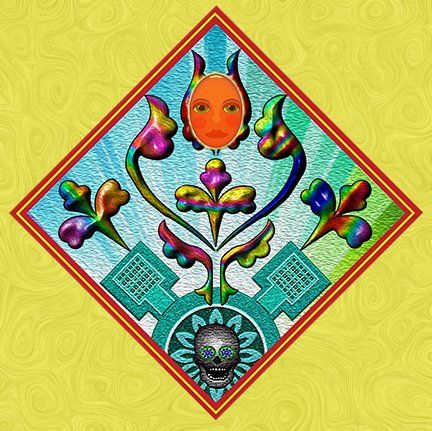
Corrections and Rectifications
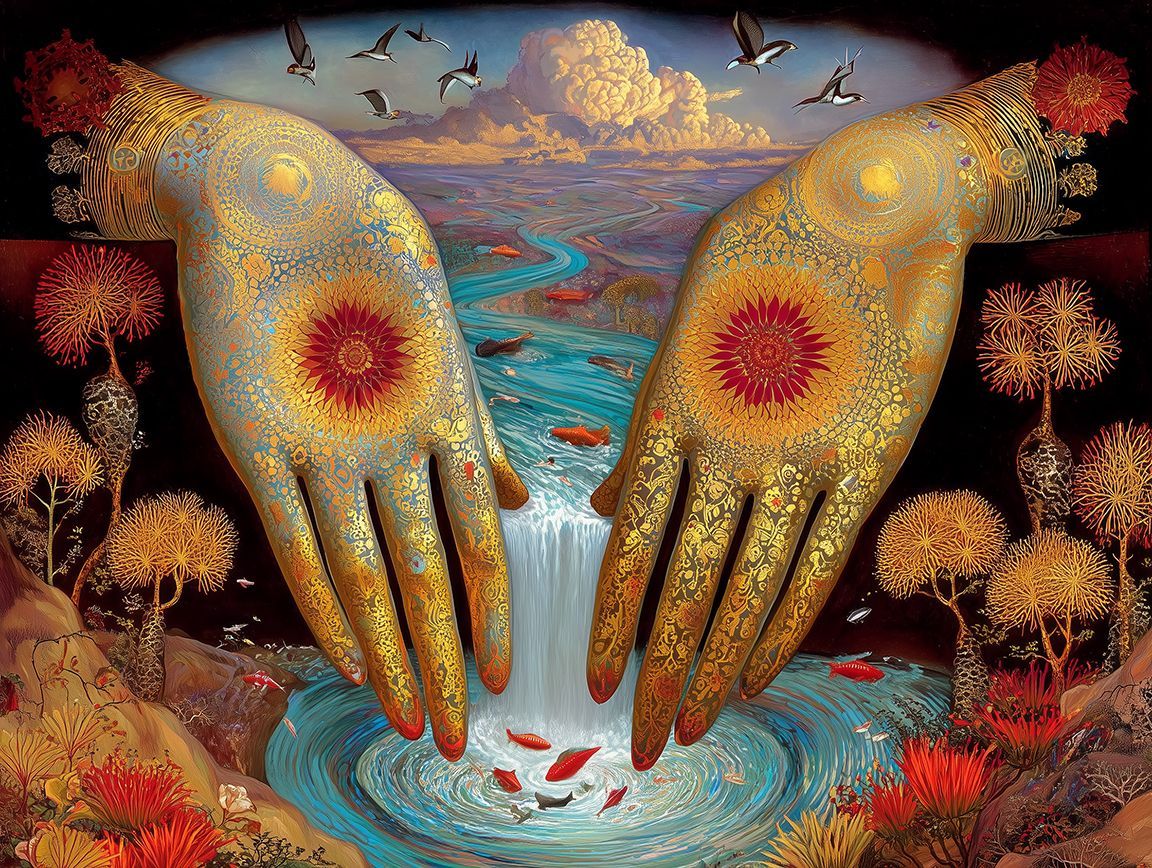
This fine example of Dictum Art presents a comprehensible image of an abstract and remote subject, the enactment of one or more Generational Plans to bring about a Correction or even Rectification. The Resplendent Hands of the Majastas reach down to the surface of the Living Orb and modify the Common Desire, shown as turbulent waters teeming with life. In doing so, they redirect blind and willful tendencies into new, more constructive channels.
The term Correction refers to an Epochal Generational Plan focused on an aspect of the Living System. Most Corrections involve incremental work over long periods. While powerful Operants have been known to enact specific critical Corrections, especially before the arrival of the first KoruMajastas at the commencement of the Secondary Epoch, these important undertakings are the near-exclusive preserve of the Majastas. A majority of these Corrections involve some aspect of The Common Desire. Corrections are also performed on all facets of the Resplendent Work, from the surface to the core. A key element of most Generational Plans is a sequence of interrelated Corrections over time. These modifications and interventions comprise many of the Majastas' labours within the Living System.
Rectifications may be described as the termination version of a Correction. These extreme events address profound issues by temporarily halting all Tatchlan activity. This leads to the complete overturning and restoration of the entire Living System or a specific portion. These events exact an appalling toll on the inhabitants of the
Skin of Anu and lead to pronounced changes across all aspects of life on
Anu. There have only been three occasions when such events have taken place. The first, popularly known as
The Killing Swath and the Ultimate Panacea, occurred at the end of the
Primary Epoch. The second and third are known as ‘Lesser Rectifications ’ and took place in a tiny location early in the Secondary Epoch.
Yeldic Momentous Correction
There is no record of this term before it was used by the first Majastas of the Danam Yelda’s Texen-Sho Dynasty in 70,222 of the Emaxul Age (344,372 UKC). The oblique reference was found in five pieces of Her Majastas Annotations. Only after the death of Majastas Dreamer Texen-Sho I did Honoured Historians, finding no prior use of it, conclude She had coined the term. The placement of it within particular historical and current Census material was ambiguous. Majastas Jalalun-Juna II used the name in the year 227,329 of the Emaxul Age (501,479 UKC) in Her own Imperial Marginalia. Esteemed Librarians have since concluded it was improbable. She would have reason to review Annotations from the distant Texen-Sho Dynasty. Her references are also ambiguous, although history notes She was troubled on the subject.
Such unlikely coincidences have lent further credence to the Honoured Historian’s ‘Conglomerations Theory.' It suggests successive Majastas had constructed an animate sigil formation within the Living System to communicate serious matters with consecutive members of their dynasty and subsequent dynasties that they chose not to commit to paper. The term refers back to the ancient ‘Breathing Seals Conglomeration,’ still alive within Tatchlan, which not only recorded common Anomalies and how to deal with them but communicated the lamentable errors of the Primary Epoch to all Majastas of the Secondary Epoch. Such profound works are presumed to dwell at such depths within the Living Orb that only Majastas, having achieved The Throne, may locate. One hundred and eighty thousand years later, in 407,942 of the Emaxul Age (682,092 UKC), Majastas Majastas Seneferuz IV evolves the term several times and declares.
“Tatchlan’s glorious garden, the face of all life, needs tending.
The Yeldic portion must find new soil to grow in.”
Further details will be found on the Danam Yelda page.
Majastas Between
Throughout the Primary and Secondary Epochs, many combinations of one of the Spokes of the Cluster Wheel and a Majastas are well documented. While all Majastas begin as Maja, other Spoke combinations are relatively infrequent. These are known as ‘Majastas Spokes.’ In the case of Betweens, these may take on a singular manifestation. While a new Majastas may grow into a Giant for other reasons, not all Majastas Betweens become Giants; those who do are unique. Only Majastas Multitudes surpass Giant Majastas Betweens in their grandeur and majesty. They retain one set of limbs, but all are magnified in their unique form of sovereignty. They also become exceptional beauties, showered affectionately and celebrated with numerous art, literature, and dramatic depictions.
The most-ancient Tolku noted this feature among their Majastas Betweens, leading to much speculation about the general unique depths of Betweens. Completes, who manifest a more profound sign of Tatchlan in many ways, have never displayed any sign of Giantism. On rare occasions, when a Majastas Between, who was not until then a Giant, has to absorb a Healing Vat, they may manifest this aspect of their Presence.
During the Nantu Age of the Secondary Epoch, fifty-eight Majastas Betweens were interspersed across its eighteen dynasties.
Majastas Touched
While all Majastas begin as Maja, ‘Spoke Compilations’ are less common. One of the least Spoke and Majastas combinations seen is that of a Touched becoming a Majastas. This presents both wondrous opportunities and unique challenges. Such a Majastas may have profound sensitivities, producing a unique Mantle able to plumb depths and discern subtleties unknown to all others. As with most Touched, communication with others on the Skin of Anu remains the primary issue. How this novel situation was first dealt with in the Primary Epoch is unknown. Still, it is clear the first reference to a Majastas Touched during the Primary Epoch immediately brings about the construction of what is known as the ‘Majastas Chorus,’ a collection of Sensitives acting as the collective voice for the Majastas. Due to their unique presentation, assemblies of the Majastas Touched and their Chorus have found a disproportionate place in literature and theatre.
During the Nantu Age of the Secondary Epoch, seventeen Majastas Touched were interspersed across its eighteen dynasties.
Majastas Complete
These are said to be the most beautiful of all walking beings. They are magnified in all the graces of Completes and have been known to cause supreme joy and heal maladies just by coming into view. These rare forms of Majastas came to have a close association with Acoons due to their ability to bring peace and joy to many forms of mental suffering. Majastas Complete Bakasha-Duta II opened a new chapter in the glories of Majastas Completes by bonding with Acoons in such a way as to magnify their powers. This infusion of potency was due to Herhis ability to reverse the usual process and infuse the host Acoon with what would come to be known as ‘Acoon Blood.’ Only a tiny percentage of all Majastas Completes were able to accomplish this.
During the Nantu Age of the Secondary Epoch, thirty-seven Majastas Completes were interspersed across its eighteen dynasties.
Majastas Dreamer
This group of Majastas appeared as all others on the Skin of Anu. Their distinction came within the Living System of Tatchlan, where they were found to possess abilities to read and modify one of the most profound and mysterious legacies of the Primary Epoch, the Breathing Seals Conglomerations. This greatest of all Primary Epoch Troves is a living library surpassing all surface libraries. They were crafted by generations of Majastas Dreamers of the Primary Epoch for a select few Operants and the succession of Majastas of the Secondary Epoch. While some ‘Majastas Spokes’ appear to have had a particular facility in reading these ‘breathing entities,’ Majastas Dreamers alone could modify existing Conglomerations and fashion new ones. Only they could set down further instructions for succeeding Majastas in this most profound form of Majastas generational communication. A secondary but no less vital service they provided was the ability to turn and modify the backs of the Twelve Principal Faces of Tatchlan and the multitude of Secondary Faces. While other Majastas and Majastas Spokes possessed similar skills, it is clear that Majastas Dreamers were also masters of this arcane art.
Majastas Multitude
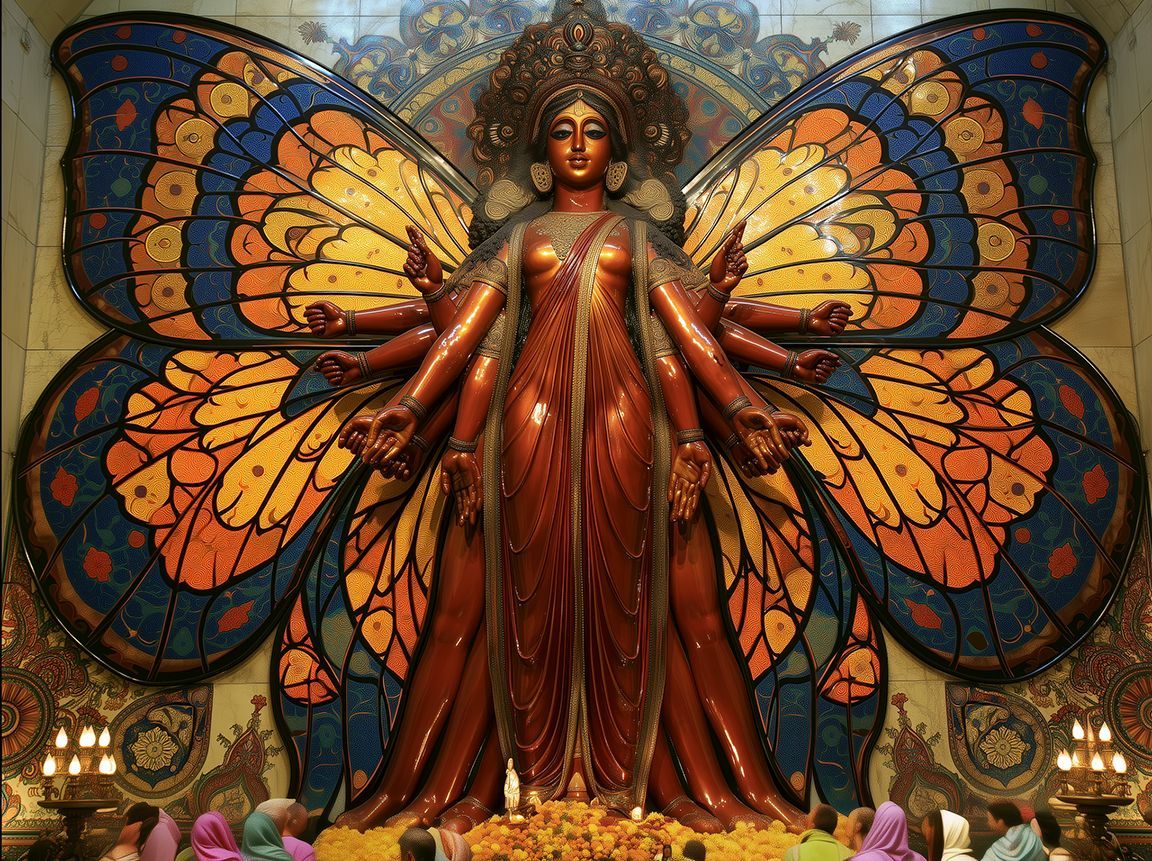
This is the monument of Upata-Shepsus VI, the first Danam Yeldic Majastas Multitude who commenced her reign in 52,002 UKC. Of the eight Majastas of this first Danam Yeldic Dynasty, she was the only Multitude. This is the first colossus of the Secondary Epoch and may be found on the southern side of the immense rotunda at the centre of the Upata-Shepsus Mantle Museum just outside the Circumambulatory Highway facing the southwestern face of The Plateau.
These are Doubles who become Majastas. This is a rare combination, known as ‘The Splendid Body walking among us,’ which has only happened a few times in the Primary and Secondary Epochs. As with the Multitudes, part of their wonder lies in how they manifest all their Double conceptions in bodily form. In the case of Majastas Multitudes, this takes on a vast, fantastical form. These unique manifestations have many abilities beyond those of Multitudes and are designated ‘Jewels of the Age;’ they live (distinct from the Eight Living Jewels). Majastas Multitudes generally live far longer than other Majastas, and the date of their rare birth becomes a Jewel Day thereafter in the calendar.
Beloved Jewels of the Age's attributes include completing Generational Plans from start to finish during their extended lifespans, creating novel and distinct new life through their hands, such as the Acoon, and radically modifying the entire Living System.
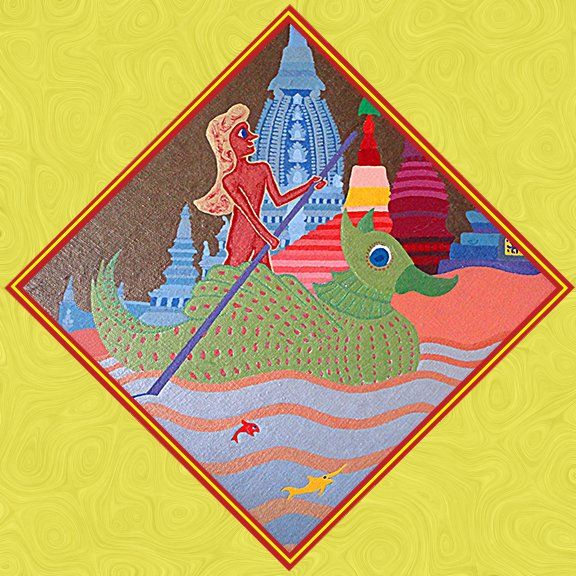
Majastas Cluster
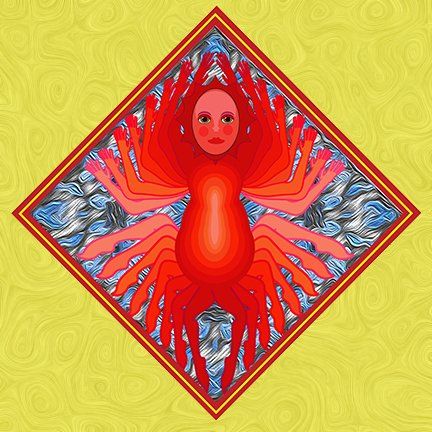
On the occasion of The Mantle’s migration from a Majastas and their cluster to a new Majastas outside their cluster, a unique set of changes occur. While the recipient of The Mantle is transformed immediately into a new being with the Mantle rising ‘through their feet,’ there is a gradual metamorphosis of the entire cluster. While taking many forms, the chief change is an almost immediate increase in the birth of Maja. This trend accelerates to the point that within a generation, all newborns in this cluster are Maja and fulfill the exact percentages of the remaining Spokes of the Cluster Wheel through an unprecedented rate of ‘Spoke Compilations’ and the flowering of a remarkable number of the Eight Living Jewels. The one exception is Mundanes, which vanish from what is now the Majastas Cluster. This leads to the Majastas Cluster employing a vast company of Mundanes to serve them in various essential ways. This benefits surrounding clusters where the Mundanes originate, as their percentages of Spokes of the Cluster Wheel increase due to these Mundanes giving birth to exceptional offspring. Whatever the former Cluster Grade, the population increases beyond all bounds, resembling one or more Encirclements. Another unique feature is a very high percentage of these Maja become Invocates and Operants in Ripe Adulthood, serving critical roles in many ministries. These Majastas Clusters also produce exceptional talents in diverse forms and often grow a variety of in-depth cultural refinements. In this rarified environment, specialties such as reading the Sigil Cubes have become one of many defining features. Without exception, the Majastas Cluster continues in this profound existence, sometimes through hundreds of generations, through all the successive Majastas of the dynasty. They are often the source of the defining cultural features of the many ages of their existence. There is only one other instance where a cluster produces many Maja with each generation, the rare Invocate Cluster.
For the former Majastas Cluster, a different set of observances is described below upon receiving the ‘Dynastic Termination’ designation from the Chancellery. They begin with the Dissolution Ceremony.
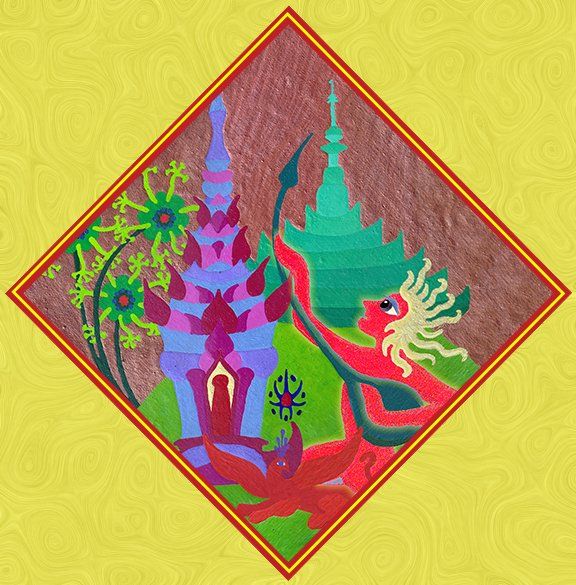
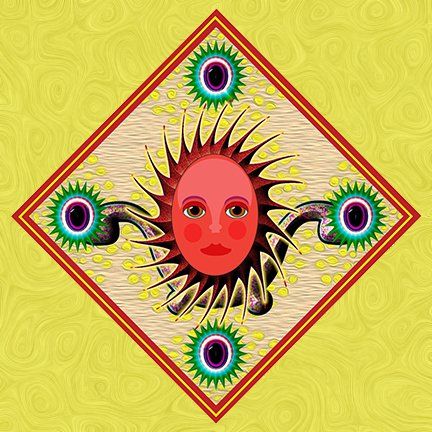
The Resplendent Hands

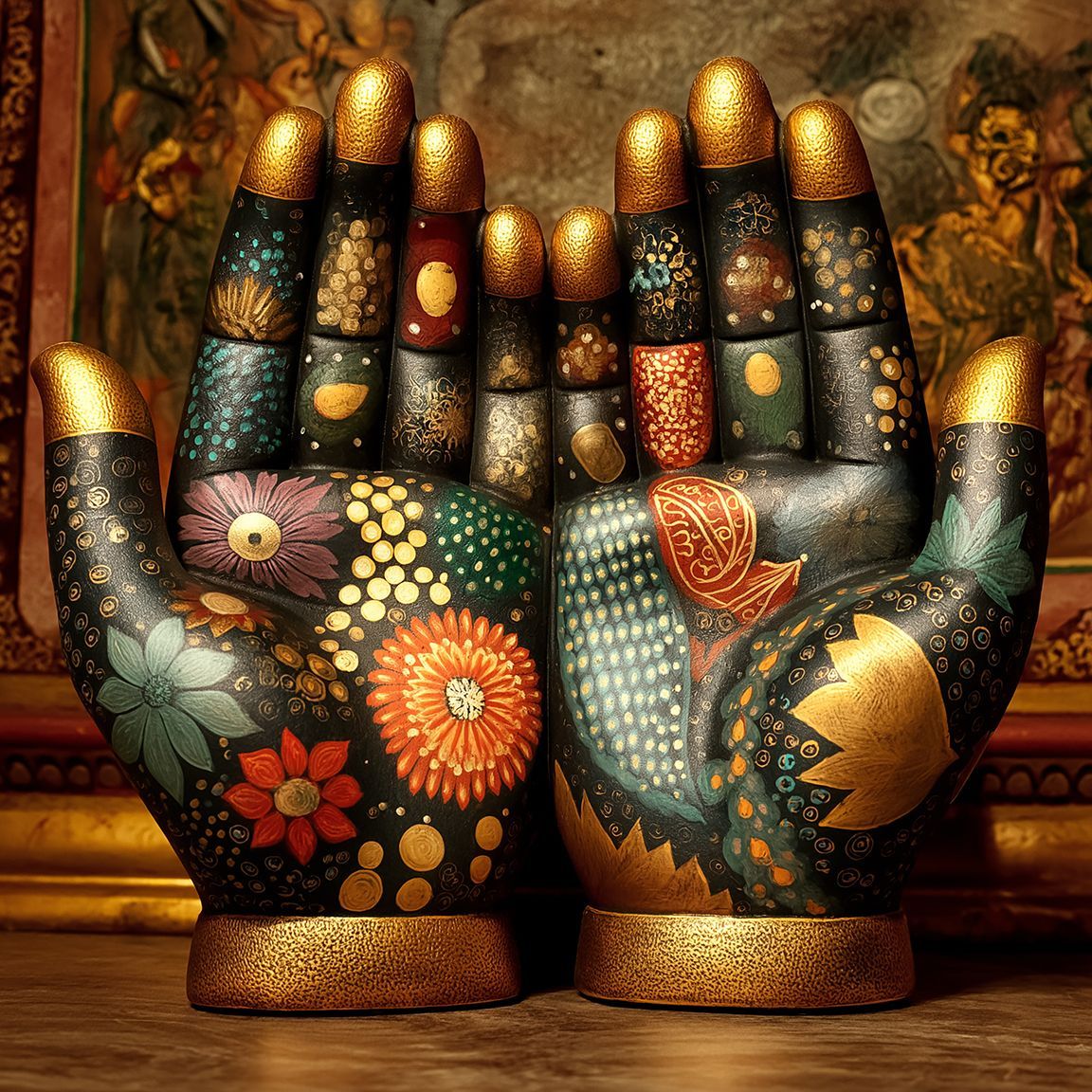
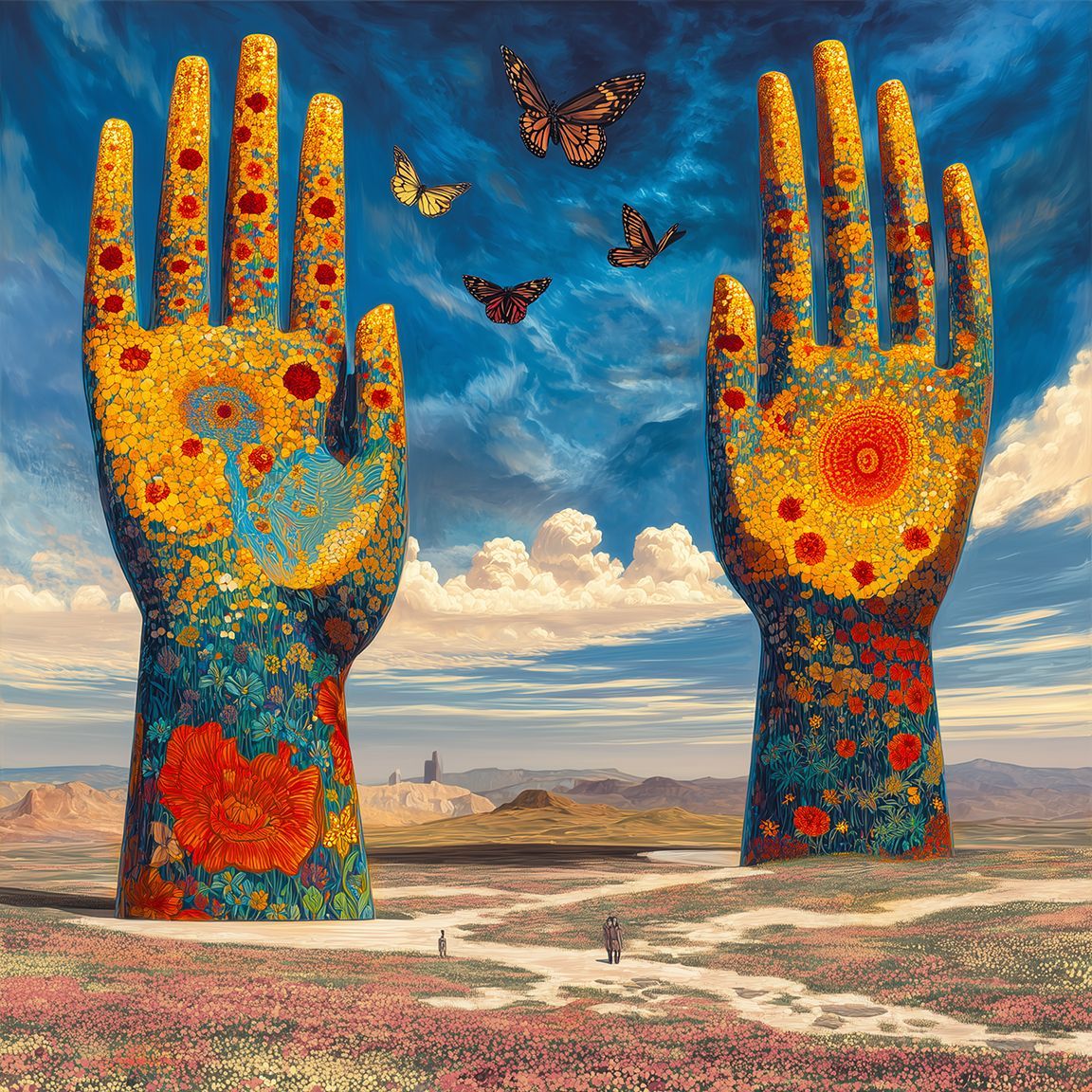
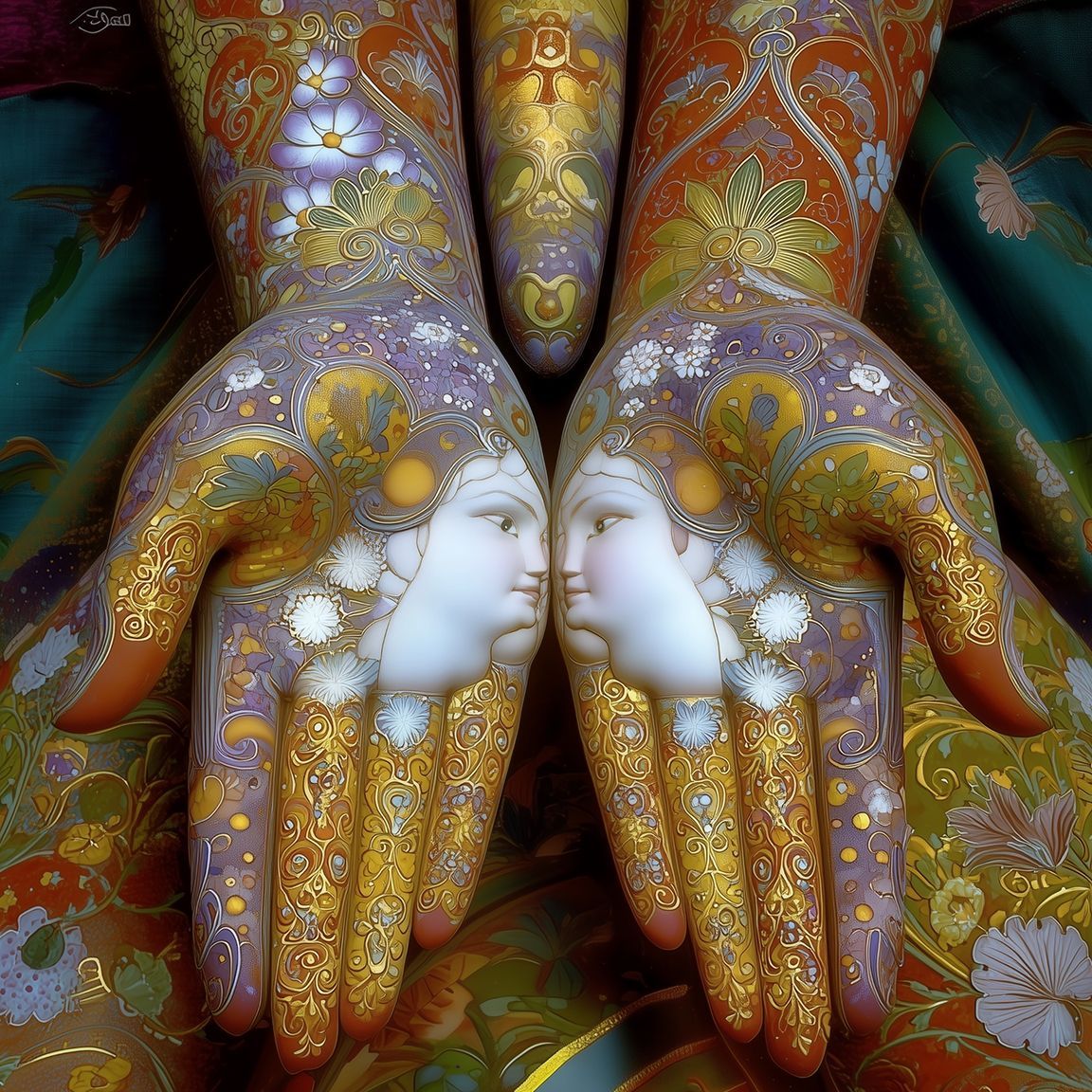
Like another popular form of Dictum Art, the ‘Collective Pull,’ these ‘Resplendent Hands’ are far too incremental, affecting universal alterations over vast time periods, to be experienced by a single, fleeting generation. They symbolize the hands of the Majastas, enacting their collective Generational Plans. There are two general traditions for these images. Urban settings see the ornate hands of three of these works. Rural settings see far more variations on the immense hands rising out of the landscape.
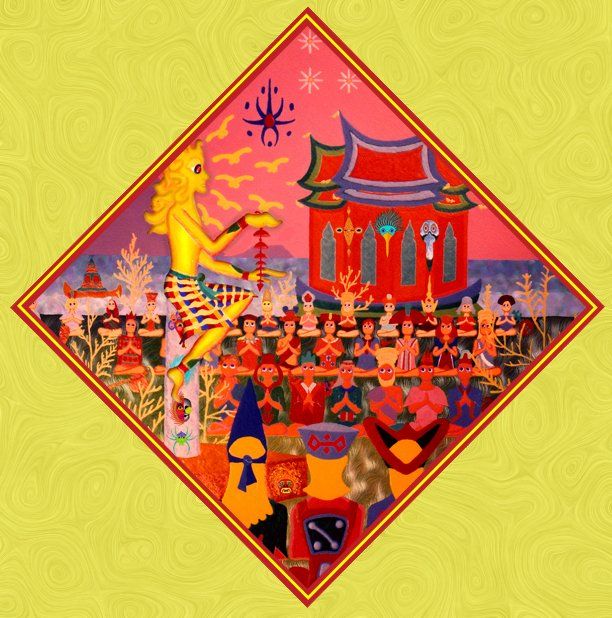
Service Supercedes Self
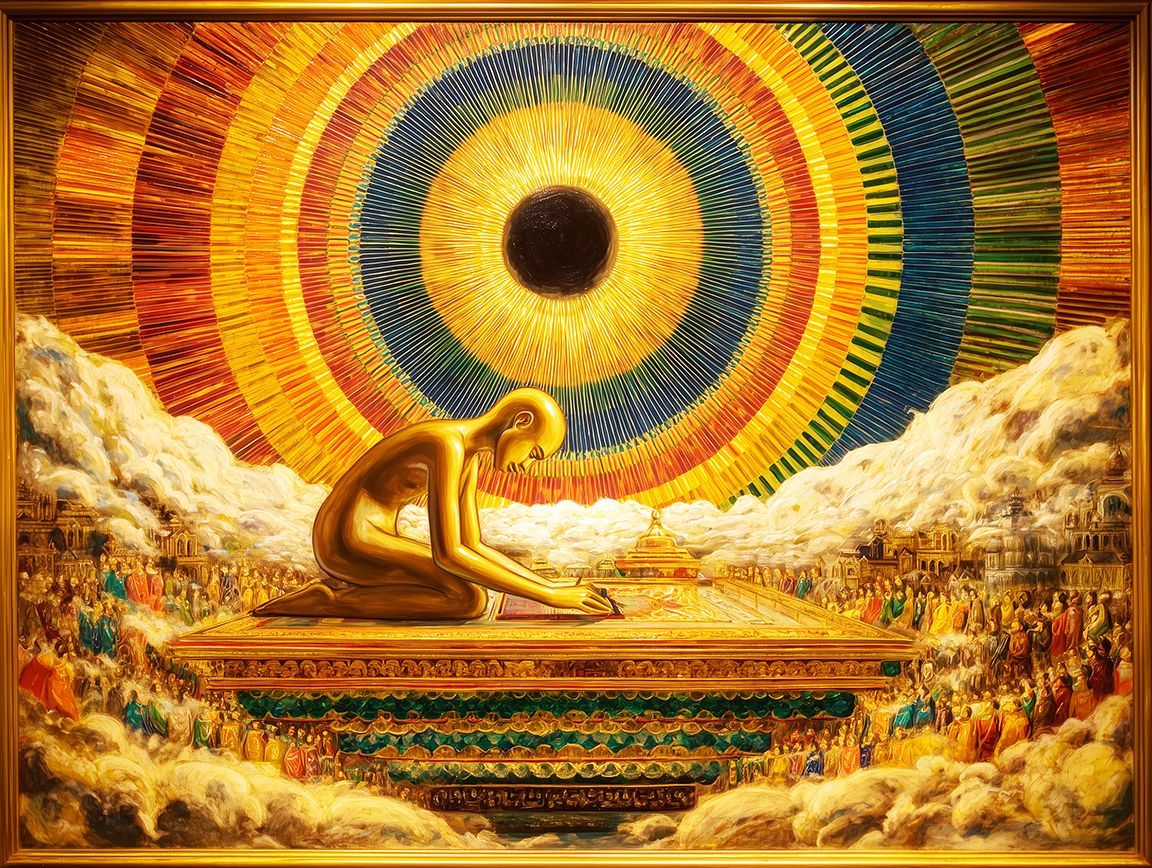
This singular image is from the ‘Dictum Arts’ of popular, non-iconic representations. This is a rare image of a Majastas embodying the foundational concept, first formulated by the Practicians of the Lesser Era of the Primary Epoch, of ‘Service Superceding Self.’
What follows is a description of Majastas' Governance upon the Skin of Anu. See Tatchlan for a more detailed description of their activities within the Living System. See Governance for details of the establishment and responsibilities of the Eight Ministries of the Majastas Variothya. It must be noted that, especially with a new Mantle, or during times of transition, such as a South-to-North Movement, the Majastas Court may be mobile for much of the year, making a series of circuits through each province in rotation. The location of the Progress Court varies, but with few exceptions, it takes place in provincial centres. Representatives of all ministries travel with the Majastas during these Progresses. They are connected to Operants and Invocates, with each of their ministries, through the Living System.
Consideration must also be given to the fact that this is a living institution open to modification and adaptation over time. Honoured Historians have observed a relaxation in some aspects of the Majastas Court's extensive travelling and the strict observance of each station of the Majastas Hours as the Majastas Reign becomes fully enveloped by The Throne.
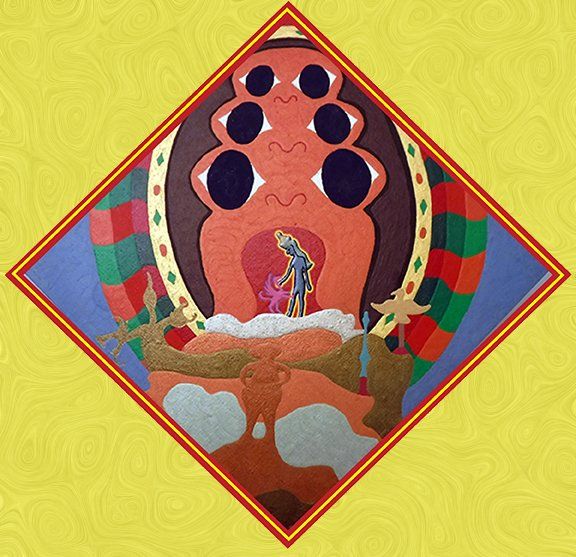
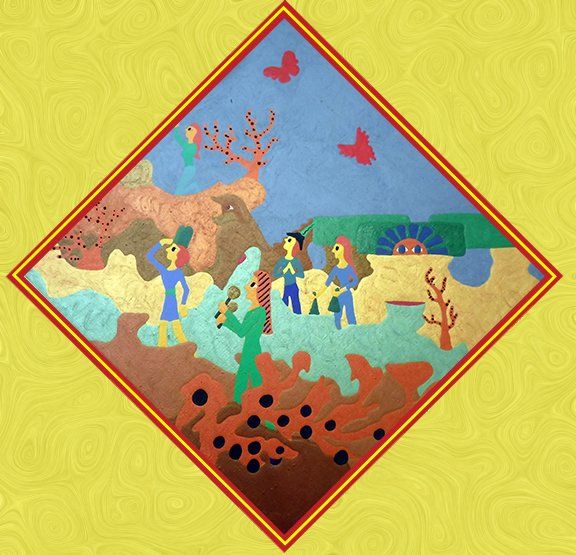
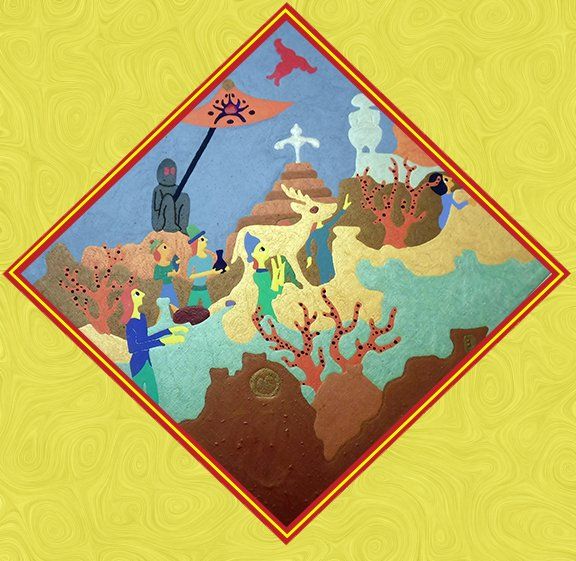
Sixth Night Phase: Hour Twenty-Seven (Myka Nu) and Hour Twenty-Eight (Dancing Eyes)
The Faces of Vashivonos and Hashahanu oversee the sixth set of Night Hours. Larpana Plants become pale purple with black patterns and become deep purple with black borders.
The Koru Majastas rests and eats within the bosom of the Majastas Cluster before entering the Living System again to scrutinize The Common Desire.
The Danam Yeldic Majastas rests within the bosom of the Majastas Cluster.




Servant Ranks
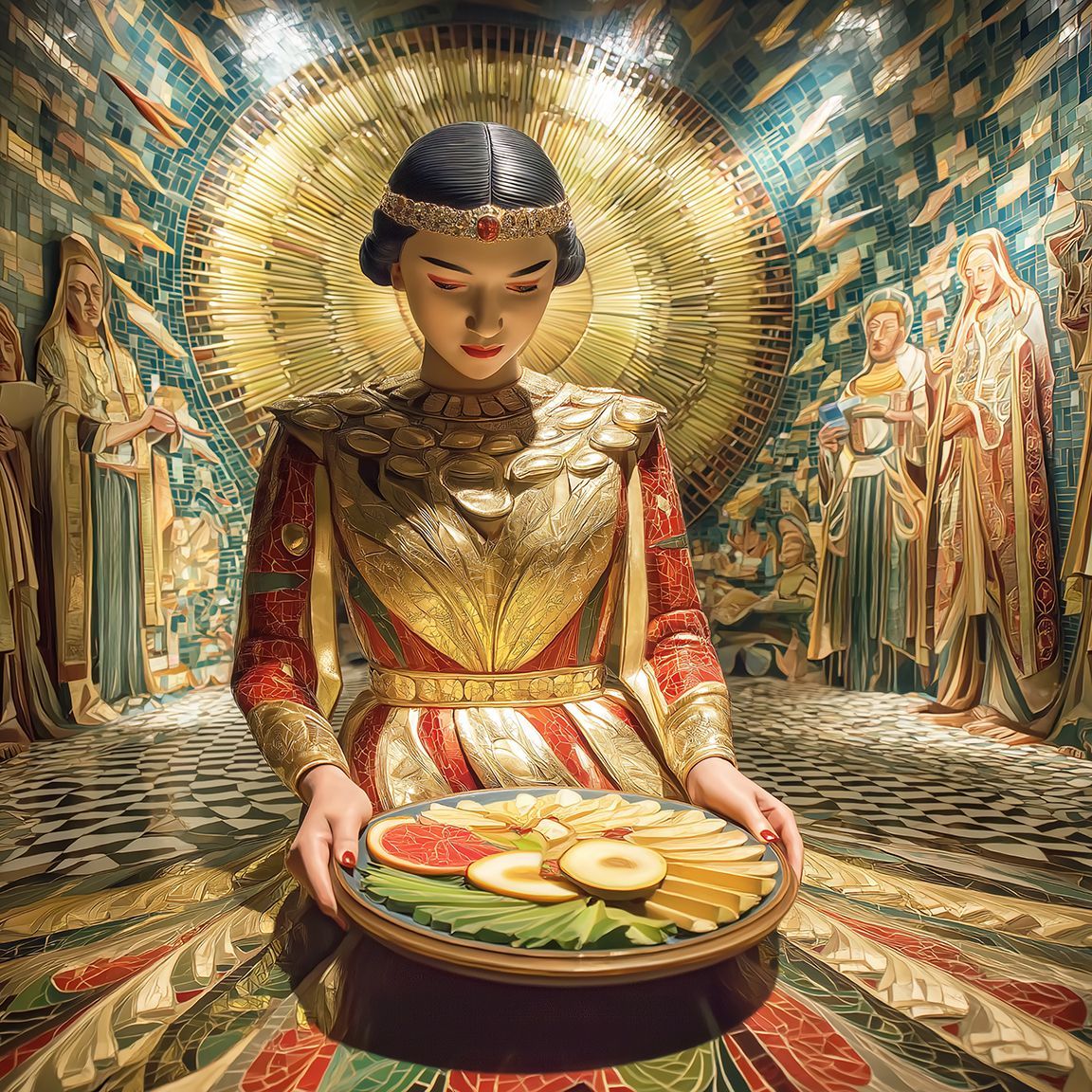

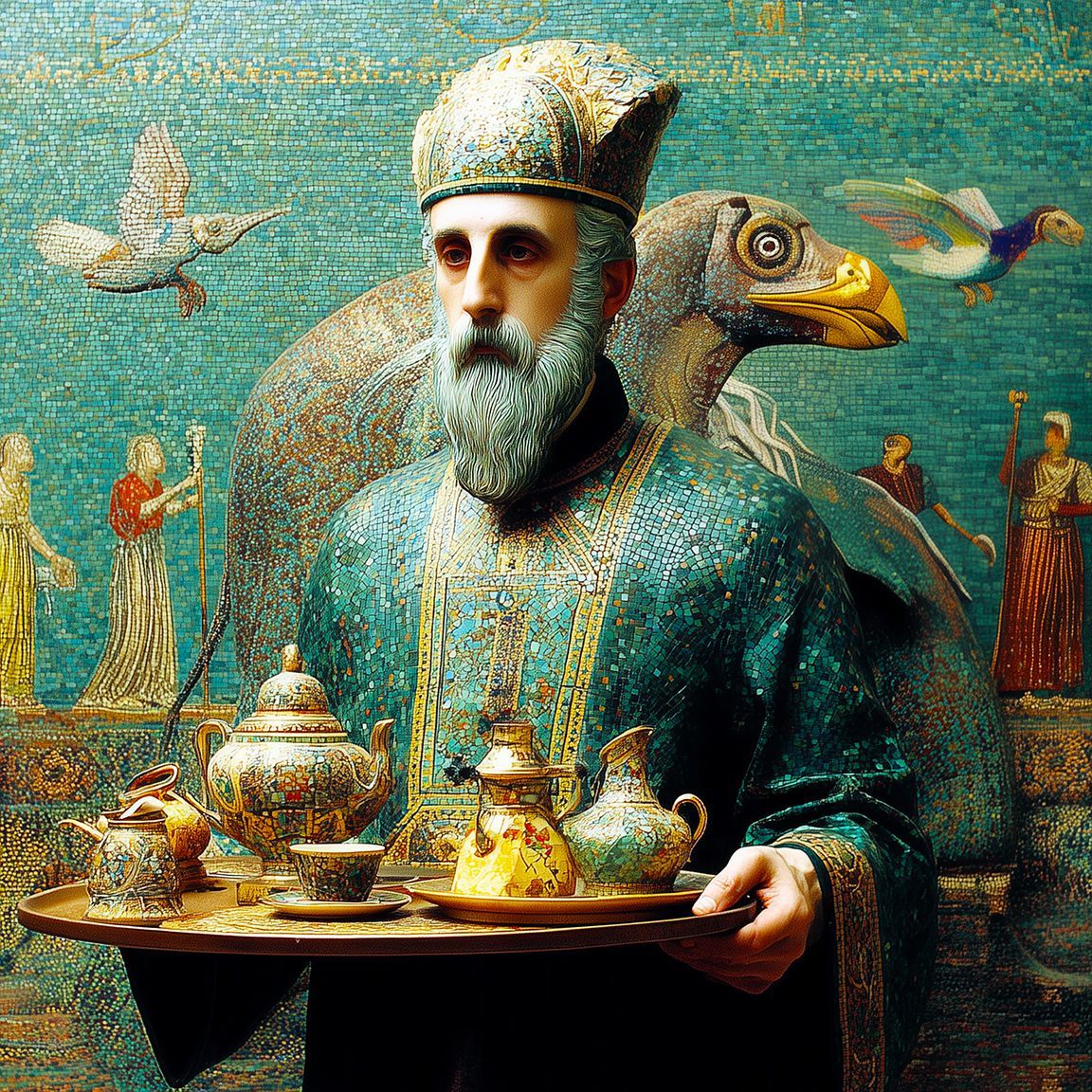
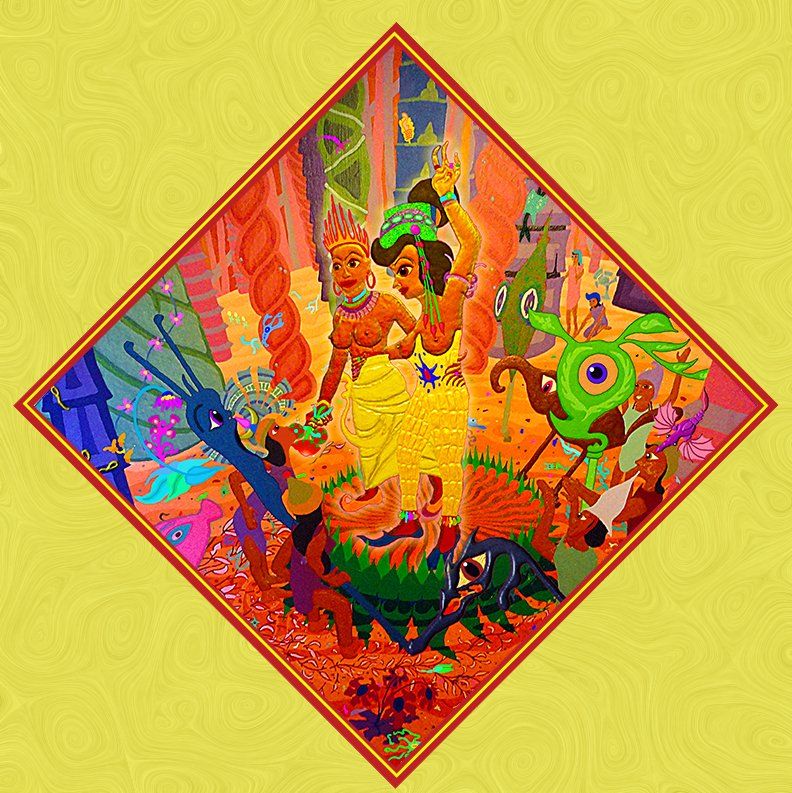
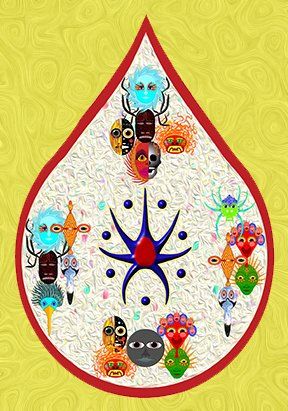
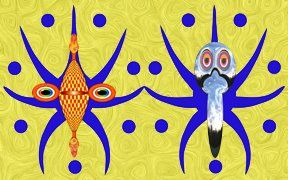
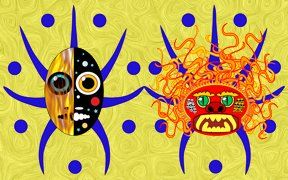
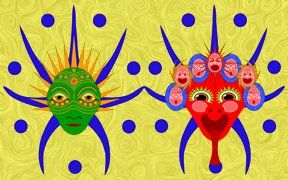
These three images are a small sampling, representing a popular branch of the ‘Dictum Arts,’ illustrating the foundational concept, first formulated by the Practicians of the Lesser Era of the Primary Epoch, of ‘Service Superceding Self.’
Submissively Venerating
An Invocate or, on occasion, an Operant, seated within the deepest circle of the provincial equivalent of the Chancellery Ministry. As with all provincial ministries, they serve under the guidance of the Cluster-of-Clusters National Governance of Upata-Shepsus, except for the Cycles and Ceremonies Ministry, which is based in the ‘Sister City’ of Bhampay. The Submissively Venerating oversees all mandated activities of their province and coordinates with neighbouring provinces in accordance with all Majastas directives. All members of the Submissively Venerating’s Circle of Eight are also Invocates (usually of the Everlastingly Serving rank, see immediately below) and are linked to other Invocate Circles within this and other ministries. This office is also defined by its use of the ‘Adoption Conventions’ for selecting a successor.
The only exception to these general rules during the Secondary Epoch took place a century prior to the Ceremonial Walk of the Danam Yelda. During these unusual circumstances, Majastas Mustamu the Second sequestered all Invocates in the lead-up to the crescendo of events surrounding the emergence of the Danam Yelda (details available on the Dalinantu Emergence Page and elsewhere).
Everlastingly Serving
These often form the remainder of the Submissively Venerating's circle or series of circles. Only those circles of notable depth who carry out significant responsibilities receive this title. This honourific covers most of the primary circles of all eight ministries housed within each provincial centre’s Eight Ministry Campus and provides access to the Annular Chamber. This depth designation and that of the Submissively Venerating are only found within governance circles of a provincial centre. The eight Ministries have many circles attending them, usually under the title ‘Major,' i.e. Chancellery Major. Not all of these servants are Invocates or Operants. However, those heading up the Maja circles are usually designated as Everlastingly Serving and receive direct instruction for their circle. Tradition dictates that an Everlastingly Servings’ robes be of combined dark blue and green hues with a matching general half or full mask.
Superior Servant
While of less depth than the above designations, this general term applies to various services for those in more profound authority on the periphery or outside the governance realm. Superior Servants are designated in mature Ripe Adulthood as a mark of decades of exemplifying the virtue of ‘Service Supersedes Self’ in various uses.
Distinguished Servant
As the title suggests, this is an honorific given out to any serving within the Cluster-of-Clusters Nation deemed worthy of the appellation. Unlike deeper rankings, such preferments are often designated by a neighbouring cluster or, more commonly, by the surrounding Encirclement. While more modest than the other rankings, a Distinguished Servant may be noted as a possible candidate for the profound designation of ‘Cluster-of-Clusters Treasure’ as determined by various specialized Masters of their given field. Well-established clusters in urban settings commonly have several members, often Elders, who have been honoured with this nomination.
Yeldic Mantle Museums

The Danam Yelda, inheriting the same Capital Region of Upata-Shepsus from the most-ancient Tolku, have since repopulated small portions of The Grand Interior with Mantle Museums of their Danam Yeldic Majastas Dynasties. They also safeguarded certain Primary Epoch monuments that survived the Second Suvuka Onslaught, which devastated Statos-Vey. The chief abiding monument was the Anu Cluster Event Chamber, deep underground. Thus, the Danam Yelda returned Upata-Shepsus to its role as a revered repository of the entire Majastas Legacy and place of pilgrimage.
The icon for the Areatha District, the third of the four districts running north to south inside the Grand Interior, is shown. During the Primary and Secondary Epochs, this region was the traditional home of most Mantle Museums. The Funomanru Dynasty divided the Grand Interior into four Districts with straight borders running east to west. Each of these districts is roughly two hundred and eighty andas from their northern to the southern border. The Turms District commences inside the north wall and has always been the home of the ministries. The ‘Mid-North District’ of ‘Ethausva’ contains The Plateau and most ceremonial structures. The ‘Areatha District’ comes next, filling the Mid-South region. The ‘Tages District’ ends at the southern inner wall and is the most fertile. The significance of these names has been lost to time.
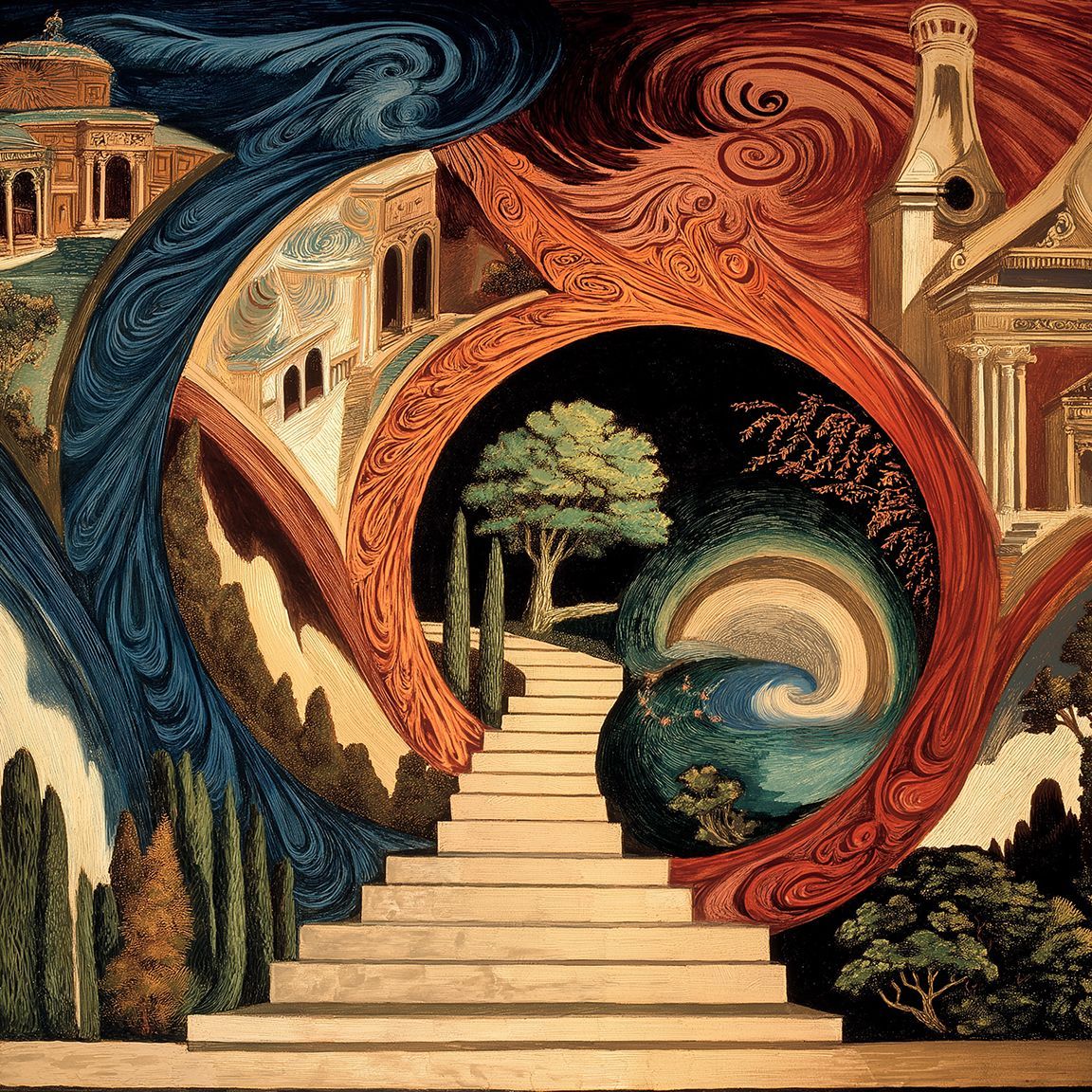
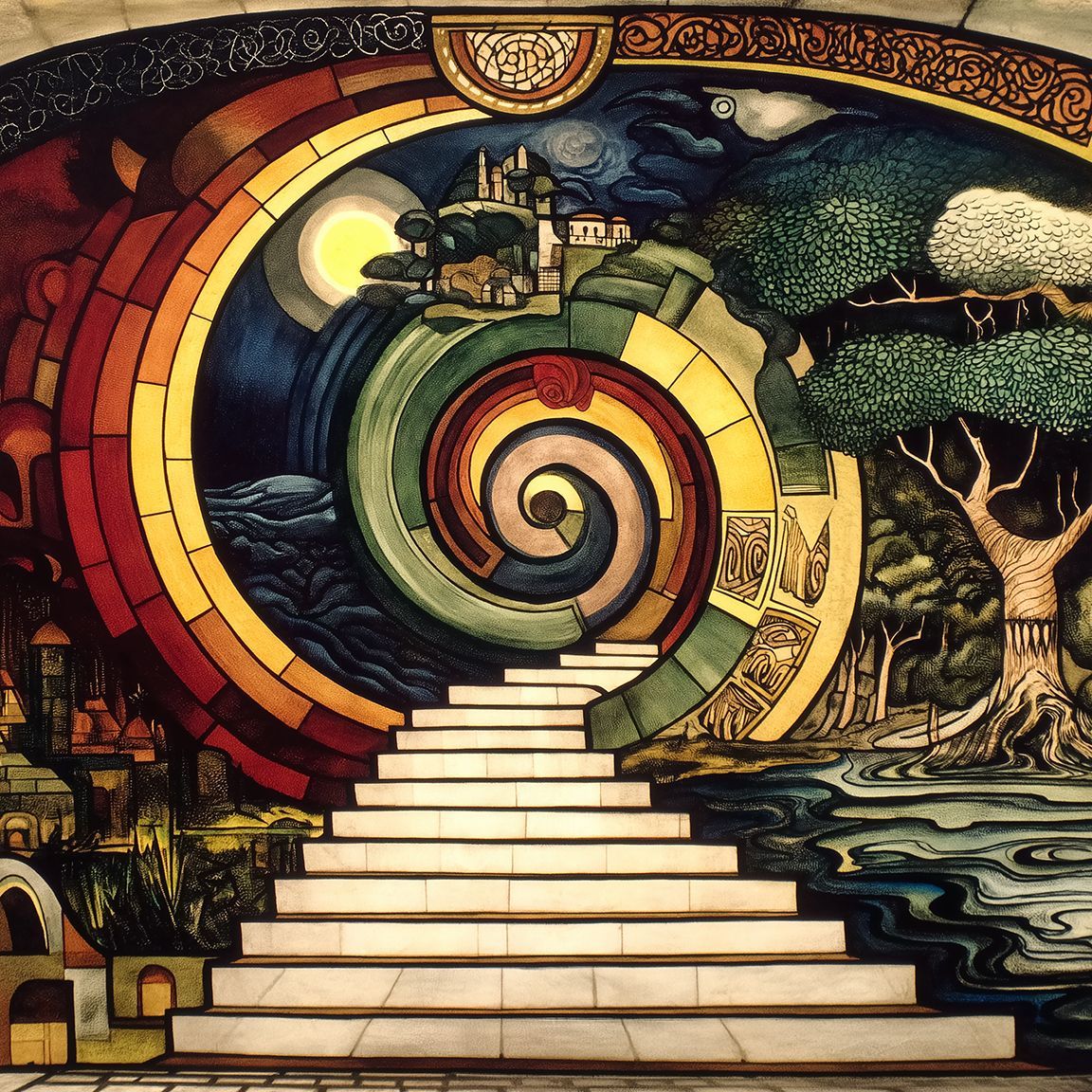
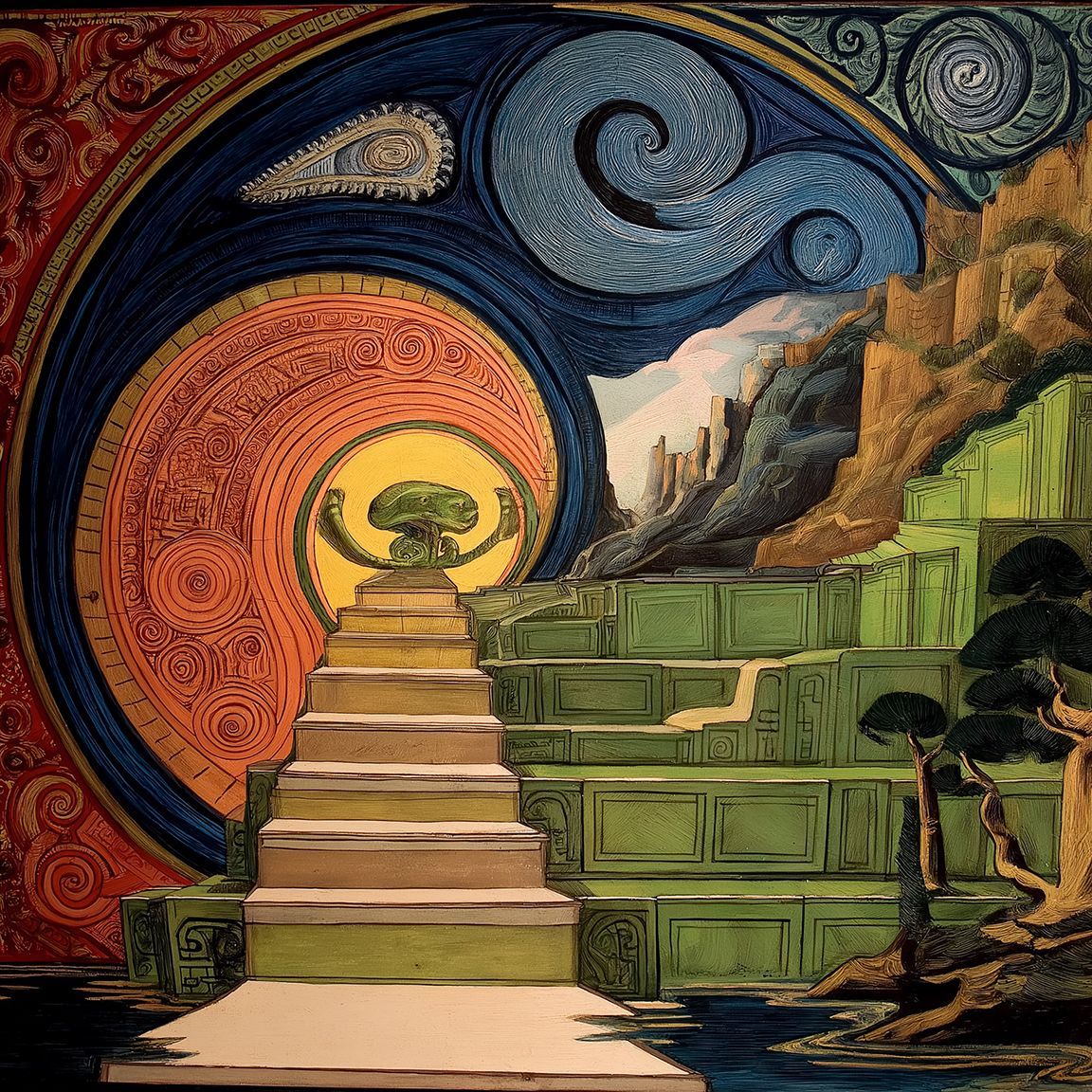
There is an unusual level of consistency, notwithstanding the diversity of regions and time periods represented by these samples. All these popular Dictum Arts images depict a walkway or stairway through a spiral or vortex, symbolizing the shift in awareness that may take place during this ‘Moment of Disburbance’ between the death of one Majastas and the Mantle enveloping the next. One detailed example of this type of event is presented in the second novel of this series, Amarel Mountain. There is also something of a separation between those produced during the Nantu Age (all three above) and those produced in the Emaxul Age and Quantha Age. A far more profound event, involving the emergence of the Pastoral Yelda, takes place in the as-yet-untitled fifth novel of this series.
Danam Yeldic Disturbance icon
This illustrates the Danam Yelda radically departing from the Venerable Koru’s icon precedent. It was fashioned during the reign of the first Majastas of the Shamastrata Dynasty, who oversaw the first years of the Emaxul Age. The unprecedented fifty-eight years between the last Majastas of the Nantu Age, Majastas Kety-Varkara II, and the first Majastas of the Emaxul Age represents the single most extended Moment of Disturbance in recorded history of either the Primary or Secondary Epochs. The horrors of chaos were avoided by the unwavering service of the Variothya, who even conducted five Decennial Census during this period. Majastas Shamastrata I commends all eight Majastas Ministries for maintaining order and continuing all aspects of the administration of the Cluster-of-Clusters Nation, declaring they possessed one of the highest of all Maja Qualities – ‘Steadfastness.’
“While there were many disruptions, our Variothya ensured our Majastas Institutions and our Decennial Census continued to serve the Danam Yeldic State. Our Danam Yeldic Calendar is broken in two, but many things continue without pause. Let our census be one symbol of that continuity.”
This dynamic icon shows one symbol of the Mantle of Tatchlan, the Blue Star exiting, and another entering the formation. Between them stands an inverted star intended to show the Disturbance between the two Mantles, and in this case, Danam Yeldic Ages.

Perhaps the most extraordinary manifestation of this Disturbance was the emergence of what would be known as the ‘Pastoral Yelda.’ A tiny portion of the Danam Yeldic Cluster-of-Cluster’s Nation Separated from their circles and clusters and began to wander in large herds in southern Rho-Jashun. They were characterized at the time as having ‘gently lost their minds,’ speaking in a strange sing-song fashion and taking up herding and gathering. While the population mostly died away naturally with the return of the Mantle, small numbers, both descendants and the occasional Separated cluster-mate from Statos-Vey, ensured this aberrant culture continued for several centuries into the Emaxul Age.
Not all Moments of Disturbance have had such dramatic effect, nor have the results always been viewed at the time as an immediate benefit. They may also be challenging and disruptive. Yet, with the maturing passages of subsequent centuries, they are seen as crucial to future developments.