
Prehistory
Arose among Cousins, The Witnesses, Baby Mother rituals, Most-Ancient Mound Worship, Alpanum Goddess Mound, Rural unremarkable
History
First Unifying Dynasty: Necessity of Writing, First Empires, Funomanru, Tolku made whole, Charsha, First ‘Generational Plan,’ Early Literature and Institutions, Taboo against the North, Upata-Shepsus Azure Stone, Bhampay founding, First Guilds and Maps, First Continental Bureaucracy, Funomanru Code, Cousin Rights, Blue Star, First Surviving Histories, Fall of Funomanru, Practicians and Masters
Second Unifying Dynasty: Buyanupithar Dynasty, Salarish, Funomanru crop policy returns, Prosperity through food production, Thithanu the World City, Upata-Shepsus set aside, Buyanupithar Code, Calendar, Imperial Benefits, Buyanupithar troubles, Philosophers Mystics welcome chaos, Menem converts emperor, Machines, Menem Priests face urban challenges, Rural Loyalty, Diminished crop yields, Buyanupithar Dynasty falls, Midin Mountain Amassment
Third Unifying Dynasty: Yin-Vinulan Dynasty, Primary Mountain Circle Clarified, Arts predominate, Institutes Enumerator, Wellbeing and Preeminent Works Ministries, Yin-Vinulan Encyclopedias, Encyclopedia series marked by female, Complete and male Nu, ‘Life must Live with Life’ leads to machine eradication, Anti-Menem backlash, Unity without ‘unification war,’ Masters become prominent, Increments of Eight Conventions, Eroticism affirmed, Midin Mountain Amassment grows, Yin-Vinulan falls
Fourth Unifying Dynasty: Mysterious Fourth Unification, Muraharoma Dynasty, Menem return to power on Rho-Jashun, Two continents two cultures, Masters receive warning of Suvuka
First Suvuka Onslaught
Cataclysmic change, Uthumpon River assaulted, Suvuka convert Menem Shrines, Impact on Statos-Vey society, Menem Priesthood marginalized, Tatchlan Masters speak openly, Master Duamang Turning Point, Duamang Age, Suvuka contained behind Vettencore Passage, Master Duamang effect, Tolku Thermistal, Unlikely pilgrimage, Tolku Rho-Jashun, Deliberate policy, Duamang Age prepares for Quickening, Summary of history's impact on culture and philosophy
Religion, Philosophy and Mysticism
Chelyaka: Hollow Anu, Kavan-Kyan Monument, No complete literature, Rituals and Songs, Other beliefs, Memanu Myths, ‘Chelyakans still had their tails,’ Everlasting Ennui, Ten plays satirized concept of afterlife, Bliss turns to lethargy, Paradise becomes prison, Embodied paradise, Why was Everlasting Ennui written, Debate over inclusion in Chelyakan canon, Everlasting Ennui collection’s modern popularity
Menem Religion: Militant Exclusivity, Borrowed from enemies, Converted an Emperor, Artistic legacy, First Suvuka Onslaught broke Menem Power, Menem legacy within Tatchlan
Menem Literature: Core Narrative, Yeoyupan, Yeoyupan creates Anu, Menem forget former existence on Anu, Daruadunnal, Tarunachit, Sixty-four Tarunachit shrines, Zitapermas, Yeoyupan Epic, Yeoyupan Mystery, The Yeoyupan Story, Footprints become shrine, Furrumittal, Mystic Tools and Menem Language, One Hundred Gates and their Guardians, Aspirant's journey, Final Binding of Yeoyupan, Aspirant, Dependant, Four Grand Menem’s Promise, Four Menem Generals become Furrumittal instructors, Vindaviran, Samajalas, Samajalas and machines, Tarunachit, Yuyutar
Sedat and Sev: Aspirant binds lesser Menem to them, Sedat, Sev, Sev and Memanu, Powerful Aspirants bind Grand Menem
Menem-Inspired Opposition to Tatchlan
Nallurakon: Little known, Worked on Larpana Plants, Leaves Masters, Sheshenara Plan, Masters Reveal Plan, Nallurakon exile
Geltran: Inspired Nebutan, Young Geltran sees ageing Suvuka, Suvuka bemoan their barrenness, Deserted Running Circle, Geltran Writings, Respected critic, Geltran’s work forgotten with domestication of Suvuka
Nebutan: Began as Water Viewer, Discovers Tatchlan Master Enclave, Rediscovers writings of Nallurakon, Forms networks and builds a movement, Nebutan discovered and fled north, Welcomed by Sawlu Clan discovers works of Geltran
Nebutan’s Works: Rise of Tatchlan, Worse than Chaos, Dignity's Demise, Dies suddenly, Collected Letters
Philosophy
Water Viewing: Contemplation, Water contained living code, Menem oppression
Three Forms of Water Viewing: Practical, Ethical, Destiny
Baby Mother Rituals
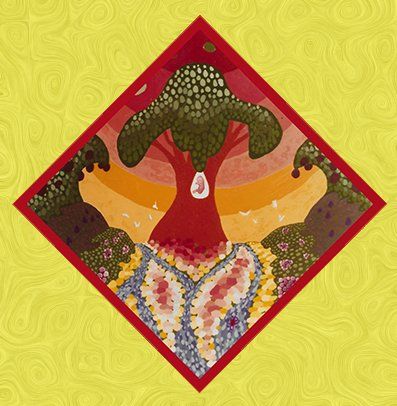
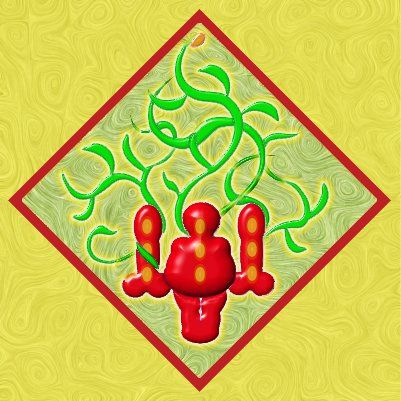
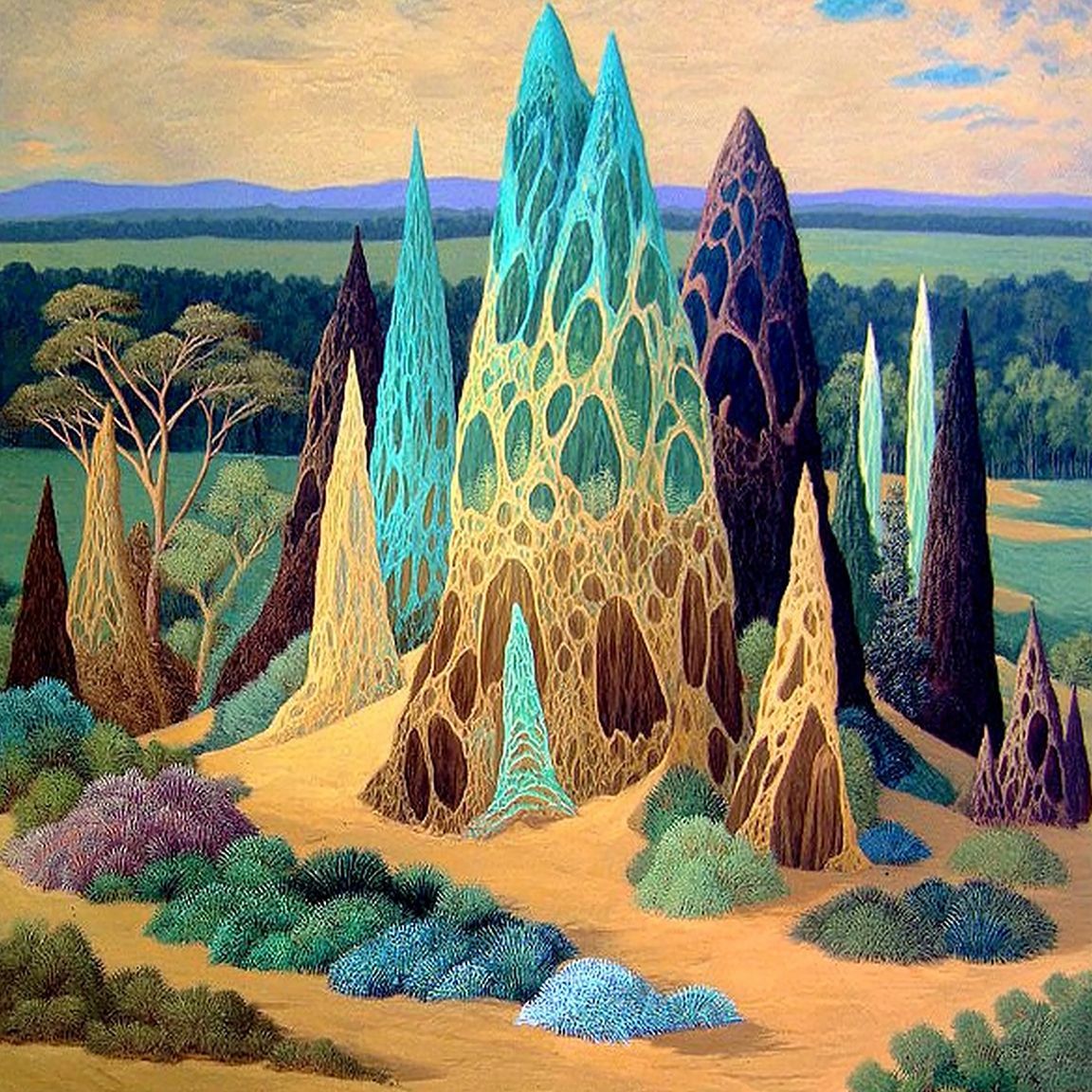
What continued through this volatile period were gradual advances in food cultivation and animal domestication, along with growing knowledge of working metals. Many deep traditions tied to all forms of agriculture emerged, including the ‘sprouting mother’ and ‘baby mother’ rituals. Remarkably, these agricultural ceremonies have survived despite the complete disappearance of all other aspects of these most-ancient times.
Details may be found in their continued practice among Rural Clusters. The rudiments of several Tatchlan elements were also achieved, with the tentative communication with Cousins and the first modifications of other living beings. There is no reliable dating system for most of this time. Despite each of these falling to violence and destruction, they inspired later generations and planted the seeds of the current Cluster-of-Clusters perfection.
Most-Ancient Mound Worship
Alpanum Goddess Mound
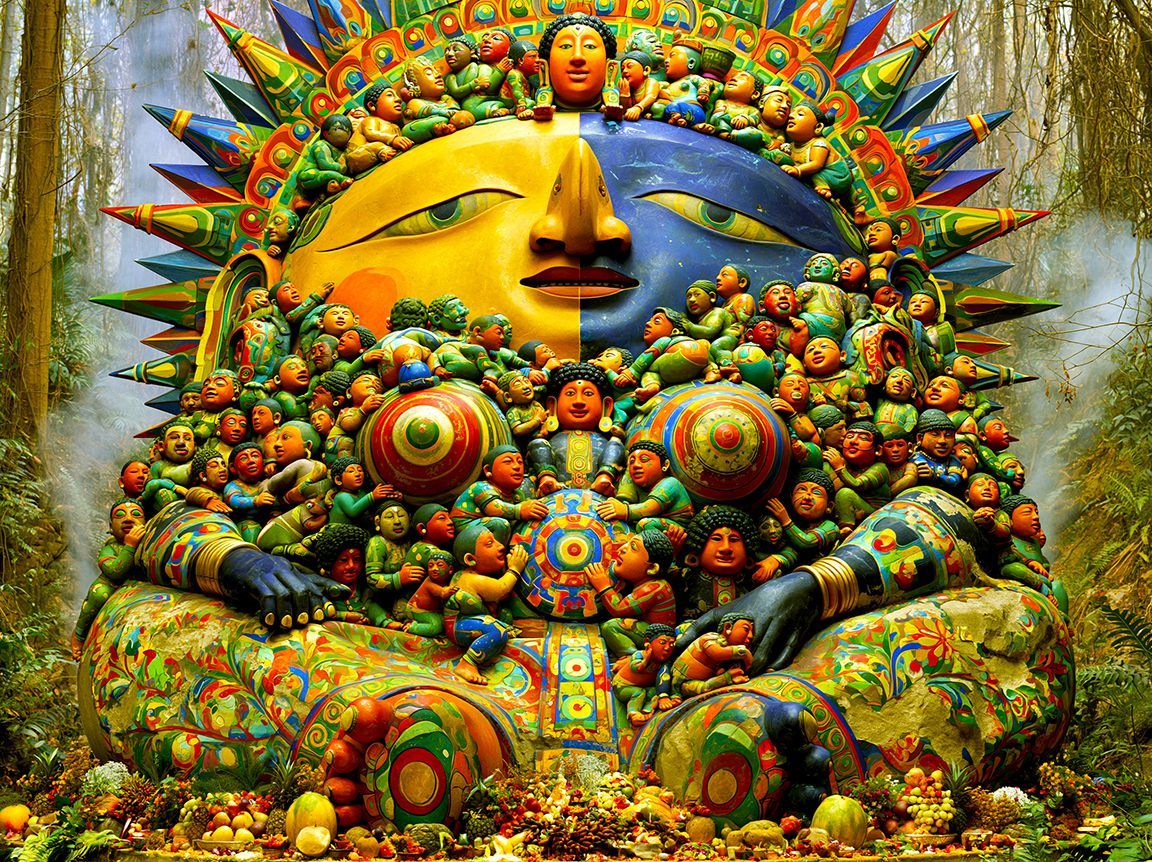
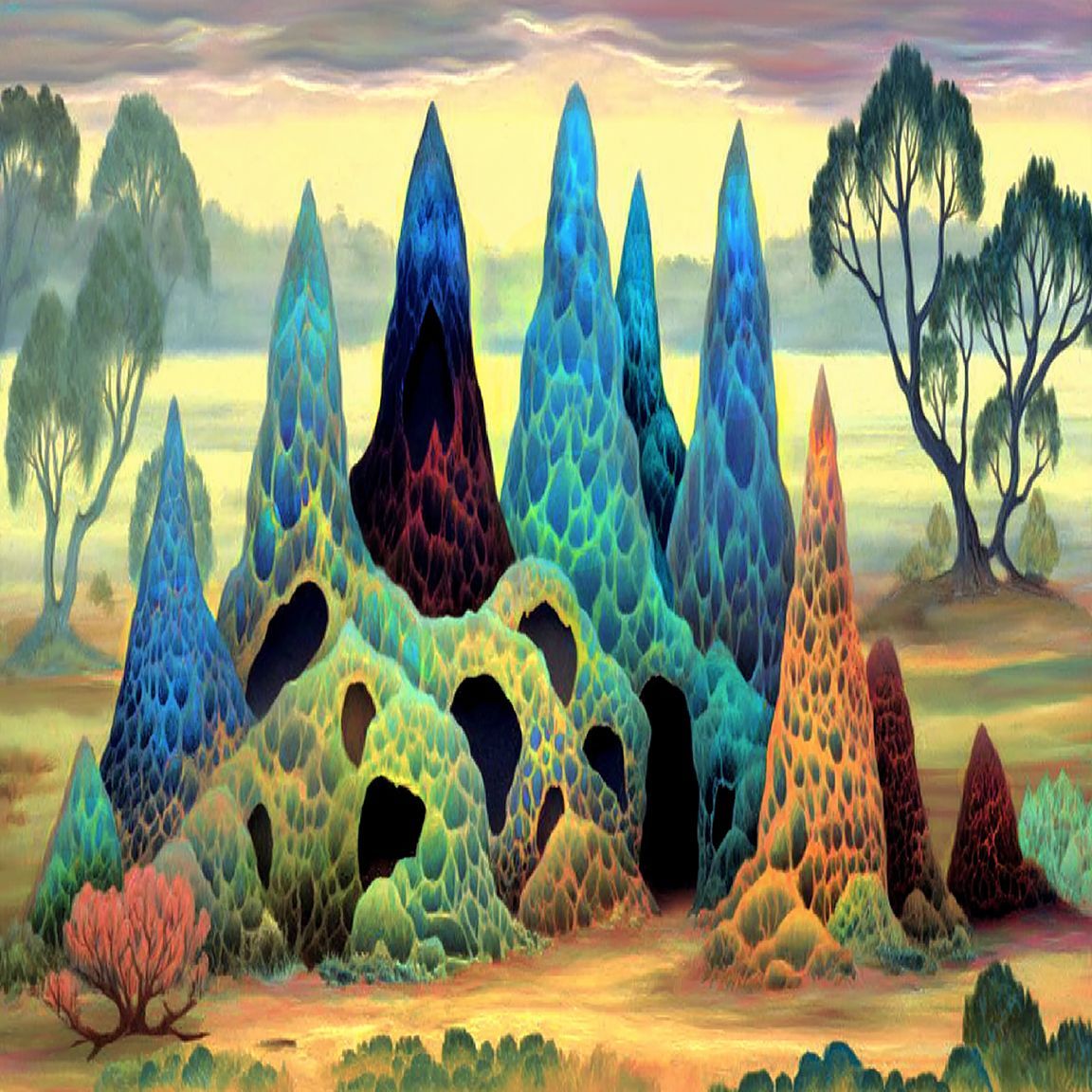
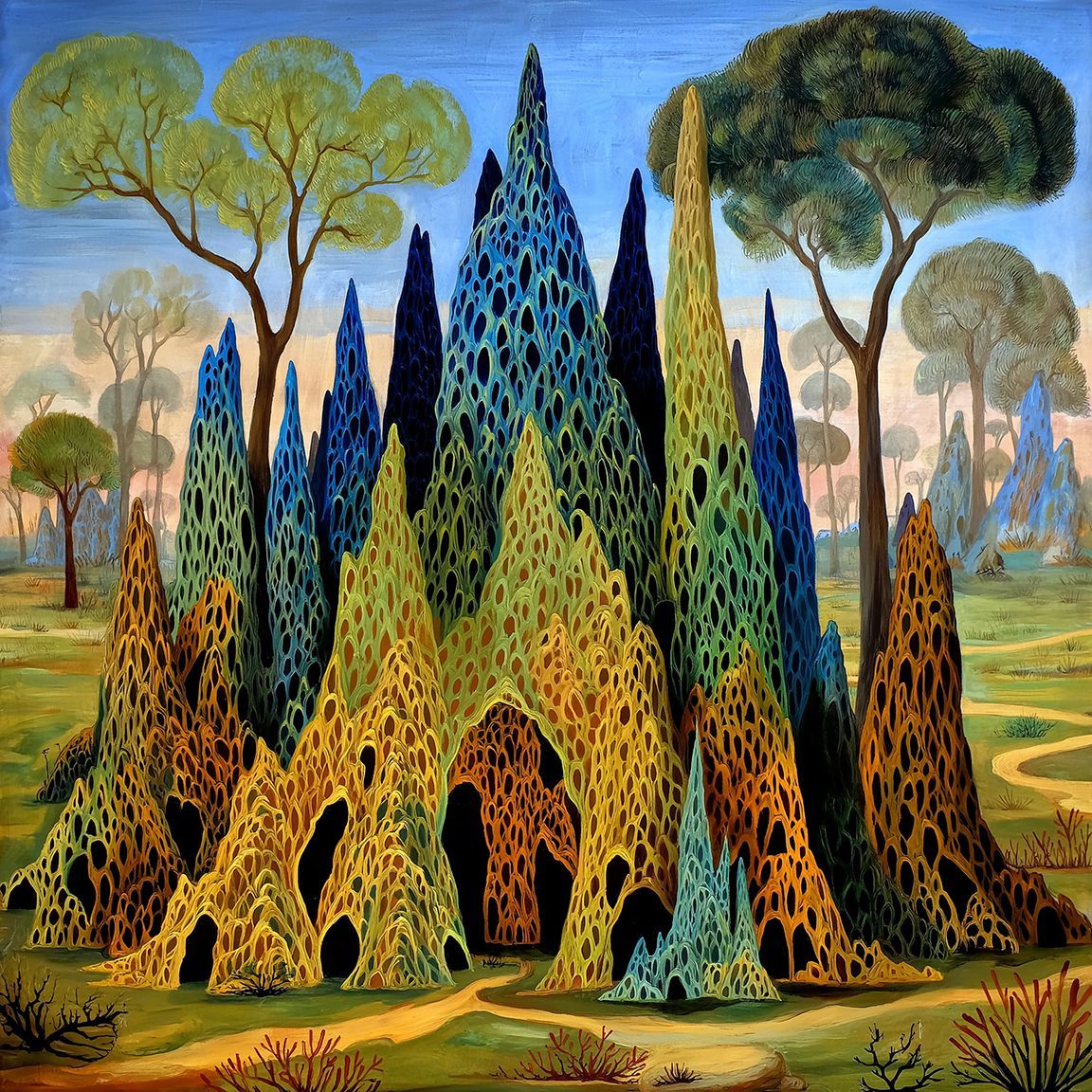
Perhaps a natural outgrowth of these Ketukku colony mound rites was the development of a venerated figure taking the shape of a mound. What would come to be known as the Goddess Alpanum was given names such as ‘Laughing Mountain’ and ‘Opening Mother.’ Her monuments were often in remote locations and were built on pre-existing rock outcroppings. These huge, round mounds were worked into an immense female body, smiling or laughing as many tiny children climbed over and sat on every part of her generous body. She was seen as the source of all creation and destruction. In a few sculptures, she gives birth to another infant as she stuffs two more into her laughing mouth. This image is a reconstruction based on several surviving monuments and a few Funomanru descriptions, which noted that, in their most-ancient time, oral traditions continued about heaps of offerings that were always at her feet. Given their worn and eroded state, it was presumed the Suvuka left them untouched as unrefined objects.

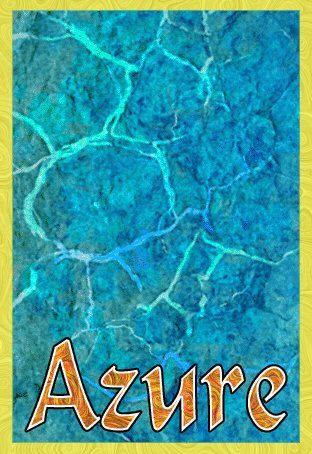
The walls of the Primary Mountain Circle were also a significant source of wealth. Azure Stone, almost unknown to the rest of Anu, was abundant throughout the Veradapandra Mountains on Statos-Vey. As it is now, Azure was listed as the First Grade of builder and sculptor stone, particularly those infused with veins of Argent, Cupric and Lapis minerals. All six classes of minerals and gemstones lay in abundance within the Veradapandras, where it is said that ‘the wealth of Anu is gathered.’ This was the second stabilizing foundation of the empire.
Founding of Bhampay
The Funomanru Dynasty also founded the first of many ocean ports in what would become the city of Bhampay. The first extensive and stable trade networks were established with Bhampay at their hub, bringing goods from all parts of Anu to benefit a burgeoning population. This led to an influx of populations from remote communities, many finding new homes in the port city. Children of distant principalities were also brought to Bhampay to be educated at the first universities alongside the empire's elite.
Most were explicitly trained as the ‘service aristocracy’ of the dynasty before being sent back to serve the designated governors of peripheral nation-states for the Funomanu dynasty. All these activities contributed to Bhampay's development of a unique cultural status.

First Histories
The first rudimentary histories of the Tolku date to this time and, despite their incompleteness, are often the only sources we have for this period and what went before, including most of the information on this page. ‘The Witnesses’ and ‘Goddess Alpanum’ monuments were already ancient at this time and were treated with reverence and awe. Despite having access to long-lost oral traditions, academics of this time could not learn anything about their origins or purpose. The Chelyakan Religion was thought to have formed early in this dynasty as a revolt against the emergence of large cities, their increasingly cosmopolitan culture, and intensive, universal agriculture, which changed the nature of Tolku life. An unlikely companion to this material is a unique survivor from a later period. ‘The Everlasting Ennui’ is a set of plays satirizing ancient religious beliefs. Those ancient authors had far more extensive sources, and much of what we know of these long-gone cultures is largely due to this comedic material.
Thithanu - the World City
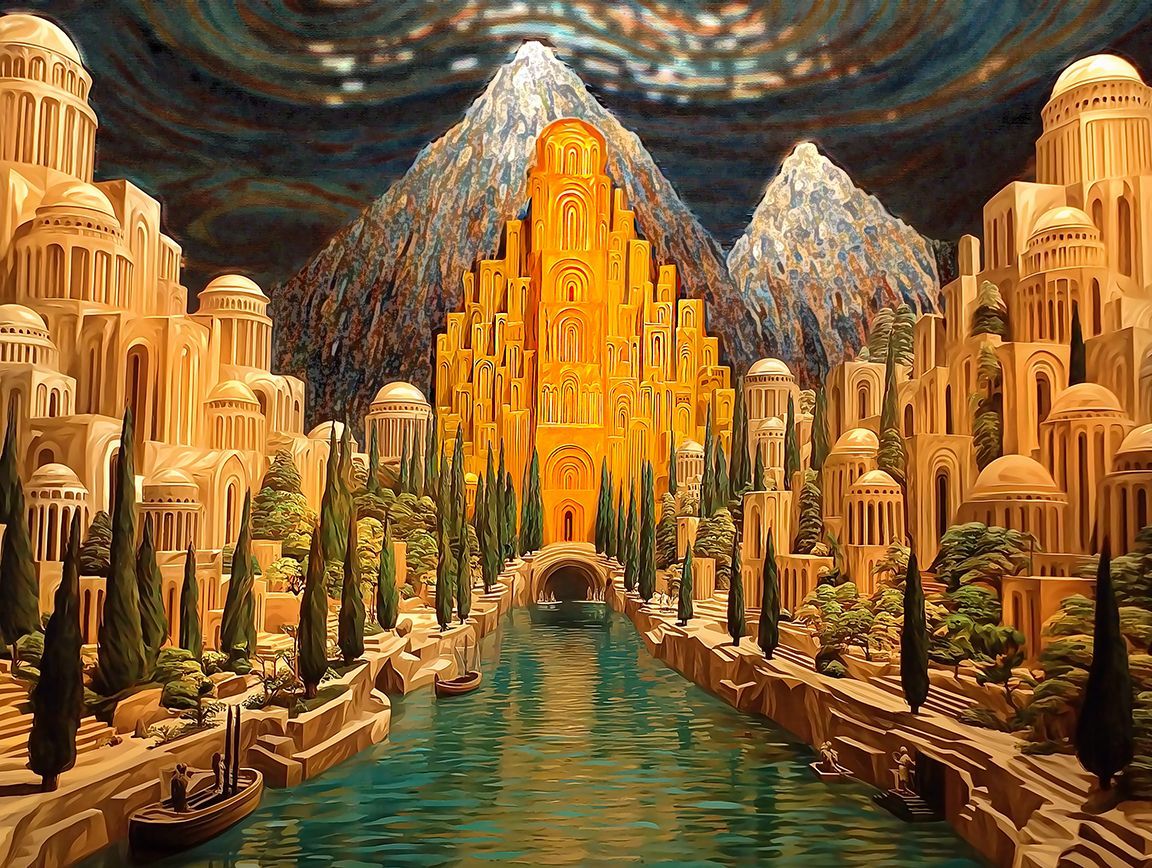
This is a modern reimagining of Thithanu, the ‘World City,’ based on literary sources and excavations conducted during the raising of Xaduth One, the third series of the Koru Living Mountains, during the Secondary Epoch, near the southern slope of Mount Thuma in 9,387 UKC, and Thamand One Living Mountain, of the fourth series, which joined her near the south in 20,532 UKC. The World City was founded by the Second Unifying Dynasty of the Lesser Era of the Primary Epoch, the Buyanupithar, far to the north of the Funomanru capital of Upata-Shepsus. The northern extent of the city stood at the base of Mount Thuma and its lesser mountain companion, Mount Barom, which rose together on that portion of the open northern Marachla Plain. The Uthumpon River flowed in an enormous curve to the south and was the source of the city’s canal system. What is pictured here is a view sailing up one of the canals flowing from Uthumpon into the city. Those viewing this image know that this city, which produced much art and genius, was also a cauldron of contending ideas. The Menem Priesthood prevailed, leading the early Tatchlan Masters to leave the city before finally settling in Mount Uluvatu to lay the foundations of Tatchlan. Later generations of these Masters tried to warn the World City of the approaching storm of the First Suvuka Onslaught to no avail. The Suvuka destroyed the city and pushed such vast piles of ruin into the Uthumpon River that it would permanently change course.
The Buyanupithar Dynasty was based in northern Rho-Jashun, with its consolidated capital at Thithanu, close to the grand Mount Thuma, with the immense Uthumpon River flowing around three sides. Due to the abundance of water from myriad small rivers and underground springs flowing into the Uthumpon River, Thithanu became the first known city to be dominated by an extensive canal system. (Bhampay on Statos-Vey had yet to divert the Siana River through the city). With Mount Thuma forming a dramatic backdrop to the north and the Uthumpon River defining the south, west, and east, Thithanu became the largest metropolis on Anu, and an extensive road system converged on it from all sides. Not until the Living Mountains of the Koru during the Secondary Epoch were larger urban populations brought so closely together. This mighty urban centre would remain the capital throughout the Buyanupithar, Midin and Muraharoma Dynasties. Its name was derived from the term ‘World City’ in the language of the time. It supported an immense population, saw many events, nurtured cultural and historical innovations, and authored innumerable masterpieces. Among many other recorded wonders, at this height, there were one hundred ‘North Towers’ encircling the southern surround of Mount Thuma.
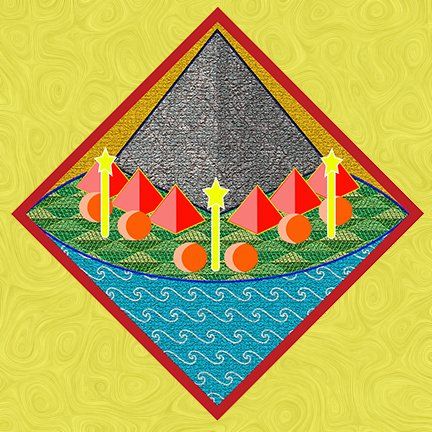
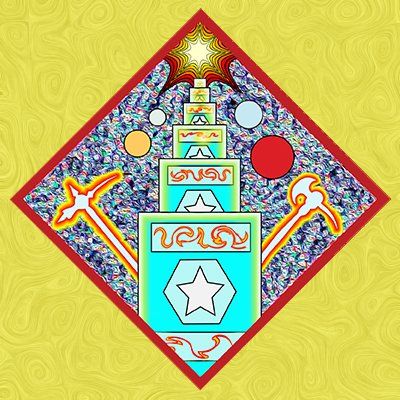
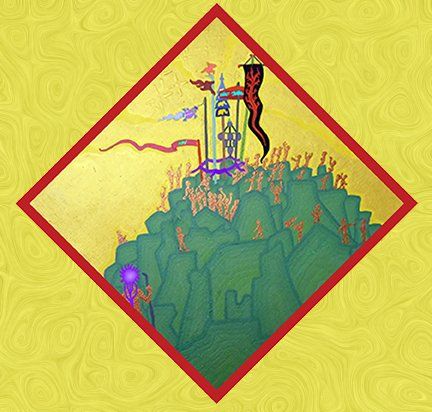
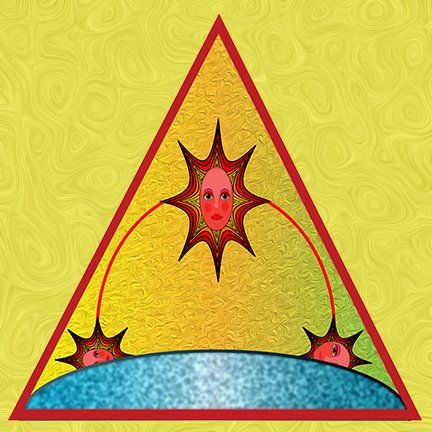
This Primary Epoch Icon is based on a most-ancient emblem recovered from the Mount Midin Amassment. It is estimated the original image dates from early in the Buyanupithar Dynasty. It shows a stylized Uthumpon flowing in its original course to the city's south. It is in the foreground, with Mount Thuma rising to the north behind it. The mountain is presented in an idealized form. The city appears as a series of perfect structures at the mountain's base. It is unknown whether these shapes had a specific symbolic significance at the time. This Icon can now Summon because it is a vital nursery for the first significant associations of Masters dwelling there. For centuries, they continued their work in the shadow of Mount Thuma before the Menem Priesthood drove them out.
Arts predominate
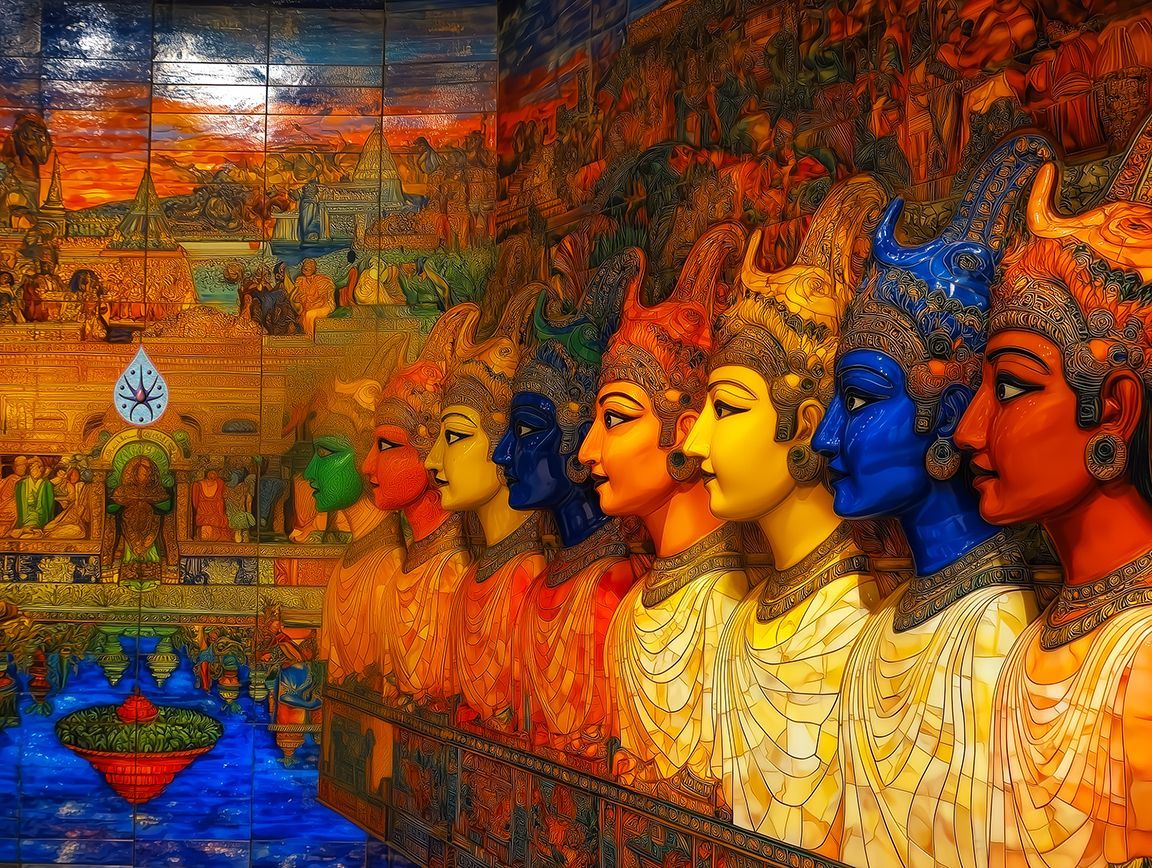
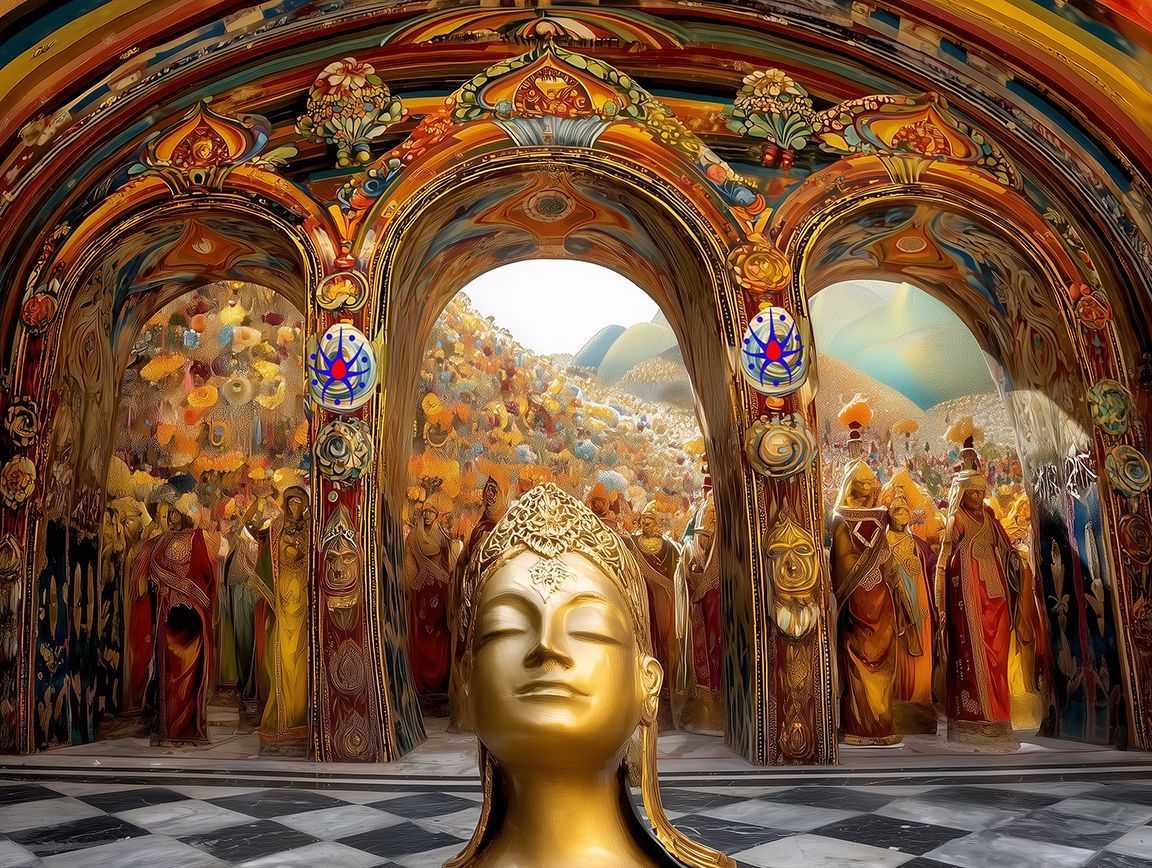
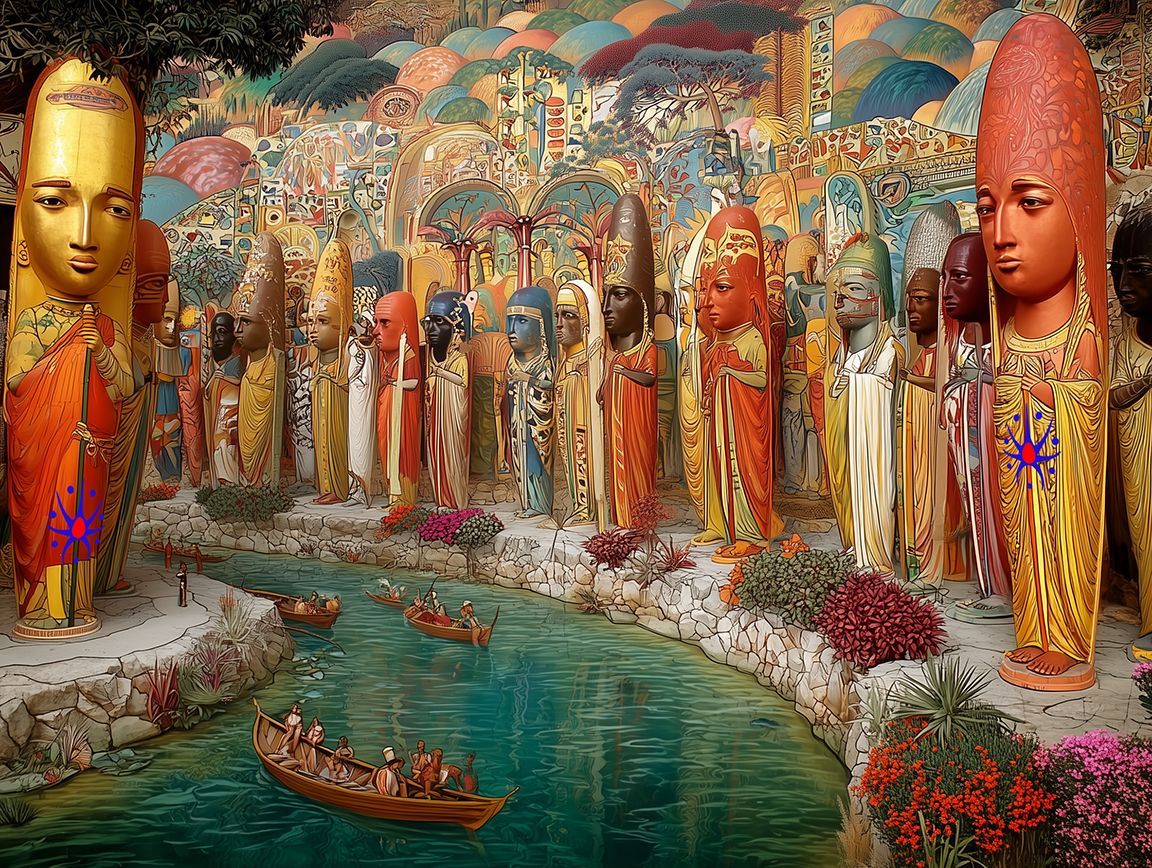
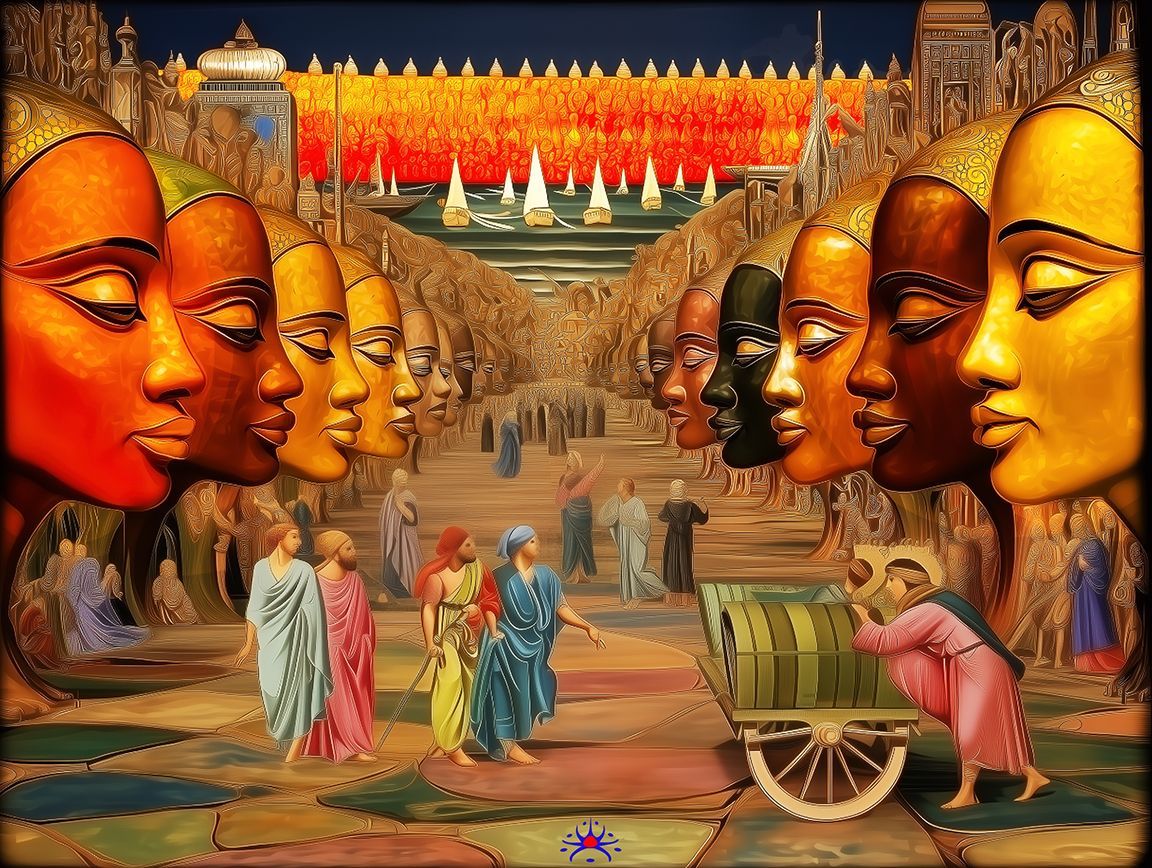
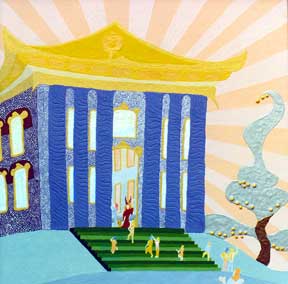
Despite all these images dating to the Secondary Epoch, the opulence and richness depicted here reflect the surviving descriptions of the city for most of the Lesser Era and all of the Greater Era of the Primary Epoch.
While the Buyanupithar Dynasty was known for several agrarian and scientific accomplishments, the Yin-Vinulan Dynasty was a reformer and a patron of the arts. They turned their port capital into a fabled treasury of public art and architecture, nurturing a period of intensive literary, musical and theatrical innovation. They transformed Bhampay and other centres with vivid public artworks drawing on many cultural traditions. The Yin-Vinulan also distinguished their city by constructing the Red Ring, a perfect circular wall that extended into the harbour. The only breaks were for shipping to enter its sheltered inner harbour and for land traffic to pass under its massive gate via the Imperial Way from Upata-Shepsus. The ‘shifting’ outer wall, moving in and out with the waves and currents, was the marvel of the age. This dynasty appears to have used this dynamic Bhampaian culture to unify the rest of Statos-Vey. Recent findings suggest all of central and portions of southern Statos-Vey were taxed and serviced by the Yin-Vinulan. This was the first dynasty to use the ancient Funomanru Blue Star image as an explicit symbol of Bhampay and its royal house.

Institutes Enumerator, Wellbeing and Preeminent Works Ministries
Previous unifying dynasties had seen fit to conduct a census and analyze the results. Still, this dynasty formalized the regular taking of the census each decade within the new ministry known as
Enumerator. They also added what would come to be known as the third of the ministry’s three bureaus, the
Erudite Bureau, to oversee and administer various intellectual and cultural activities. They also founded the
Wellbeing Ministry, which comprises three bureaus: the
Pacifier,
Ratio, and
Completion. While within the later
Cluster-of-Clusters Nation, two additional bureaus would be added; the original three parameters have remained unchanged through subsequent ages. This dynasty is also distinguished for creating a third ministry, that of
Preeminent Works. The four bureaus of today’s ministry were all founded at this time. The catastrophic failure of the great city of
Thithanu to control its growth and sufficiently deal with its unhealthy conditions was fresh in the minds of many. The newly instituted Preeminent Works Ministry was tasked with massive infrastructure works to make
Bhampay and other places of health and beauty. These many initiatives were, in part, a response to what was seen at the time as the foul and dour nature of the former capital of Thintlith under the influence of the
Menem priesthood.
Masters receive warning of Suvuka
The Mount Uluvatu Masters on Statos-Vey received many warnings. These included news of increased disturbance incidents, such as a rise in Gandahatapan and Mahakram insect wars. Such natural anomalies were followed by explicit dispatches from their serving Cousins and Krall of an imminent threat approaching from Northern Rho-Jashun. They relayed this to their Tatchlan compatriots in Thithanu, who began to sound the alarm. Gradually, other authorities in various fields saw the signs and joined their call. Only a fraction of the population chose to listen and begin to move south ahead of the approaching storm. It is noted that while the Muraharoma emperor Semesilian XIII struggled with conflicting reports and indecision in Upata-Shepsus on Statos-Vey, he did accede to the Master’s urgings to stop all emigration from Statos-Vey to Rho-Jashun and to begin to fortify the three gaps in the southern Mulungu Mountain range. Due to trade and other issues, barriers had already been raised at these locations over a century earlier.

The above image is a common feature in most Koru Living Mountains during the Secondary Epoch. They are crafted mainly by taxidermists using recovered bones and other materials, mostly from the northern shores of the Huallapandu Headlands.
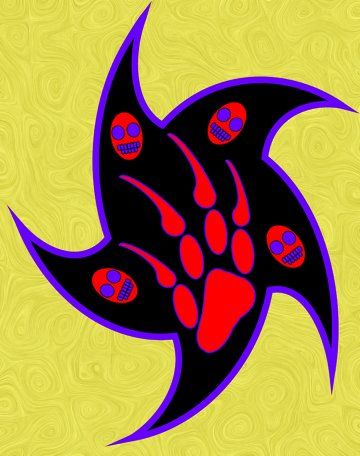
Uthumpon River assaulted
Such was the rage of the Suvuka when they arrived at Thithanu; they changed the course of the mighty Uthumpon River. Were the evidence not irrefutable, it would be impossible to credit. They did so by tearing down this immense city and pushing most of the ruin into the river in such quantities that it could no longer flow and change course. With all hope lost, the surviving Tolku began a frantic evacuation south across the Marachla Plain. Those reaching safety said the Suvuka became intent on levelling the World City and did not follow them initially. Due to many topographical factors, the river backed up and flooded broad areas, presenting something of a barrier when the Suvuka began to give chase. Despite these watery impediments, they quickly overtook more than half of the refugees and destroyed them. The miserable remnant allowed through the Xaduron Wall of The Impenetrable Barrier Region was the last Tolku of Rho-Jashun. The Uthumpon River eventually forged a new channel. It now flows far north of Mount Thuma and its small companion, Mount Thanur. This is the only example of such a monumental alteration of a major river by the Suvuka.
Suvuka convert Menem Shrines
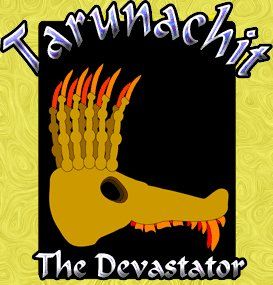
There was one mysterious exception to their programme for eradicating all signs of Tolku presence on Rho-Jashun. Forty-four Menem shrines were built across Rho-Jashun, and a further twenty were built on Statos-Vey. These are mentioned in the Menem religious text, the ‘Daruadunnal,’ within the set of martial tales known as ‘The Tarunachit.’
They supposedly contained relics of the war between the Menem and Kovlah in Ranvartawan. They were characterized as having an egg-shaped central depository of the relic surrounded by large curving walls with elaborate murals depicting aspects of the Menem narrative. The Suvuka chose to trample down the complex while carefully converting these forty-four sites into their Running Rounds, suggesting something about these structures and their locations separated them from all others. Many theories have been expounded, but no clear answer to this mystery has gained acceptance.
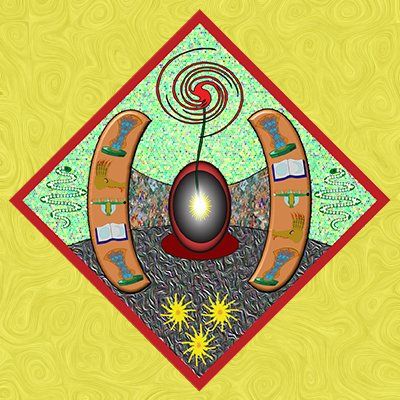
Master Duamang Turning Point
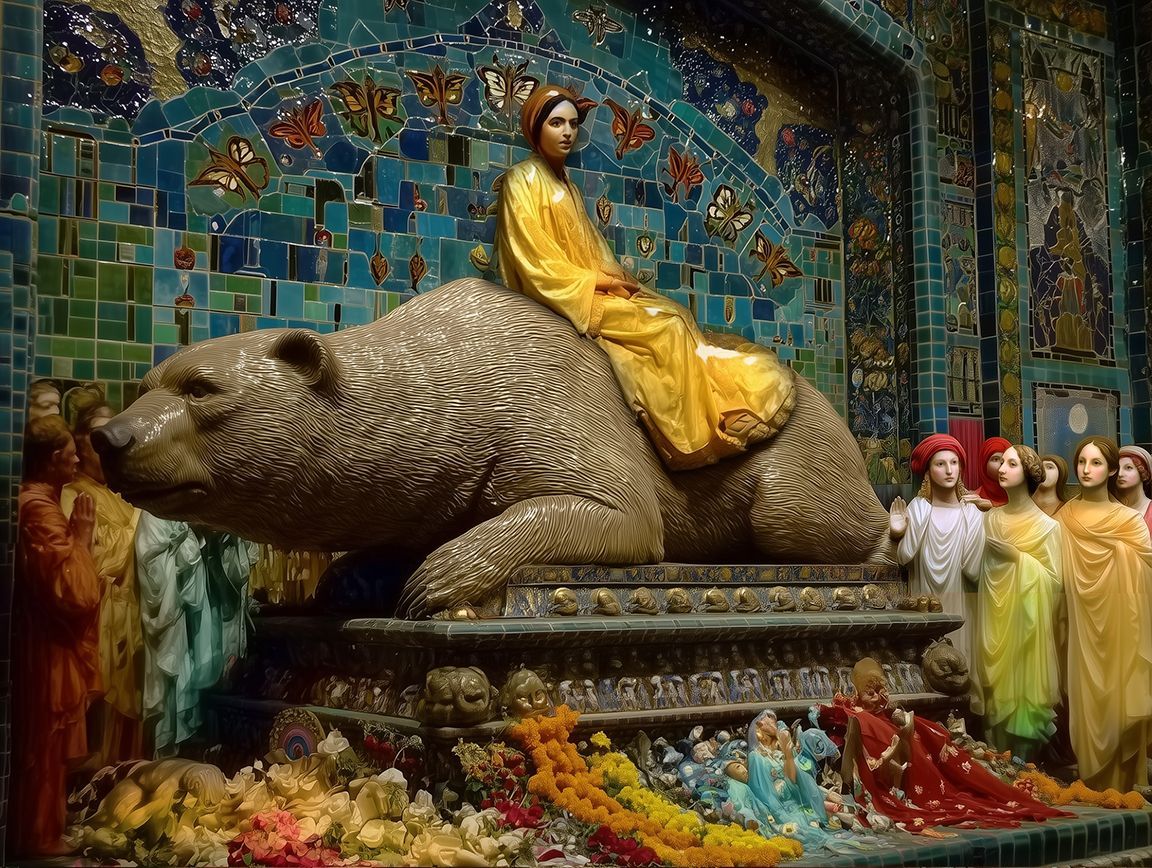
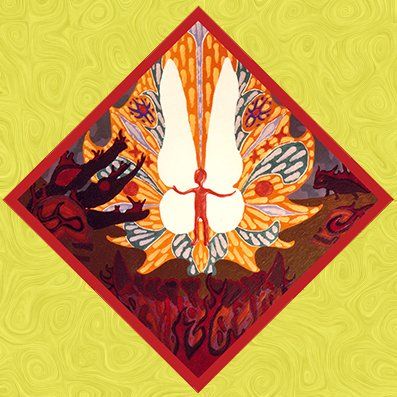
This is one of innumerable monuments to Master Duamang to be found in many Koru Living Mountains. She has been celebrated throughout the Primary and Secondary Epoch for being a ‘turning point.’ First, for the development of the weaponized Brangnam Plague, delivered by a modified version of the common Blood Midge used to sterilize the Suvuka. Second, her turning the seemingly unstoppable Suvuka hordes led to the decisive ascendancy of the Tatchlan Masters of the Lesser Era. So profound were the changes that the last portion of the Lesser Era of the Primary Epoch came to be known as the ‘Duamang Age.’ This is a similar yet distinct sculptural theme to the ‘Four Masters Riding the Suvuka.’
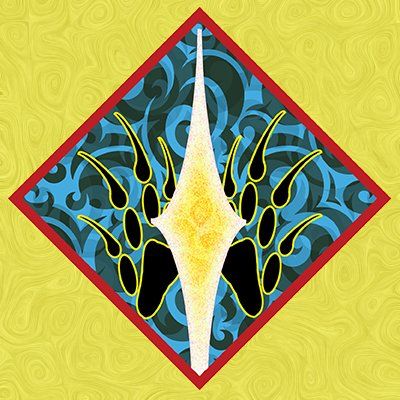
Summary of history's impact on culture and philosophy
A primary theme throughout the pre-Tatchlan period is a longing for release from this cycle of successive societal creation and destruction attended by ‘execrable cruelty, vile green and venomous ambition.’ Eventually, this repeating cycle became known as the Four Generations theory. Even during intervals of relative stability, there is evidence of intense speculation on this question. Some took the form of mysticism, some a variety of religions, while a few embraced philosophy. Most eventually concluded that the only solution lay in changing key aspects of the Tolku themselves. Out of this crucible, the first Dreamers and Water Viewers initiated themselves into Raw Sensitives, wandering the deep places of life and finding they could modify and change them for the better, leading to the first Practicians. These explorers laid the foundations for the Tatchlan Masters and all subsequent history of the Primary and Secondary Epochs. Below are a few more pertinent cultural movements across this turbulent historic landscape that led to the Tatchlan Masters' ‘ Resplendent Work .’
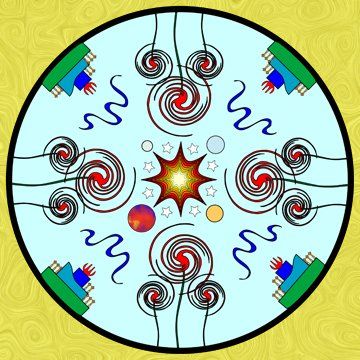
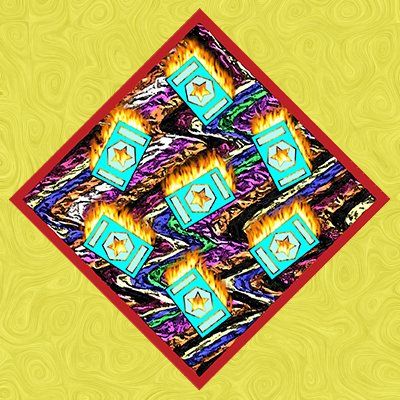
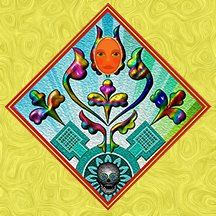
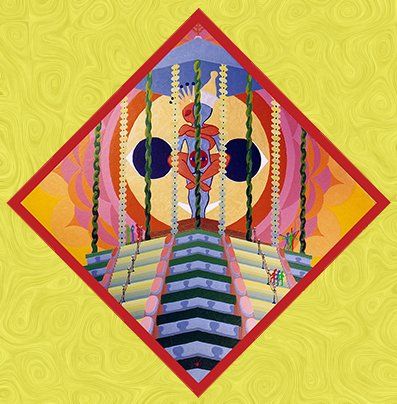
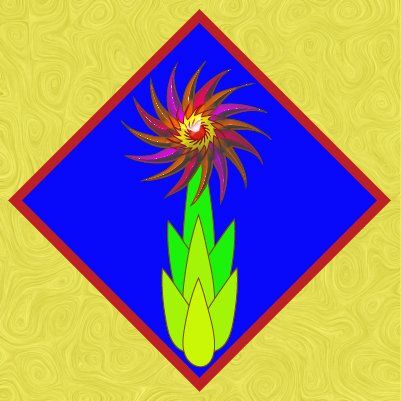
From the inner surface, four groups of three Memanu grow inwards towards Nu, symbolizing the Memanu's role in sending messages from one side of the inner sphere to the other. Their blossoming tops are presented as stylized swirls. Between them stand what appear to be four large, three-tiered altars with a flame coming out of the top portion. It has been speculated the lower tier represents rock and soil, and the middle story, which appears to be a stylized wave, is meant to symbolize Anu’s oceans. By this estimation, the upper level is the sky, and the flame is Nu himself. Eight tiny figures stand on each of these structures with their hands joined above their heads. A single Xumkuka flies over this architectural arrangement.

They worshipped and feared the soil and were told to always ‘tread lightly’ on it. They treated the two Skin Banes, Consumption Monoliths and Hungry Rock, as ‘Anu Gateways’ and were known to ceremonially ‘feed’ them with stone refuse to fortify the Skin of Anu ceremonially. Anu quakes were monumental traumas for them, and elaborate rituals and ceremonies attempted to mitigate them. Eruptions of Dead Blood horrified them, as they believed this was puss issuing from a wound in the Skin of Anu. Despite the tradition being extinct, some agricultural practices, including the ‘Baby Mother’ harvest rituals, come down to us from this time.

Yeoyupan Mystery
Given its confirmed early date of composition, it also poses a puzzle. Before Zitapermas, there had been no other mention of the
Suvuka within any other surviving
Menem or literature. Until the
First Suvuka Onslaught, little was known about them. Many shipping losses crossing the
Panchala Sea led to a tradition of evil ‘residing in
the North.’ Increasing reports of fantastic bones washing up on the northern shores of
Rho-Jashun cemented this notion. When the first explorers successfully returned to Rho-Jashun and described the Suvuka, the Menem Priesthood condemned them for suggesting such a being existed (not being mentioned in the
Daruadunnal and other now lost early texts). They attempted to prohibit and destroy their published accounts (this is why the Zitapermas were also initially suppressed), declaring they fell under interdicts against all forms of ‘Kovlah Heresy.’
While its structure and language usage prove this epic significantly predates the Furrumittal collection, it describes the landscape of Thermistal with surprising accuracy. The unknown author(s) also possessed a comprehensive knowledge of the rest of Anu, along with many long-extinct mythologies. With few exceptions, the only other surviving source of information about them is the Everlasting Ennui, dating a millennium in the future of The Lesser Era. Traditional Menem works eschewed all such religions, claiming they were evil falsehoods of Yeoyupan and later fabrications of the Kovlah/Suvuka. Lastly, Suvuka’s social structure and many dancing and running rituals are described in detail, as could only come from first-hand observation. Many questions remain unanswered about how this work fits with what is known of the period.
All of this evidence now leads Venerable Scholars to conclude this creative work was the product of an anonymous author, or authors, who had survived one or more extended voyages to what was then known as the ‘Dark Continent.’ It has been suggested, given the poor reception factual accounts had in Thithanu, that the dramatist chose to frame their message as a theatrical narrative to increase the likelihood of its survival. Several forensic examinations were undertaken, by notable academic figures, of other literature surviving from the time to identify the playwright - without success. Such is the enduring popularity and profound respect accorded to this work that, even today, contentious debates erupt occasionally within learned circles and at assemblies over various points on interpretation and authorship of this most-ancient narrative.